-Analysis-
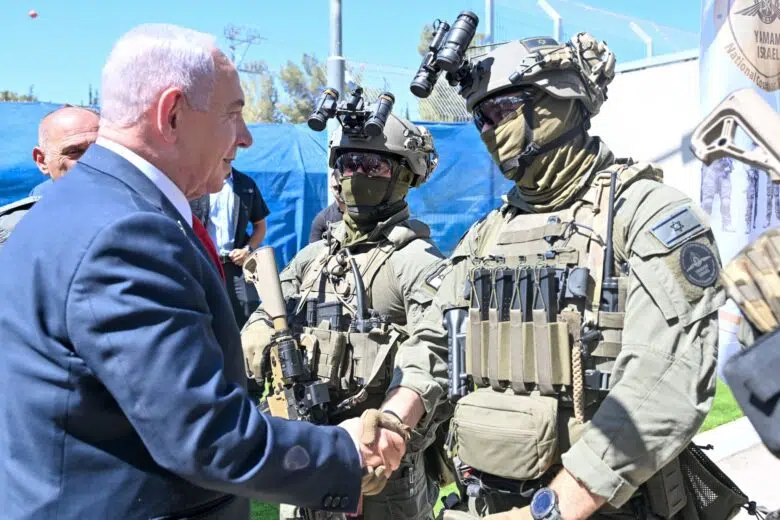
PARIS — As his army launched its ground offensive on Gaza City, Benjamin Netanyahu made a declaration that diverged sharply with his past remarks. And it stunned many Israelis. Speaking at an economic conference in Tel Aviv, Netanyahu said that Israel must become a “Super Sparta.”
Sparta was a city-state in ancient Greece known for its militarized organization, discipline and strict obedience to the state, all of which gave rise to the adjective “Spartan,” still used today. It was also a highly hierarchical society, in which not everyone had the same rights, and some were reduced to slavery.
For the latest news & views from every corner of the world, Worldcrunch Today is the only truly international newsletter. Sign up here.
While Netanyahu does not intend to replicate the Spartan society of 2,500 years ago, his reference to this societal model, at a time when Israel has been in a state of constant war for nearly two years — its longest period of conflict in history — conveys a clear message to his citizens and to the rest of the world.
A new normal
Firstly, the message is that this state of war is here to stay. War is no longer an “abnormal” interlude between “normal” periods, as it was in the past — if we don’t count the longstanding occupation of the Palestinian territories. It is now a permanent state of affairs.
Many Israelis see the reference to Sparta as an authoritarian drift.
It is also, in the spirit of Sparta, a war economy, including relative self-sufficiency in weapons production. When asked about Spain’s cancellation of certain arms deliveries, Netanyahu replied defiantly, “We are good enough to produce weapons ourselves.”

Secondly, the message is one of accepted isolation and self-reliance. Netanyahu warned his fellow citizens that Israel would have to endure this relative international isolation. He referred to growing criticism from Europe, which he attributed to Muslim immigration and propaganda from Qatar and China on social media.
Many Israelis, those who were protesting even before October 7 against the “illiberal” plans of Netanyahu and his far-right coalition, see the reference to Sparta as an authoritarian drift. The militarization of society portrayed in this way revives fears of the erosion of checks and balances.
Isolation deepens
Finally, invoking the spirit of Sparta, like Netanyahu’s promise to “return to Gaza where it all began,” is a response to external criticism. It is a resounding rejection of the decision of France, and several other countries that have long been close allies of Israel, to recognize a Palestinian state. It is also a defiant response to the possibility of European sanctions for the first time, which will be discussed on Wednesday in Brussels.
Netanyahu is also sending a message to the UN committee of experts that has just concluded that genocide is taking place in Gaza — and to the Arab states, including some of the signatories to the Abraham Accords, who met at a summit in Doha after the recent Israeli raid on Qatar.
“Super Sparta is the end of the country, economically, politically, and militarily.”
Not everyone agrees with this closed-minded discourse. Former Prime Minister Ehud Barak sees it as madness, saying, “Super Sparta is the end of the country, economically, politically, and militarily.” It is certainly a different Israel that is being created in these endless wars, one that bears no resemblance to that of its founding fathers.