-Analysis-
BERLIN — Soldiers goose-stepping, with a viewing platform above them crowded with stern-looking heads of state: newspapers love to splash such images across their front pages. China’s leadership provided them in abundance last week.
For the latest news & views from every corner of the world, Worldcrunch Today is the only truly international newsletter. Sign up here.
The intended message of the Beijing military parade marking the 80th anniversary of the end of the war in Asia, just as it had been two days earlier at the Shanghai Cooperation Organization summit in Tianjin, was clear: the future belongs to us, China and its allies.
Indeed, amid the chaos unleashed by Donald Trump, party and state leader Xi Jinping managed to cast himself as the guardian of international “stability.”
At Beijing’s thunderous display of weaponry, Xi spoke from the Gate of Heavenly Peace like a leader touched by destiny. “The Chinese people,” he declared, “stand firmly on the right side of history.”
“Davos of Despots”
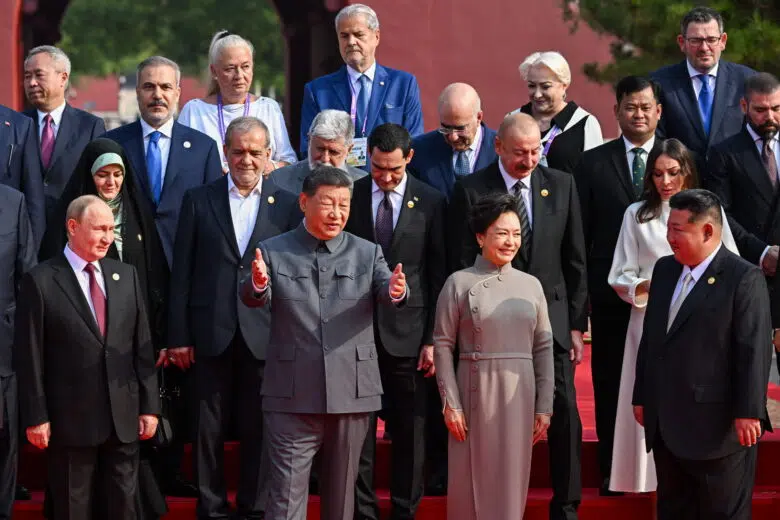
But there is every reason to doubt that. After all, who did Xi Jinping assemble beside him at the entrance to the Forbidden City? From Russia came warlord Vladimir Putin, from North Korea his arms supplier Kim Jong Un, from Iran Massoud Peseschkian, from Belarus Alexander Lukashenko, from Serbia Aleksandar Vucic, and from Myanmar junta leader Min Aung Hlaing.
A “Davos of despots,” as the Frankfurter Allgemeine Zeitung scoffed.
And with this crowd, Xi believes he stands on the “right side of history”?
In truth, what was on parade was the past. It is hard to see why so many Western media voices immediately began to fret about the birth of a new world order and the waning strength of the West.
Such continuity with the Cold War, even after the collapse of the Soviet Union, is remarkable.
The order represented by China, Russia, and North Korea is hardly new. On October 1, 1959, at the Gate of Heavenly Peace, Mao Zedong, Nikita Khrushchev, and Kim’s grandfather, Kim Il Sung, stood together with Vietnam’s Ho Chi Minh to review the parade marking the tenth anniversary of the People’s Republic of China.
Such continuity with the Cold War, even after the collapse of the Soviet Union, is remarkable. True, it was not the old Communist International that gathered last week. That is long gone. But those one-time sister nations remain dictatorships, all of them nationalist, and Russia openly imperialist.
Weakened by Trump
One crucial difference from 66 years ago is that China has achieved a breathtaking economic ascent, and in many industrial sectors it has already overtaken its great rival, the United States. The People’s Republic now produces more than 70% of American economic output, and is on its way to cementing its place as the world’s second superpower.
But if one looks at the West as a whole – North America, Europe, and the democracies of Asia and the Pacific, including Japan, South Korea, Australia, and New Zealand – it still represents a force that far surpasses China and its dreary company of dictators in every respect: economically, scientifically, technologically, and even militarily.
Here, of course, comes the objection: but what about Western political cohesion? Is Donald Trump not doing everything in his power to tear it apart? When U.S. Vice President J. D. Vance snubbed the Europeans with an outrageous speech at the Munich Security Conference earlier this year, there was much talk of “the end of the West as we knew it.”
American democracy is resilient
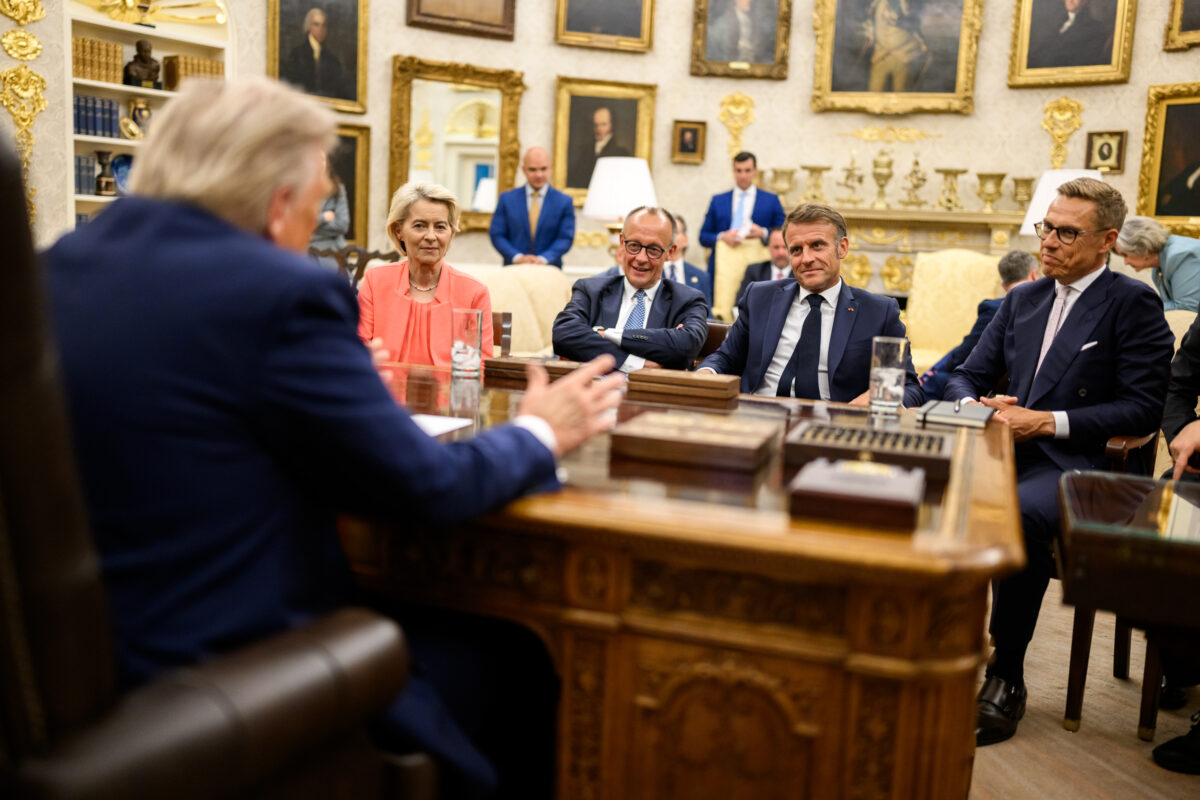
There is no doubt: the unity and credibility of the West are being weakened by Trump’s destructive behavior, and he himself would prefer to rule like a dictator. But American democracy is resilient. Contrary to dire predictions, Trump has not pulled the United States out of NATO. In fact, through his pressure and threats, he has pushed Europeans to take on much more for their own defense. And despite Trump’s diplomatic blunders, solidarity with Ukraine has so far held firm, as last week’s meeting of the Coalition of the Willing in Paris showed.
China and India both see themselves as leaders of the Global South.
Perhaps Trump will one day come to understand what America gains from its allies and partners, rather than constantly driving them away, as he recently did with India. His punitive tariffs pushed Prime Minister Narendra Modi into the wide-open arms of China.
Still, this will not produce a new world order co-shaped by China and India. Both countries see themselves as leaders of the Global South. Their geopolitical ambitions will keep them apart, as will deep-seated historical hostilities.
Let us wait and see who truly stands on the “right side of history.” The Western-led world order is riddled with flaws and injustices; it badly needs reform. But surely Xi, Putin and Kim offer none of the answers.

