
-Analysis-
PARIS — For some, France’s move, along with that of many other countries, to recognize a Palestinian state doesn’t go far enough: it will not put an end to the tragedy that Palestinians in Gaza are facing, and should be backed by sanctions against Israel. For others, however, the official recognition of Palestine is an outrage — an act that rewards Hamas, which is still holding hostages, and may even be an act tinged with anti-Semitism.
Between these two opposing views lies the reality, which can be summed up in three points:
Firstly, the two-state solution has long been the official position of the international community, and of France. It dates back to President François Mitterrand calling for a Palestinian state in his historic speech to the Israeli Knesset in Jerusalem in 1982. That was more than 40 years ago. Nothing has been achieved on this front since the failure of the Oslo Accords a quarter of a century ago, but it is hardly surprising that France continues to support the two-state solution, the only realistic — if extremely difficult — path forward.
Secondly, recognizing a Palestinian state within the framework of a two-state solution is not an endorsement of Hamas, which rejects the very idea of two states. Hamas, like Israeli extremists, seeks a single state stretching from the Mediterranean Sea to the Jordan River.
After Oslo
Yet the accusation persists. Since the October 7 massacre, Hamas has been the easiest way to discredit any peace initiative. But this is a misinterpretation of history. I was living in Jerusalem as a correspondent during the Oslo process, when Hamas suicide bombings derailed negotiations and helped bring Benjamin Netanyahu to power in 1996 against Shimon Peres, who had sought to continue Yitzhak Rabin’s legacy.
Hamas’ attacks shifted public opinion toward Netanyahu, while successive Israeli governments, for their own purposes, encouraged the rise of Hamas in Gaza to deepen Palestinian divisions. The record is clear: Hamas and the two-state solution are contradictory.
At the very least, countries are stating clearly that they will not accept the eradication of Palestinians from their land.
Third of all, Emmanuel Macron chose to launch his initiative with Saudi Arabia, which is now taking shape at the United Nations at a decisive moment. Israel’s offensive in Gaza and its settlement expansion in the West Bank are delivering a final blow to any Palestinian political horizon — or even to Palestinian existence itself, according to the most extremist Israeli ministers.
Save face
Recognition alone will not stop this. That much is true. But at the very least, countries such as France, the United Kingdom, and Canada are stating clearly that they will not accept the eradication of Palestinians from their land, and that compromise remains the only way forward.
If the Franco-Saudi initiative ends here, it will have done little more than save face in a time of collective disgrace. The real challenge lies in what comes next — the so-called “day after” — especially with Israel and the United States firmly opposed.
The vast majority of the world’s states backed the Franco-Saudi initiative in a UN General Assembly vote. But in the end, the final word still belongs to Washington.
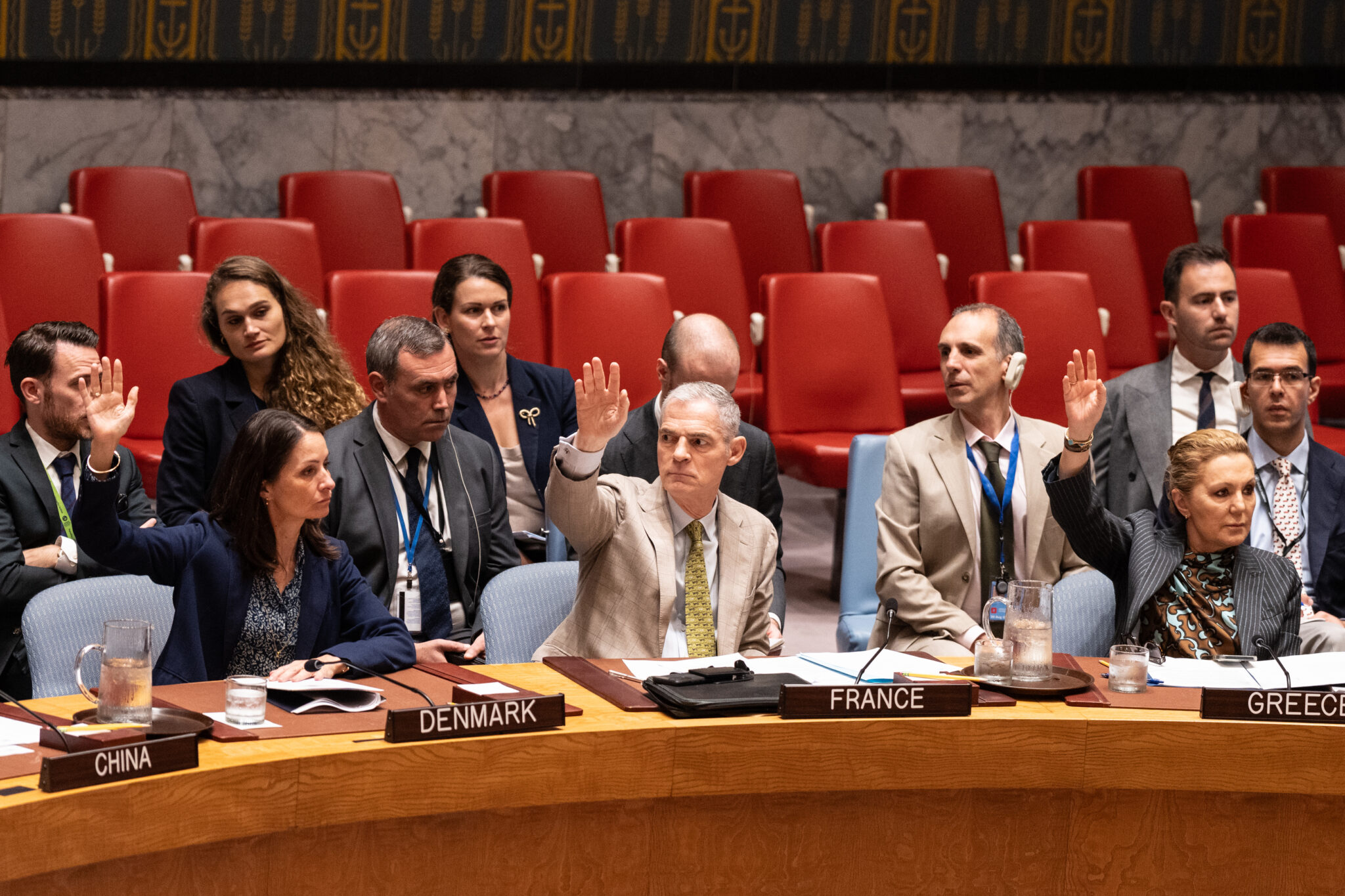
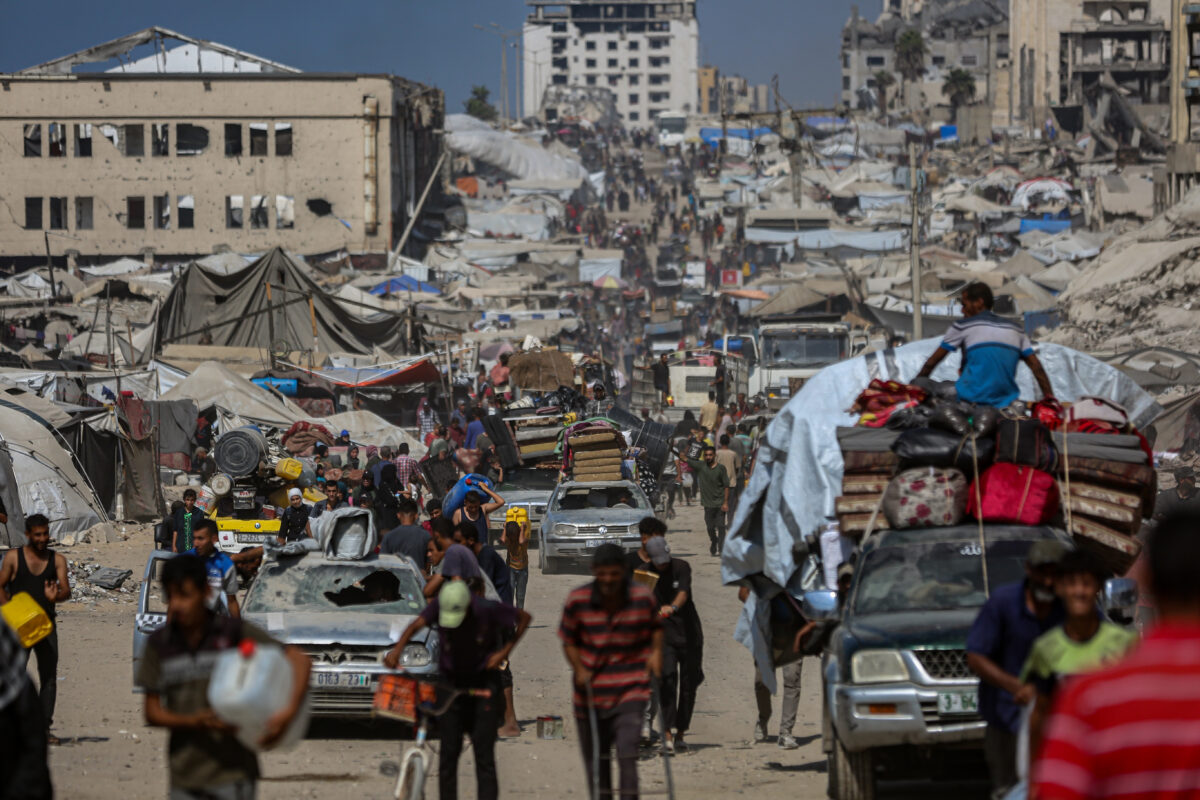
Two scenes to consider: one on Monday afternoon in the glass tower of the UN, the other on Gaza’s bomb-scarred roads of exodus. The first carries the fragile weight of hope; the second, the inevitability of despair. In New York, at least, a group of countries has had the courage to say ‘no’ to pure domination by brute force.