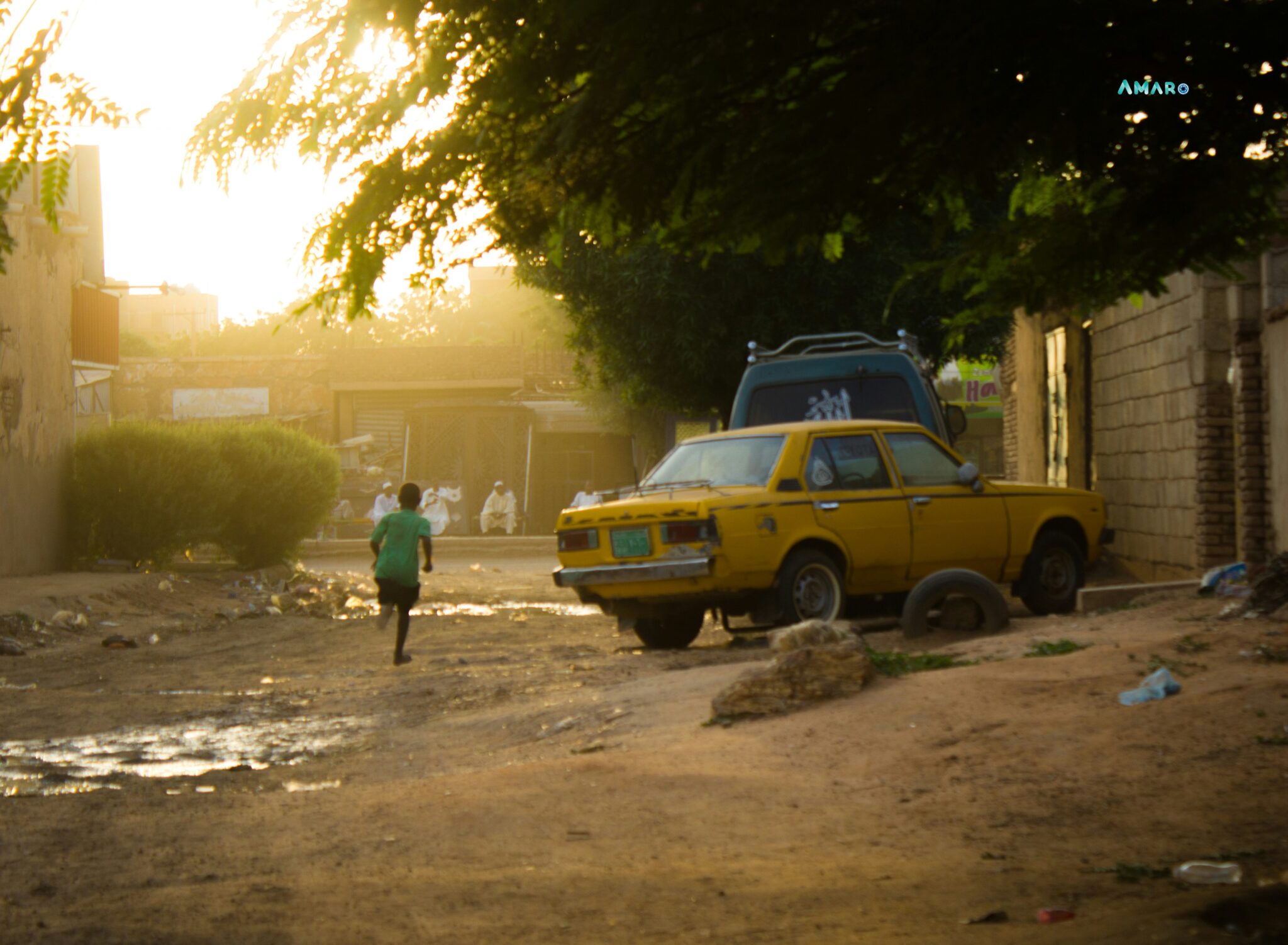
-Essay-
SEVILLE – The diversity of the Sudanese people, their color, their traditions and peculiarities have been and still are a reason for love as much as violence. The recent history of what was once the largest country in Africa — now the third, bears as many silences as shadows, and to shed light on them will be the humble task of these lines.
The army and the RSF (Rapid Support Forces), engaged in a bloody war since April 15, 2023, are carrying on a conflict, invisible to the world, that has caused more than 30,000 deaths and the internal and external displacement of almost 10 million people, reports the Spanish news agency EFE. As we are writing these lines, we are wondering if we will ever be able to return.
How many years will have to pass before we hear about the end of the war? How many generations will it take to heal the wounds? How deep will the scars be? In the past, my father, Mohamed, who has had Spanish nationality since 2003, had to renounce his Sudanese nationality in order to survive. He was unable to say goodbye to his father, Abdelgabar, who died a year after his departure. He had to wait almost 10 years before he could return to Sudan safely and rebuild his life in a country that, months before, meant nothing to him.
In Franco’s Spain
In Spain, he had to bear with the stares, to live in conditions he had never imagined, to go through endless paperwork, to speak a language he had never heard before, to validate studies and try to understand a culture that had little to do with his own… In short, he had to reinvent himself and learn to live again.
If anything is engraved in our family memory, it is my father’s conversations with my maternal great-grandfather, Luis, who was profoundly marked by the Spanish Civil War.
When my parents began their relationship in 1998, my great-grandfather could talk about the Spanish Civil War only with my father, as if he were the only person able to understand him. His cracked voice and the tears in his eyes spoke louder than his own words. My great-grandfather recounted how a tip-off led to his arrest and imprisonment with the death penalty.
Two wars in two different countries, at different times, leaving indelible marks and scars.
“Rafael Iglesias Mateo (Luis, as everyone called him). Day laborer, son of Rafael Iglesias Bautista and María Mateo Beroño, born in 1914, single. On August 23, 1936, he entered the Provincial Prison of Seville with his fellow countryman Ángel González Lancharro. He left the said prison on December 1, 1936 after being taken by order of the Delegate of Public Order, most likely to be forcibly incorporated into the Francoist army. In 1945, he married Felisa Moñino Boza,” writes the historian José Antonio Jiménez Cubero in his book La memoria silenciada. Radiografía de la represión franquista en El Real de la Jara, Sevilla 1936-1950 (The silenced memory. X-ray of Francoist repression in El Real de la Jara, Seville 1936-1950).
He would finally be released, with the obligation to fight on the national side. No one asked him, nor was he ever able to voice his opinion or political feeling. Fear, the suffering of the whole family, his imprisonment and his pending execution marked the rest of his days. He told how he heard the names of his companions who never returned to their cell and who would be forever part of his life story.
Meanwhile, my great-grandmother, full of hope, awaited his release, which would eventually happen, like a miracle, although not as she would have liked since he had to join the ranks, and luckily survived until April 1, 1939, the day the war came to an end. Life was never the same again. Poverty, hunger, political pressure, work on the farm as a lime-burner… everything was part of a life he never chose. Just like my father.
Today in Sudan
Today, since war broke out in Sudan again, history is repeating itself and this time it is my grandmother Huda, my aunts Selma and Leila, my uncle Ahmed and his family and some of my cousins who are exiled in Saudi Arabia. My uncle Rashid became a refugee in Germany with his family.
Still in Sudan are my uncles Omar and Bekri and their families, who since the beginning of the conflict have been displaced from their home in Khartoum to the north of the country; they have had to abandon their jobs, their lives. My cousins are not always able to go to school because formal education has not been regularized for five years (since 2019).
Today, violence is increasing. “Time is running out for millions of people,” the United Nations warns; famine is advancing at a rapid pace and both the army and the FAR are withholding and preventing aid from reaching the population. “We are witnessing… a bloodbath before our eyes,” said Claire Nicolet, from Doctors Without Borders.
Meanwhile, here in southwest Spain, in Gines, near Seville, we helplessly follow day to day a war that seems to have no end. Two wars in two different countries, at different times, leaving indelible marks and scars, and reaching me from both sides: paternal and maternal. Two wars which make me, like many other young people, reflect on the damage and uselessness of violence and how economic and political interests destroy the lives of millions of people.
Since independence
The war in Sudan, along with that in the Democratic Republic of the Congo, has become the bloodiest, most silenced and invisible civil war in recent history. As of June 2024, we can speak of the world’s greatest humanitarian disaster. There are countless deaths, displaced people within the country and refugees in neighbouring countries. Yet, the international community looks the other way.
A war no one talks about; a conflict only those of us who, for one reason or another, have a connection with Sudan know about; a disaster of no interest to politics and that connects countries, such as Russia, Ukraine, Egypt, the United Arab Emirates, Israel, Chad, South Sudan, Iran and others that, without intending to talk about them, are necessary to mention in order to understand the scope of the conflict.
Sudan gained independence as a British colony in 1956. At that time, the government, which emerged from the polls after free elections, gave way to a democratic government led by Ismail al-Azhari. Two years later, in 1958, the first military coup took place, led by General Ibrahim Abboud, who ruled alone until he was overthrown by a popular uprising in 1964.
In 1965, a democratic government emerged again, through free elections, led by Alsadig Al Mahdi, who only lasted four years, being overthrown again by a military coup led by General Jaafar al-Numeiry, who extended his mandate until 1985, when a new popular uprising put an end to his dictatorship.

Exile in Libya
Numeiry successfully signed peace with southern Sudan in 1972. Yet the imposition of Islamic law in 1983 unleashed what would be the second Sudanese civil war, which, just as we are seeing today, was also silenced and made invisible by the Sudanese government. Famine, mass displacement and humanitarian disaster precipitated his overthrow in 1985.
During the time of Numeiry, specifically in 1974, my paternal grandfather, Abdelgabar, was forced into exile in Libya, where he would live and work as a primary school teacher for eight years. During this time he was able to gather his family. My grandmother, my father and my uncles would move there and begin a new life.
My father, who was then a child, experienced as an adventure full of contrasts: longing, joy, fear, sadness, comfort and, deep down, an absolute lack of freedom to fulfill his greatest desire: to return home. They would stay in Libya until, in 1982, a slight attempt at flexibility by the regime allowed them to enter Sudan again. A difficult transition would begin in 1985 after another popular uprising, which would end the Numeiry dictatorship until, in 1986, through new democratic elections, Sadiq al-Mahdi would return to power as prime minister.
My grandparents managed to create a safe space in the turbulent times.
A third military coup, in 1989, would bring General Omar al-Bashir to power, giving rise to the longest and most ironclad dictatorship in the history of Sudan, 30 years. The country’s current situation took root at this time.
Bashir, an instrument of the Sudanese Islamic Front party, would establish a single party close to Islamic fundamentalism that would lead to the inclusion of Sudan on the “list of countries sponsoring international terrorism” by the United States, which linked it to Osama Bin Laden and al-Qaeda. The general’s fundamentalism fueled another new conflict in Darfur (the western region of the country), which would last for years and would cause the International Criminal Court in The Hague to issue two arrest warrants against him on charges of “genocide and ethnic cleansing.”
At that time, my entire family had returned to Sudan. My father, the second of seven siblings, was studying medicine at the University of Khartoum. My grandmother, a seamstress, and my grandfather, a university professor, managed to create a safe space for their sons and daughters in the turbulent times that the country was experiencing.
The return of activism in Sudan
It was not easy for my father. Before Bashir, there was a “tacit rule” that allowed freedom of expression within university campuses. These spaces were places where any political opinion was welcome until the dictator broke the rule. My father and some of his colleagues, all people opposed to the regime, were forced into clandestine activism.
This regime, which opted for the militarization of civilian life, sent everyone working in the civil service to military training and ideological indoctrination camps, with refusal being grounds for losing their jobs and exile. My grandfather, at 60 years old, like the majority of the population, had to accept this order so he would not lose the only means of livelihood and support for his family. Anyone who, in one way or another, did not accept this ideology was expelled from the civil and military service, as were people who owned important companies or properties. Life was controlled and determined by belonging to the dictatorial regime imposed by the Islamist movement.
Bashir turned the war that had begun in southern Sudan in 1955 into a religious war, at a time when religion had no place; he began sending inexperienced young men to the front. From those times, my family carries unprocessed and still heavy grief, friends of my father, relatives, people close to us who will always be part of our history.
In the west, in Darfur, the regime fomented hatred by forming and arming ethnic militias (Janjaweed) to use them as an instrument to commit atrocities. Under pressure from the international community to stop the genocide in Darfur and dissolve this militia, the regime chose to legalize it in 2013, turning it into the RSF (Rapid Support Forces), which today are an important part of the current conflict.

Exile in Spain
In 1995 my father, who had just finished his medical degree, refused to join the military training camps and decided to go into exile. Given an “opportunity” to attend a medical conference in Barcelona, he left the country, requesting political asylum upon his arrival in Spain. This marked the beginning of a new period in which my family relived what had happened 20 years earlier: exile.
In 2005, when Sudan counted 1.9 million deaths and more than 4 million refugees, the Nairobi Peace Agreement was reached, granting southern Sudan the right to self-determination. And in 2011, a referendum was held that, with an overwhelming majority (98.83% of votes), precipitated the division of Sudan: Sudan and South Sudan.
By 2018, the discontent toward Bashir’s government was evident and the people began to rise up after three decades of violence, poverty, isolation, lack of freedom… thousands of people took to the streets until his overthrow in April 2019, when civil society agreed with the armed forces to jointly control power on a temporary basis until democratic elections were held.
Every idea can and should be defended with words of tolerance and respect.
The civilian government, led by Abdalla Hamdok, achieved improvements and broke the country’s international isolation. But the generals who control the army, supported by the RSF, promoted a new military coup in October 2021, in the midst of the COVID-19 pandemic, which broke with the progress made by the civilian government. In their struggle for sole control of power, the army and the RSF began the bloodiest and most devastating war in Sudanese history on April 15, 2023.
Currently, both sides attract groups through ethnic issues, political affiliation and even appeals to religious sentiment to add followers to their ranks, which amplifies the bases of the conflict and gives it an even more complex vision, making it difficult to find solutions and increasing both internal and international misunderstanding.
At this point I can say that I have the strong conviction that every idea can and should be defended with words of tolerance and respect. My mother always reminds me of a phrase by Gandhi that I repeated like a mantra when I was little: “An eye for an eye will leave the whole world blind.”
This story, written under the title Contrasts, won the contest on historical memory of the Aljarafe School, in the family category. Journalist Patricia Simón spoke with the Abdelgabar Carballar family for the TV program La Ventana on Spanish Cadena SER.