-Analysis-
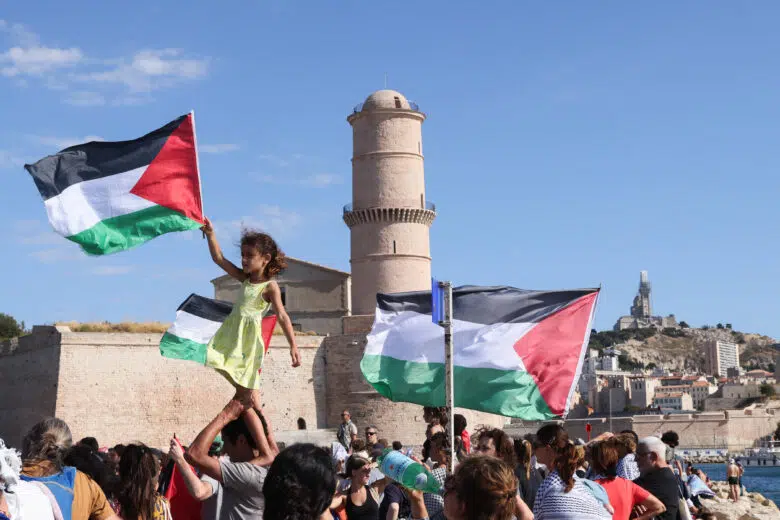
PARIS — We are less than three weeks from the fateful date of September 22. That’s when France will announce that it formally recognizes the State of Palestine. It will take place at the United Nations headquarters in New York, and French President Emmanuel Macron will co-chair a conference on the “two-state” solution with Saudi Crown Prince Mohammed bin Salman.
For the latest news & views from every corner of the world, Worldcrunch Today is the only truly international newsletter. Sign up here.
As this deadline approaches, tensions continue to rise between Israel and France amid a wider global diplomatic standoff that mirrors the real war unfolding on the ground in Gaza as the Israeli offensive on Gaza City gets underway.
Israeli Foreign Minister Gideon Saar accused Macron this week of seeking to “undermine stability” in the Middle East through his “dangerous” actions. The Israeli government is considering possible retaliatory measures, ranging from closing the French Consulate General in Jerusalem to annexing all or part of the West Bank.
Other countries have also announced their intention to recognize Palestine, but Israeli attacks are mainly focused on France, due to its leading role in this matter and its status as a permanent member of the UN Security Council.
UN matters
The U.S., which strongly supports Israel, refused to grant visas to Mahmoud Abbas and the Palestinian delegation that was supposed to attend the UN General Assembly in New York. Normally, this is a formality, even for America’s worst adversaries: Even Yasser Arafat, at a time when he was considered a terrorist by Washington, was able to address the General Assembly. The U.S. decision shocked even Donald Trump’s Saudi friends.
The commitment to recognize Palestine carries weight at a decisive moment.
Furthermore, the threat of annexation discussed within the Israeli government prompted a warning from the United Arab Emirates, one of the signatories to the “Abraham Accords” recognizing Israel: annexation is a “red line” for the Emirates, said Abu Dhabi, which has remained fairly discreet so far in the face of Israel’s radical war in Gaza.
Those who said that France’s decision to recognize the Palestinian state was insignificant were wrong: this frenzy shows that, even if symbolic, the commitment carries weight at a decisive moment.

The fact that Western states such as France, perhaps the United Kingdom (which has yet to confirm its decision), Belgium, and Australia are taking this step demonstrates the blatant illegality of any plan to drive Palestinians out of the Gaza Strip.
A working document leaked to the American press a few days ago showed that the Trump administration was continuing to work on this idea of emptying Gaza of its inhabitants, which is a war crime under international law.
Today, Israel has a government with strong messianic overtones, which sees a historic opportunity to build the “Greater Israel” that Israeli Prime Minister Benjamin Netanyahu himself referenced just last month. It is therefore working to delegitimize all those who oppose this plan, calling them accomplices of Hamas, even though France and its Arab partners have clearly ruled out the Islamist organization’s involvement in post-war Gaza.
Thus between now and September 22, the pressure and maneuvering will multiply — in direct proportion to the stakes at hand.