-Analysis-
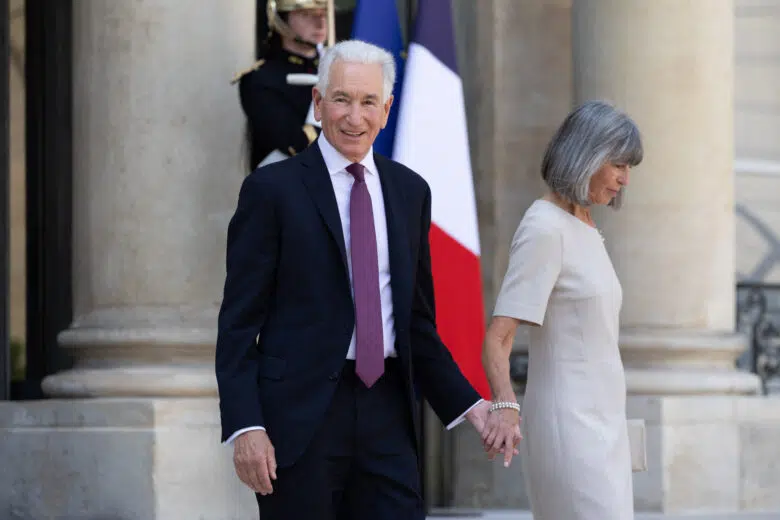
PARIS — Summoning ambassadors is a way for the government to show its displeasure; it is usually reserved for countries that are, shall we say, unfriendly. When the U.S. ambassador is summoned by the French Ministry of Foreign Affairs, it means that diplomacy is in rough, dangerous waters. And that is what is happening with the Trump administration’s new representative, Charles Kushner, who, it should be remembered, is also, and perhaps above all, the father of Jared Kushner, U.S. President Donald Trump’s son-in-law.
For the latest news & views from every corner of the world, Worldcrunch Today is the only truly international newsletter. Sign up here.
In this case, there is the form and there is the substance. In terms of form, the ambassador, who is not a career diplomat, violated diplomatic rules prohibiting him from interfering in the internal affairs of his host country. Yet this is not the most serious issue.
The most disturbing aspect of the ambassador’s letter to President Emmanuel Macron is that by attacking France on the issue of antisemitism, Kushner is consciously participating in a campaign of destabilization. The issue at stake is simple: France’s recognition of the State of Palestine next month.
Exploiting the issue
Kushner’s letter comes after Israeli Prime Minister Benjamin Netanyahu sent one to Macron a few days ago, in which he accused the French president of adding fuel to the antisemitic fire with his decision on Palestine. Kushner also refers to this decision to recognize Palestine, and indicates at the bottom of his letter that he has copied Trump and Netanyahu.
It so happens that Kushner was in Israel last week, and he himself posted a photo with Mike Huckabee, the U.S. ambassador to Israel, an outspoken supporter of settlement in the Palestinian territories, and a friend of Netanyahu.
The government Kushner represents is not shy about interfering in European affairs.
The issue of antisemitism is too serious to be exploited in this way. Kushner echoes the very real resentment felt by part of the Jewish community over the rise in antisemitic acts in France. But he is using it as a diplomatic weapon, which weakens his argument and risks achieving the opposite of what he is aiming for.
On Monday, Macron sought to show that he would not be intimidated by this campaign: He described the Israeli strike on a hospital in Gaza, which killed about 20 people, including journalists working for U.S. and UK agencies, as “intolerable.”

A taste of what’s to come
What happens next will depend entirely on the attitude of Kushner, who, it should be noted, was backed by the U.S. State Department after being summoned by the French foreign ministry. If the ambassador decides that public interventions in French affairs are his “trademark,” things could get rocky.
This is especially true given that the government Kushner represents is not shy about interfering in European political affairs, generally to the benefit of the far right in Germany, the UK and France, or nationalist populists in Poland.
Since Trump entered the White House, Europe has been faced with the unprecedented situation of having its main ally also become its ideological adversary. We will have to prepare ourselves: Kushner’s letter may be just a taste of what awaits us between now and 2027, when France’s next presidential election will be held.