-Analysis-
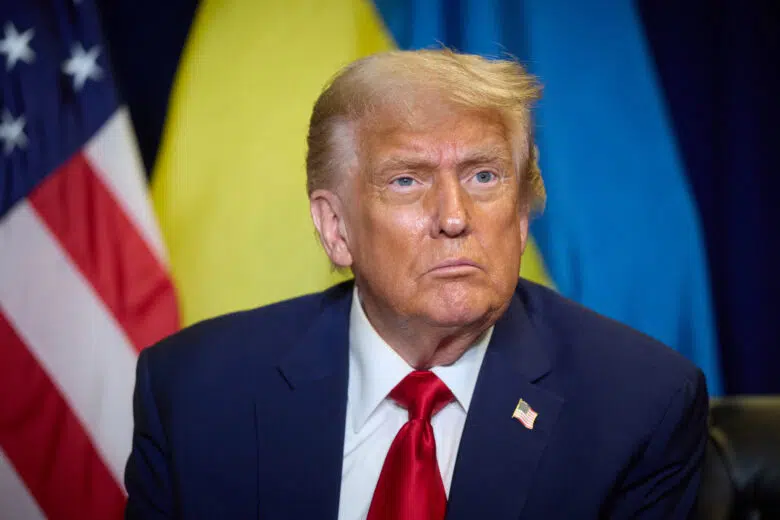
PARIS — Should Russian planes that enter NATO airspace be shot down? “Yes,” replied U.S. President Donald Trump without hesitation, visibly disappointed by his “friend” Russian President Vladimir Putin. A few hours earlier, Trump’s foreign policy chief, Marco Rubio, had expressed a significant nuance: “Yes, if they attack.”
For the latest news & views from every corner of the world, Worldcrunch Today is the only truly international newsletter. Sign up here.
French President Emmanuel Macron said on Wednesday that it may be necessary to “step up our response,” but “without opening fire.” Germany, meanwhile, is warning against the trap of escalation.
This dissonance on an issue as serious as an act of war raises questions: Does NATO not have pre-established rules of engagement for situations like this? Or is it Trump’s presidency introducing a disruptive element that is throwing even the most well-oiled machine into disarray?
A different context
The increasing number of incidents certainly calls for unambiguous responses that are accepted by all member states. On several occasions in recent weeks, NATO aircraft have taken off and anti-aircraft batteries have been activated in response to intrusions by drones and, in two cases, Russian aircraft into the airspace of several countries, including Poland, Romania and Estonia. That’s a lot, and the response has not been entirely convincing.
Opening fire on a Russian aircraft, even if it has intruded into the airspace of a NATO country, is not an easy decision. There is a precedent in everyone’s minds: In 2015, NATO member Turkey shot down a Russian Sukhoi jet that had ventured into its airspace. The tension was managed between Putin and his Turkish counterpart Recep Tayyip Erdogan, who have a very special relationship.
European NATO members have been used to relying on their American “big brother” for too long.
The context is different with the war in Ukraine. An aerial incident between a NATO army and the Russian air force would risk setting off a dangerous chain reaction that everyone has been trying to avoid since the Russian invasion began three and a half years ago.

But these repeated incursions are intended precisely to sow confusion among the countries supporting Ukraine, even more than to threaten them with military force. Contradictions and fear of conflict are exactly what Putin wants to instill in his Western counterparts.
The Trump variable
Once again, we circle back to Trump’s position on this issue, as on others. European NATO members have been used to relying on their American “big brother” for security decisions for too long to now have the nerve to decide on their own. And even if they did become more independent, their armies depend on U.S. intelligence and protection.
The decision on the rules of engagement will therefore be decided in Washington. Over the past seven months, Trump has made several U-turns on his Ukraine stance, culminating in his latest shift on Tuesday after his meeting with Ukrainian President Volodymyr Zelensky.
After pushing Ukraine to compromise, he now believes that it has the means to recover the areas occupied by Russia. Does he really believe this, or is he just trying to get Putin to be more conciliatory? No one knows, not even Zelensky, who said he was surprised by the U.S. president’s new stance.
Despite his borderline loving relationship with Putin, from whom he hoped for greater cooperation to end the war in Ukraine, is Trump prepared to risk an aerial skirmish with a Russian jet? The U.S. president’s “yes” is certainly not his final word, but if he is serious, it completely changes the situation on Europe’s eastern flank.