-Analysis-
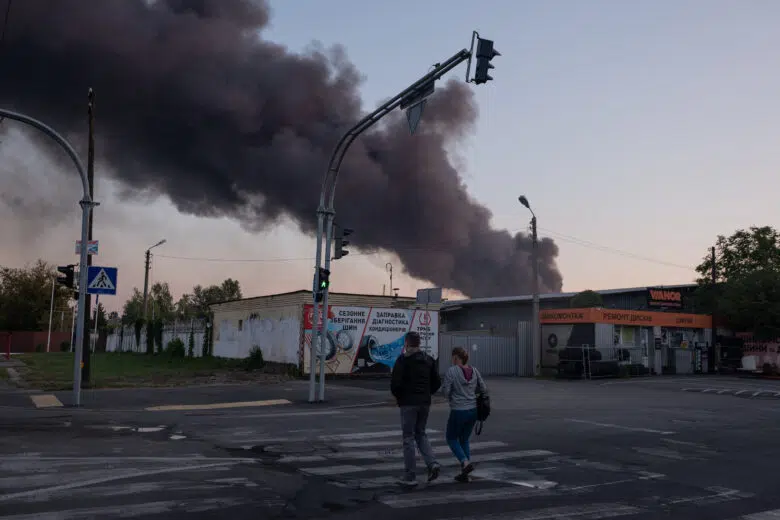
PARIS — It was a double “first” that contradicts all speculation about a negotiated settlement of Russia’s war in Ukraine. At dawn Sunday, Russia launched its biggest air assault in more than three years of war: 805 combat drones, nine cruise missiles, and four ballistic missiles. And for the first time, it also targeted the seat of the Ukrainian government in Kyiv, with footage showing significant damage.
For the latest news & views from every corner of the world, Worldcrunch Today is the only truly international newsletter. Sign up here.
This escalation is more than symbolic: It carries political weight, coming one month after the summit between Donald Trump and Vladimir Putin. That meeting in Alaska produced no breakthrough toward genuine negotiations.
The Russian president has suggested Volodymyr Zelensky travel to Moscow rather than to a neutral location, effectively signaling a rejection without having to state it explicitly. Thus, as Trump’s push for negotiations is ignored, Ukraine faces massive bombardments — with no comment from the White House.
Record number of drones
Another threshold has been crossed: the number of devices launched against Ukraine keeps rising — up 65% since Trump’s return to the White House, according to the French global affairs site Le Grand Continent. Compared to the same period in 2024, the pace of air strikes is 15 times higher than last year. This is the result of mass production of Iranian Shahed drones, now manufactured on assembly lines inside Russia.
Those who want to help Ukraine resist are always a step behind.
According to Ukrainian authorities, air defenses Sunday shot down the vast majority of Russian drones, four of the nine cruise missiles, but none of the ballistic missiles. This highlights both the progress of Ukraine’s air defense — such as producing its own “anti-drone drones” that destroy Russian Shaheds mid-flight — and the hard limits of what Ukraine can do against a more powerful adversary that has fully entered a war economy with superior production capacity.
That is where Western aid to Ukraine comes in. It may sometimes seem that the Ukrainian president is constantly asking for help, but the reality is that those who want to help Ukraine resist are always a step behind.

Winter coming
Efforts are multiplying to provide Ukraine with the necessary equipment, especially with winter approaching. Russia will likely once again target power infrastructure to sap civilian morale during the cold months ahead. Europeans are doing what they can, but their production capabilities are scaling up too slowly.
There is a tangible price to pay with such a transactional American president.
The key issue is the Patriot air-defense batteries, made in the United States, currently the most effective in service. France and Italy are working on a new generation of their SAMP/T system that will be able to intercept ballistic and hypersonic missiles, but it will not be operational for several years.
In the meantime, a recent negotiation between Europeans and Donald Trump has led to a surprising conclusion: If Ukraine wants Patriots, Europe must buy them from the United States. For there is a tangible price to pay with such a transactional American president: those who seek protection will always have to pay for it.

