
-Analysis-
PARIS — Bringing together European leaders in a capital city where the airport was recently closed due to the appearance of unidentified drones is enough to make security officials shudder. To help Denmark secure its airspace, France has sent an anti-drone helicopter and a jamming system, as have the United Kingdom and Germany. France also intercepted a Russian cargo ship from which the drones may have been sent.
Yet the “intruders” in Copenhagen turned out to be only small, commercially available drones — not Russian Shahed or Geran models, which are the size of small aircraft, like the ones that entered the airspace of Poland and Romania.
Such is the climate in which the 27 EU heads of state and government have been meeting since Wednesday, and joining them on Thursday are the rest of the continent for the 47-member European Political Community, including the United Kingdom and Ukraine. The main thing on the agenda is Russian President Vladimir Putin, the ever threatening neighbor.
Only the beginning
Danish Prime Minister Mette Fredriksen set the tone on Wednesday, when she denounced Russia’s “hybrid warfare,” i.e., the use of unconventional means such as drone intrusions, cyberattacks, sabotage, and disinformation. According to her, this is the most dangerous situation Europe has faced since World War II. “This is only the beginning,” she warned, calling on her European colleagues to be better prepared.
The fact that this call to action comes from Denmark is significant. Copenhagen has traditionally stayed out of defense issues within the EU, and has even had its stance written into treaties. Denmark has come a long way since the invasion of Ukraine.
Its push toward greater defense integration has another motive: Donald Trump’s hostility earlier this year, when the U.S. president demanded Denmark hand over Greenland, a territory linked to Copenhagen. The episode came as a severe shock to one of NATO’s most loyal members.
Europe’s drone debate
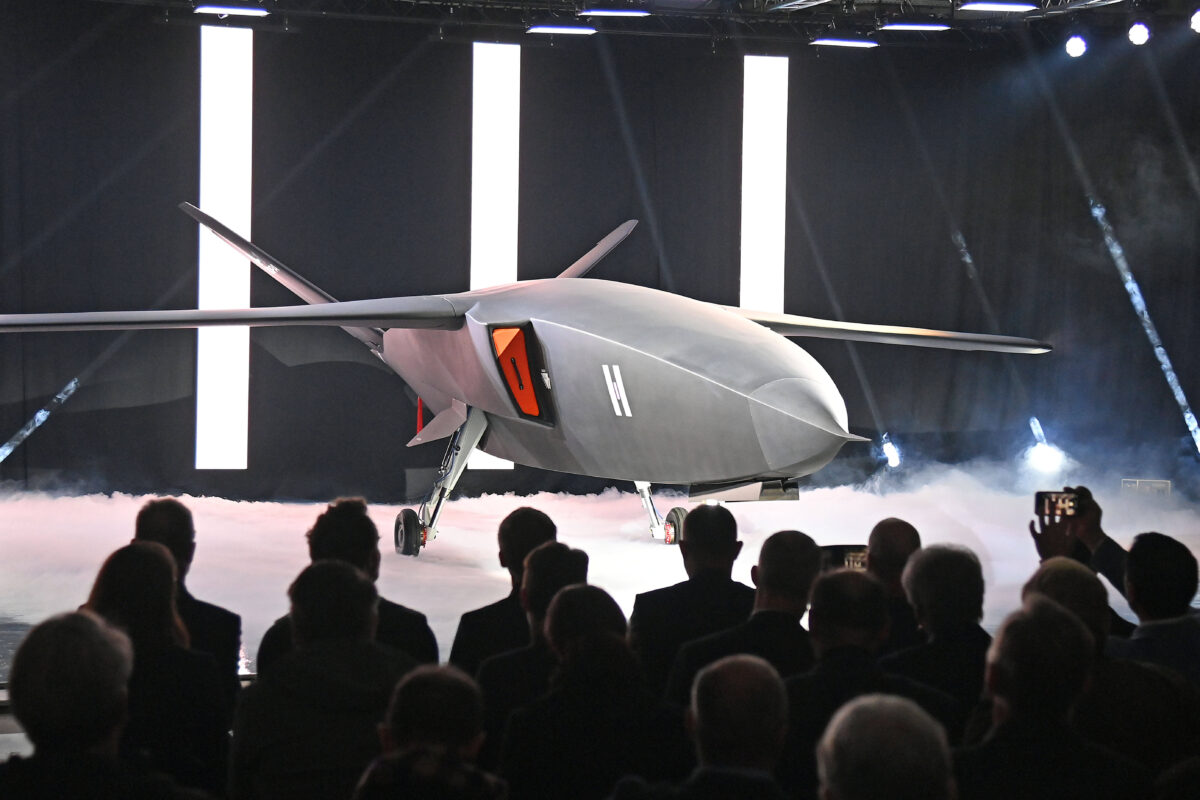
The drone issue is on everyone’s mind. European Commission President Ursula Von der Leyen has proposed an “anti-drone wall” in Eastern Europe, made up of sensors and defense systems along the long common border with Russia and Belarus.
But experts warn against building an anti-drone “Maginot Line,” arguing that such defenses would be of questionable effectiveness across such a vast area. Even the world’s most advanced system, Israel’s Iron Dome, cannot intercept everything, and it operates over a far smaller territory.
Putin’s advantage lies in being the sole decision-maker.
Europe must therefore find the right balance: avoiding overreaction to intrusions that are largely psychological, meant to spread panic and weaken public support for Ukraine, while also not lapsing into passivity, which would be dangerous amid an escalating confrontation with a Russia that is failing to achieve its objectives.
Putin’s advantage lies in being the sole decision-maker, while the EU27 often struggle to come to an agreement, particularly because some members remain close allies to Moscow. This is the price of an alliance of democracies, and one that Putin is adept at exploiting, turning their contradictions and weaknesses to his benefit.