-Analysis-
PARIS — It never takes long for disputes between China and Japan to escalate, with insults and political tensions always ready to run high. A Chinese consul spoke of “cutting the throat” of the Japanese prime minister, while a Chinese editorialist has called her an “evil witch.” The Chinese Foreign Ministry has been scarcely more diplomatic.
For the latest news & views from every corner of the world, Worldcrunch Today is the only truly international newsletter. Sign up here.
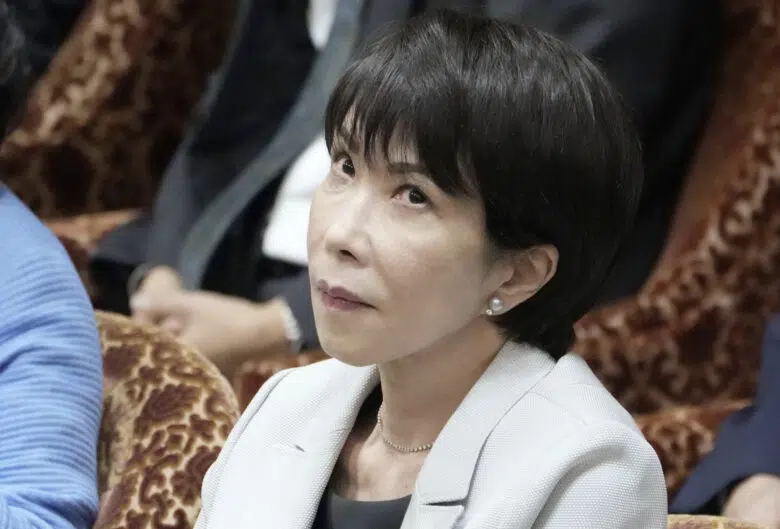
It was a statement last Friday in Parliament by the new Japanese head of government, Sanae Takaichi, a self-proclaimed “iron lady,” that reignited old embers that had never fully burned out. She said that a Chinese invasion of Taiwan could be considered by Japan as an “existential threat” and would call for a military response.
No Japanese leader had ever gone so far in threatening Japanese military involvement.
To the Chinese government, which considers Taiwan’s affairs to be an internal Chinese matter, this statement constitutes nothing less than interference in Chinese politics. Every day since the statement was made, Beijing has been raising its voice against its former World War II enemy, at the risk of fueling the nationalism already present among young people.
Deal fears
The Taiwan issue is hardly new, but the context is. Leaders on the island, which Beijing claims as its own, are growing increasingly wary of Donald Trump’s behavior. The U.S. president has scrapped major arms sales to Taiwan, even if he recently approved a smaller deal, and he has reverted to a policy of strategic ambiguity where Joe Biden had been more forthright in his support.
Many in Taipei fear Trump would be willing to trade them away in a broader “deal” with Beijing if the opportunity arose.

By speaking out in an unprecedented way, the new prime minister wants to signal to Beijing that Washington’s ambiguities should not be read as a green light for stepping up pressure on Taiwan.
Japan, which ruled what was formerly known as Formosa for more than half a century, has long maintained good relations with the island. Years ago in Taipei, several officials told me they counted on Japanese protection should the United States falter.
Leaving a mark
Taiwan’s leaders are also widening their diplomatic channels. Vice President Hsiao Bi-khim was allowed to address lawmakers at the European Parliament in Brussels for the first time, a move that was immediately denounced by Beijing.
In Tokyo, officials have tried to cool tempers by pointing to the inexperience of the new prime minister, who only took office last month. Still, her remarks clearly reflect her political worldview.
Japan remains the only country in the region capable of countering China’s hegemonic ambitions if the United States shows signs of weakness.
This crisis will leave a mark. This is a time when global power balances are shifting, particularly in East Asia under the shadow of the Chinese giant. Japan remains the only country in the region capable of countering China’s hegemonic ambitions if the United States shows signs of weakness.
Although Taiwan has slipped somewhat from the spotlight in recent years, overshadowed by the wars in Ukraine and the Middle East, it remains one of the world’s flashpoints. Military action is not Beijing’s only path to “reunification” on the Hong Kong or Macao model, but Chinese leaders have never ruled it out.
Takaichi may have said something a Japanese prime minister is not supposed to say, but at least she has reminded Beijing, and the rest of the world, of the explosive potential of any resort to force in Taiwan.