-Analysis-
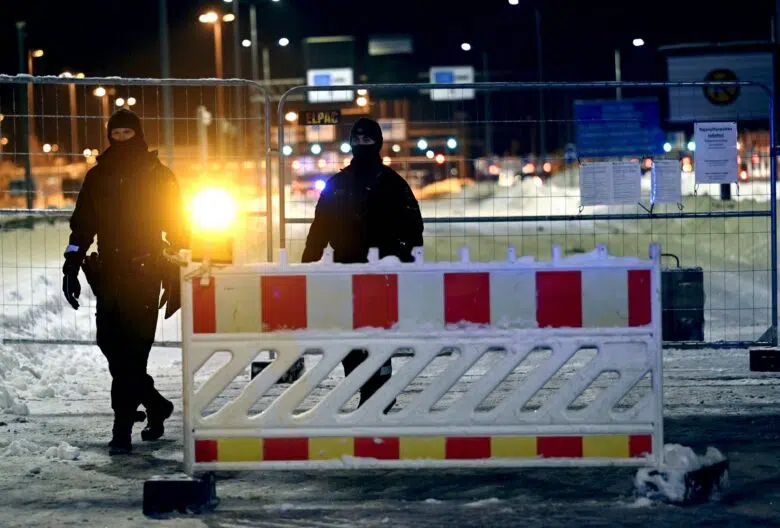
VIROLAHTI — Here at the far eastern edge of Finland, the end of the Western world is visible. I stand at the border and look across to Russia. I see red lights, barriers, roadblocks and signs pointing to St. Petersburg, which is no longer reachable from here — even with my Russian visa.
For the latest news & views from every corner of the world, Worldcrunch Today is the only truly international newsletter. Sign up here.
The new Iron Curtain across Europe now separates the two neighbors with a solid, impenetrable line that runs for 1,340 kilometers. A decade ago, more than 3 million people crossed back and forth every year along this motorway. Today, the region has become one of the most dangerous and volatile borders between NATO and the EU.
Antti Virta, commander of Finland’s southeastern border district, stands in front of the barriers and roadblocks. He is addressing a group of journalists who have come to Finland at the invitation of the EU delegation. The situation is stable, he says, but the Russian side is constantly menacing. “Tomorrow we could face a completely different situation.”
The Russians regularly jam GPS signals. There is also a channel across the river to allow communication in an emergency. “We have lived here with the Russians on the other side for generations, and we are always on guard.”
Closing the border
December 2023 marked a decisive moment. At that time, Russian President Vladimir Putin sent thousands of refugees to the border to stir unrest in Finland. It resembled what Belarus had done two years earlier, transporting people from Asia and Africa to the Polish border by bus. At the Russian-Finnish border, where refugees had previously been almost nonexistent, more than 1,500 people applied for asylum in just two months, Virta says.
Once Finland closed its border crossings, the flow of refugees immediately stopped. I too was no longer able to cross the border into the EU from my work base in Moscow. I had bought a bus ticket for the St. Petersburg-Helsinki route in November 2023, but with the border sealed, I had to forget about that plan.
The Finnish government did not stop there. It built a 3.5-meter-high green fence topped with barbed wire both north and south of the crossing. Cameras and heat sensors were placed every 50 meters. Virta explains that the fence was constructed only in the southern stretches of the border with Russia, with surveillance technology “so that we can detect anything and everything approaching.” In the north, there is no fence: The harsh weather and sheer vastness of the land serve as a natural barrier.

Finland misses Russian tourists
The barrier cuts across fields, meadows and forests filled with pines and birches. Small farms with grain silos, barns and wooden houses painted in oxblood red are scattered here, some barely a hundred meters from the fence. This area, which has served as a transition zone since the fall of the Soviet Union, is now the last western outpost before Putin’s empire begins. And that has a deep impact on those who live here.
In a brewery near the border, a representative of the regional administration explains what the closure has meant. “It was a huge shock for us,” says Petri Tolmunen. More than 150,000 people live in the Virolahti region, many with close personal ties to Russia. Some married there and crossed the border often. Some speak Russian. “Many Russian tourists came to us,” Tolmunen says, “for weekends or even just day trips.” Quite a few even bought homes in Finland. The pandemic had already reduced visits from Russia, but since 2023 they have come to a complete halt.
Many people in our area lost their jobs.
The hard border has also hit the economy. It resembles the situation in Germany, where Bavaria’s dairy industry and small businesses complain about losing access to the Russian market. Many of them fault Berlin and Brussels for sanctions, even though it was Putin who imposed a food embargo against the EU. In Finland, the blow has been far harder, but people are reacting very differently than the Germans.
“Many people in our area lost their jobs,” Tolmunen says. Near the border, an entire shopping center with outlet stores now stands deserted. No people, no shops, no revenue. Paper mills in the region had relied heavily on Russian clients and suppliers. The rail terminal and the truck transfer points are abandoned. The regional administration estimates losses for the area at well over 100 million euros. So far there has been no state aid, but Tolmunen hopes the EU will eventually provide funds for the border region.
A new reality
No one has more reason to resent the closure of the crossings and the new fence than the people living right along the border. Who is responsible for the Iron Curtain now in front of their homes? For Tolmunen, the answer is obvious: Russia, with its war in Ukraine and its hybrid attacks on the EU, including the organized movement of refugees.
Even so, he believes shutting the borders was “absolutely right.” “Every one of us understood that.” Now, he says, they must adapt to the new reality.
And if Russia tries to challenge this border as well, it will run into a wall of resistance. Almost 80% of Finns are prepared to defend their country. The mood is very different in Germany. It seems that a certain closeness to Russia is needed to grasp what is happening behind the Iron Curtain.

