-Analysis-
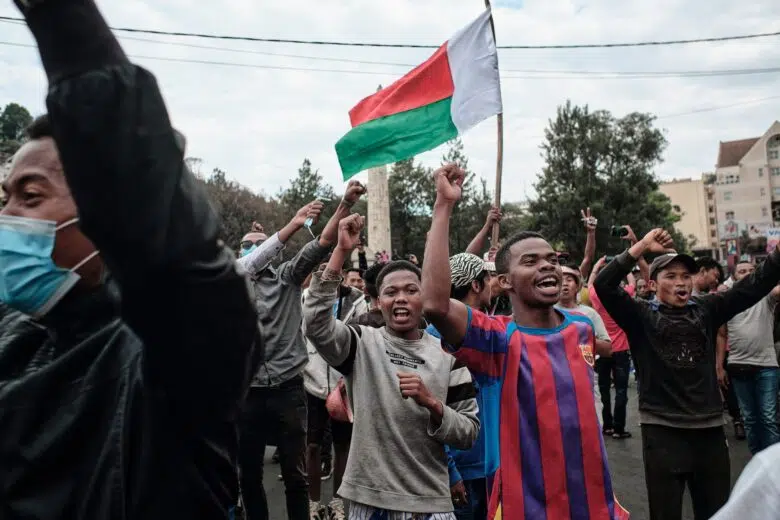
PARIS — It’s fair to call it a generational revolt when the insurgents themselves name their movement “Gen Z,” referring to young people who are now between the ages of 13 and 28. The wave of uprisings has spread rapidly — beginning in Asia, with Bangladesh, Nepal, Sri Lanka, and Indonesia, then moving to Africa, including Madagascar, and most recently Morocco. Now, unrest is even reaching Peru in Latin America.
For the latest news & views from every corner of the world, Worldcrunch Today is the only truly international newsletter. Sign up here.
In Morocco, the label “GenZ-212” — 212 being the country’s international dialing code — has gained traction on social media, fueling protests that have been met with harsh repression. Two people were killed in Laqliaa, near Agadir, after protestors attacked a police station. Clashes in Tangier and Casablanca have resulted in more than 400 arrests, dozens of injuries, and significant property damage.
Despite the diversity of countries involved — spanning continents, cultures, and political systems — these revolts share several common traits. First, Gen Z is the first truly digital generation, and unsurprisingly, the movement has grown online. Its preferred platform is Discord, originally a hub for gamers but now home to over 600 million users worldwide. Discord has already played a political role; in the United States, it was reportedly used to help coordinate the January 6, 2021, assault on the Capitol.
Second, the revolts lack recognized leaders or figureheads, reflecting a deep mistrust of political parties and trade unions. This recalls aspects of the “Arab Spring” in 2011, which shook much of the Middle East and North Africa.
Political shockwaves
Finally, the movements are united by a demand for an end to corruption and a push for social justice. In Morocco, protesters chant, “The people want an end to corruption,” criticizing lavish state spending on infrastructure projects relating to the upcoming African Cup of Nations and the World Cup, while health and education systems remain in crisis.

What are the political consequences of these uprisings? Inevitably, it is the ruling powers that pay the price. In Nepal, the government was even overthrown and replaced by a team tasked with organizing elections to be held in March 2026. It remains to be seen whether the young protesters will decide to put forward candidates, but this would be an interesting development.
Will other countries join in.
In Madagascar, the government is under pressure as protests continue. Morocco is a special case: the monarchy has been spared by the slogans, which are aimed at the political establishment and the country’s public management.
African wave?
Back in 2011, King Mohammed VI managed to turn around the beginning of the Arab spring in his country with constitutional reforms. This time, he has remained silent.
The big question is what will happen next. Will other countries join in, notably elsewhere in Africa, where the biggest gap between the youth of the population and the age of its leaders is the most significant?
The generational divide is turning into a political divide, and once again an unexpected kink in the road is disrupting political dynamics that had seemed to be under control. Gen Z is coming of age and making its voice heard: many autocrats — though they are far from the only ones — must now consider the possibility that the same upheaval could reach their own countries.