-Analysis-
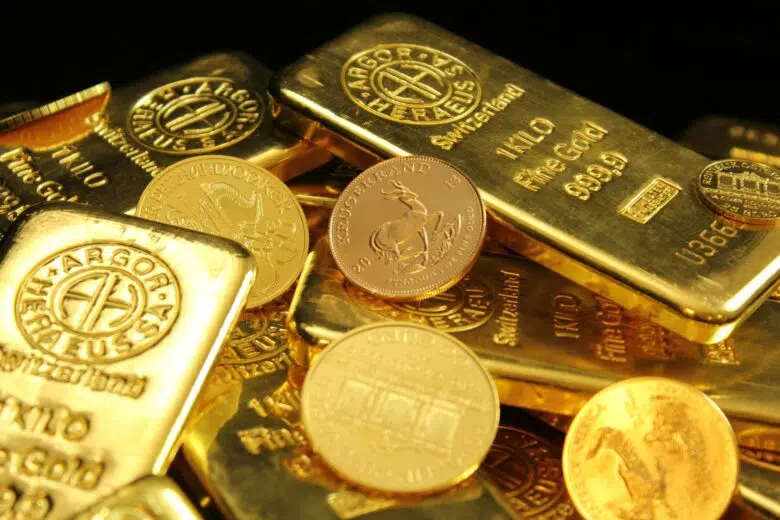
HAMBURG — Gold is not really a particularly compelling investment. It is so soft that, unlike other metals, it bends under pressure. You cannot eat it. And, truth be told, it is not even especially beautiful to look at (just consider how Donald Trump’s obsession with the precious metal disfigured the presidential office in the White House).
For the latest news & views from every corner of the world, Worldcrunch Today is the only truly international newsletter. Sign up here.
Yet the price of gold has just hit a new all-time high. And this surge, which keeps breaking records, increasingly calls for some explanation.
The case against gold is simple. You can rent out a house, collect dividends from a stock, or receive interest on a bond, but gold produces absolutely nothing. Anyone who invests in real estate or the stock market benefits from economic growth, rising prosperity, higher wages and larger profits. In short, from the advance of civilization. A gold bar, however, is a gold bar. It generates no income.
This case can be expressed in figures. New York University maintains a database of the performance of major financial assets since 1928. Someone who invested $100 in gold back then would have the equivalent of $12,649 today, without adjusting for the loss of purchasing power from inflation (because the dollar was pegged to the price of gold between 1945 and 1971). An investor in the shares of major U.S. companies would now have $982,817, dividends included.
No place in a stable world
A few years ago, a team of economists led by Moritz Schularick, now head of the Kiel Institute for the World Economy, published a study called The Rate of Return on Everything. They examined the performance of financial assets in major Western countries between 1870 and 2015. Their conclusion: the highest long-term annual returns, again before inflation, come from real estate (11.6%), followed by stocks (10.75 %) and bonds (6.1%). Gold did not even make the list.
In a civilized world, gold has no place in an investor’s portfolio. Just like Bitcoin, silver or other so-called crisis currencies with no earning power of their own. The only real question is whether we still live in such a world. Because if the principle of steady progress no longer holds, and even regression becomes possible, the return ratios on financial markets will change, too. What do you do with a German government bond if Russia drops a nuclear bomb on Berlin?
The odds of such events are not high, but they are no longer zero.
In an apocalyptic scenario, gold would not get an investor very far either. As noted, you cannot eat it, and it is far too heavy to fashion into a sword for fending off marauding gangs. Anyone who seriously expects the collapse of the state and social order should stock up on weapons and food and retreat to an island in the North Sea (how much does Föhr island actually cost?) or a well-fortified castle in Franconia (though the risk of siege would have to be considered). Large cities would not be recommended then. Not even the quiet, comfortable district of Prenzlauer Berg in Berlin.
Even if things never sink to such extremes, disruptive shocks remain conceivable well below the threshold of apocalypse. A U.S. default would unleash major financial turmoil, as would a civil war, or the breakup of the European Union. The odds of such events are not high, but, and this is perhaps the new reality, they are no longer zero.

A self-fulfilling prophecy
Political irrationality, or more bluntly, political idiocy, has undeniably become a factor in financial markets. If President Donald Trump were to decide to put part of the United States’ foreign exchange reserves into Bitcoin, then the price of Bitcoin would inevitably rise. This holds whether or not cryptocurrencies are viable means of payment (they are not). The same logic applies to investments of all kinds: Facts carry their own normative force.
This is the principle the great economist John Maynard Keynes once illustrated with his beauty contest example. To pick the winner, you do not choose the candidate you personally find most beautiful, but the one you expect most judges will consider beautiful. That person will win.
The point is that, with rare exceptions, things have no intrinsic value. Their price reflects what society is prepared to pay for them. A glass of water costs more in the desert than on the shores of Lake Constance.
If the belief takes hold that humanity’s best days are behind it, the price of gold, along with other so-called end-time assets, will continue to rise. That makes them attractive financially. The error of reasoning among many crash prophets is that they assume an inherent tendency toward self-destruction within the welfare state. This tendency does not exist, so the crash is not economically inevitable. But if humanity brings it about out of pure greed or stupidity, the outcome will be the same. We have already come this far.

