
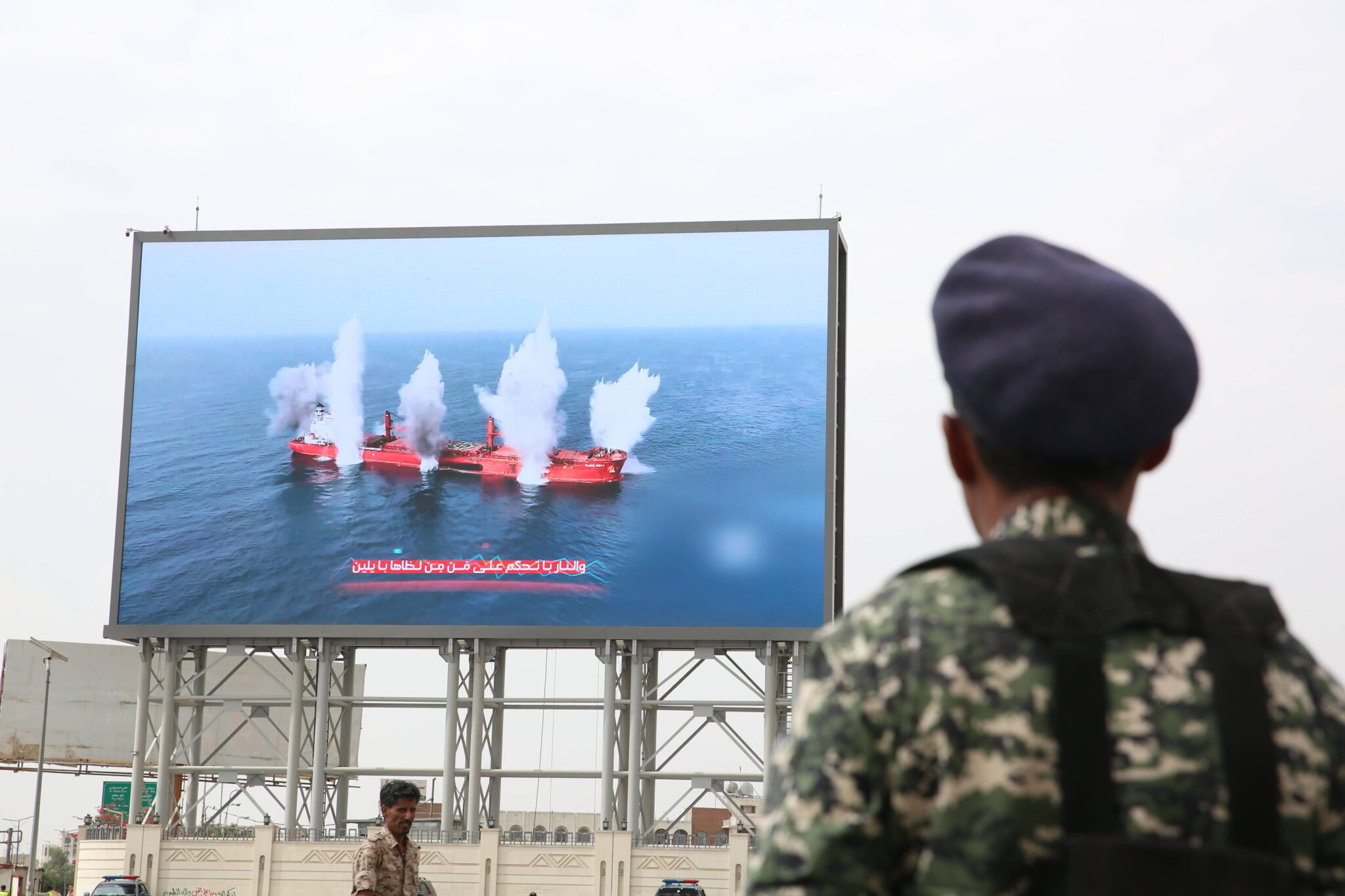
BERLIN — The international shipping industry has recently been presented with a new and rather unusual online service, courtesy of the Houthi rebel group. Known for their frequent attacks on cargo ships and oil tankers in the Red Sea and the Gulf of Aden, the Houthis have launched a platform under the authority of the HOCC, which, somewhat confusingly, stands for “Humanitarian Operations Coordination Center.”
On its website, the group informs shipowners and operators which vessels are scheduled to be targeted with drones, rockets or air-dropped bombs.
For the past two weeks, it has also offered a service called “Safe Transit Coordination Request,” which allows operators to register their ships before passage, providing details about possible connections to hostile states. According to the Houthis, this ensures that the freighter will not come under fire. The militia promises a reply within 24 hours and free processing.
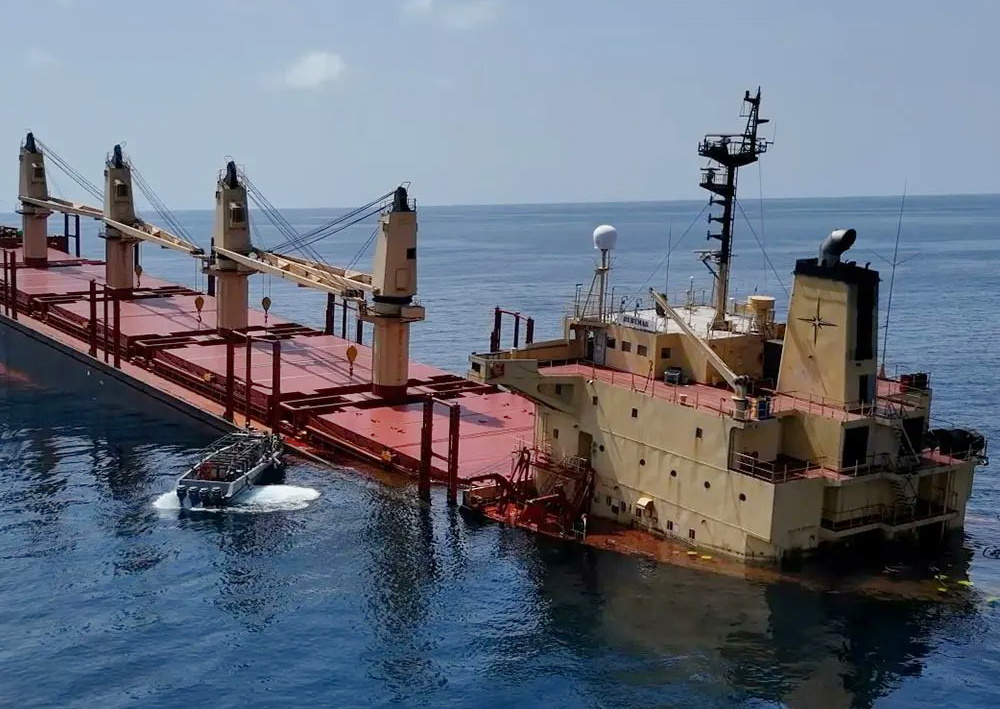
The polished English and almost helpful tone of the Houthis’ website seems macabre when set against the brutal attacks with which the rebels have terrorized shipping in the Red Sea since late 2023. Over the past two years, more than 115 such incidents have been recorded, several of them fatal, and at least four ships have been sunk.
Intensified attacks
After a period of relative calm, Houthi attacks have once again intensified: Just this July, the Magic Seas and Eternity C, both run by Greek shipping companies, were sunk. In the latter case, at least four crew members lost their lives. Many shipping firms have avoided the Red Sea entirely, preferring the long detour around the Cape of Good Hope. Still, about 35 ships pass through the strait off the Yemeni coast each day. Before the attacks began, the figure was more than double.
The Houthis justify their naval blockade as retaliation for Israel’s actions in Gaza. They say their attacks are aimed solely at vessels sailing to or from Israeli ports, or at ships with “Israeli connections.”
In recent months, however, this definition has been stretched so broadly that, according to Western security analysts, the Houthis have both erred and overreached. At times they have attacked vessels with no apparent links, such as a Russian oil tanker in 2024. The rebels themselves have gradually expanded the meaning of “Israeli connections” to include ships owned by companies with even a single branch serving Israeli ports.
Those who wish can even subscribe to an email newsletter for updates.
The new online service appears designed to address such ambiguity. A PDF application form allows shipowners to request a correction if their vessel has already appeared on a Houthis’ death list (processing time: 30 days). The site also features a “legal library” that sets out the rationale for the blockade, alongside photos of stern-faced Houthi leaders and excerpts from their speeches and proclamations. Those who wish can even subscribe to an email newsletter for updates.
So far, however, no reputable authority in the global shipping industry is recommending use of the Houthis’ online service. “No, we have no information about this new ‘service’ or whether anyone is using it,” says the World Shipping Council in Washington, bluntly.
An untested system
Some security consultancies that advise shipowners have gone further, issuing warnings. While it is conceivable that the Houthis might try to abide by their own declarations, they note that the system is untested, and any misunderstanding could prove fatal.
“Moreover, participating in something like this reinforces the Houthis’ claim that they have the authority to control shipping traffic,” says Ellie Shafik, chief analyst at the London-based maritime security consultancy Vanguard. Still, she concedes: “From the Houthis’ perspective, they are offering a system that makes complete sense to them.” The Houthis’ own position is that they only target vessels that fit clearly defined criteria, criteria now spelled out with greater clarity. “I have no doubt that some shipowners and operators are already filling out such requests.”
The Houthis themselves confirm as much. A request sent by Die Zeit to the HOCC, after an acknowledgment of receipt, was answered with a written reply: “We cannot disclose the exact number of shipowners and operators who have used our service, but it is more than several thousand.” They add that the figure has risen “significantly” in recent days.
In their reply, the Houthis also flatly reject Western claims that they have made targeting errors: the Yemeni Armed Forces, the rebels’ military wing, have never attacked a ship by mistake, they insist. They argue that warnings from Western security advisers are driven by commercial interests, as those same firms profit from selling expensive consulting services to shipowners. “Our service undermines their financial interests, which are built on exploiting shipowners and operators.”