-Analysis-
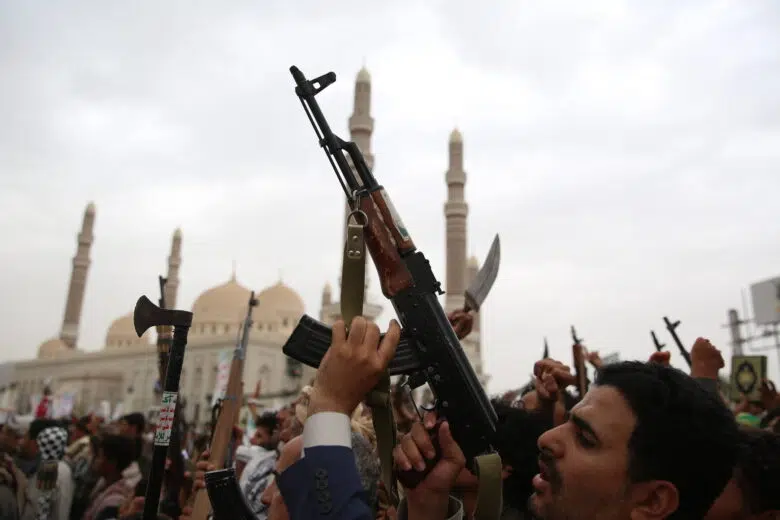
BEIRUT — Dealing with a militia like the Houthis that sees the political process as nothing more than a tactical truce in an endless war — and the state as nothing more than spoils — requires clarity from the international community.
For the latest news & views from every corner of the world, Worldcrunch Today is the only truly international newsletter. Sign up here.
The essential question in Yemen is about how reality itself is defined: are we dealing with an armed ideological group as a political actor, or as an existential threat to the state and society?
The answer to this question doesn’t merely reveal strategic blindness among some international actors — it also exposes a basic failure in the mechanisms of the United Nations that have become unable to distinguish between what is political and what is violently militant and religious.
When an armed group is listed as a terrorist organization by a country as significant as the United States — and yet is simultaneously treated by the UN envoy to Yemen as a legitimate political party — we are not merely facing a double standard, but a collapse of logic itself.
Existential question
The core of the dilemma, in my view, lies not only in the legal classification — but in the failure to grasp what the Houthi movement represents: a project that transcends Yemen’s borders and reveals a religious authoritarian vision that sees the state as merely a vessel for empowerment, not administration, for oppression, not coexistence.
How can the state be reclaimed from those who do not acknowledge its existence in the first place?
Hence, the notion of the state becomes an existential, not diplomatic, question: How can the state be reclaimed from those who do not acknowledge its existence in the first place?

In this context, official silence or mere observation becomes a form of abandonment — not maneuvering. At a critical moment in Yemen’s complex landscape, a stark contradiction emerges in international positions toward the Houthis. In January, the United States reclassified the Houthi group as a foreign terrorist organization — in a decision taken by President Donald Trump after his return to the White House. That decision comes within a broader context of a confrontation with the Iranian project in the region.
Worldcrunch 🗞 Extra!
Know more • The Houthis, officially known as Ansar Allah, are a Shia-led rebel movement based in northern Yemen. Originating in the early 2000s, they have grown from a group with local grievances into a powerful faction — effectively governing large parts of western Yemen and fighting a brutal, long-running civil war that started in 2014.
The group maintains a strong alliance with Iran and has extended its operations to the Red Sea region, launching drone, missile, and small-boat attacks on international shipping. These actions are often framed as being in solidarity with Palestinians amid the Israel–Hamas conflict.
Their latest attack, as reported by AlJazeera, targeted the Greek-operated, Liberia-flagged bulk carrier Eternity C in early July 2025. Between July 7 and July 8, the vessel was struck by Houthi sea drones and rocket-propelled grenades, forcing the crew and guards to abandon ship. The Eternity C eventually sank on July 9, with four confirmed crew fatalities and several reported missing. Rescuers recovered ten survivors, including a Greek security guard, and the Houthis reportedly took at least six crew members hostage — though they claim to have provided medical care and safe transport for them.
This attack follows the sinking of another Greek-operated ship, Magic Seas, just days earlier, marking a dramatic escalation in Houthi maritime aggression in the Red Sea. — Hagar Farouk (read more about the Worldcrunch method here)
In contrast, the UN Special Envoy to Yemen, Hans Grundberg, continued to treat the group as a political party on equal footing with other actors — ignoring the fact that it is condemned by UN Security Council Resolution 2216 — and even documenting his meetings with them in official statements, the latest of which were in April.
UN’s moral flaw
This reflects not only a political paradox, but also a moral and methodological flaw in the United Nations’ operating mechanisms. Dealing with a group classified as terrorist as if it were a political actor reflects a blatant contradiction with the very principles of the United Nations — and raises serious questions about its declared commitment to combating terrorism and ensuring international peace and security.
This classification imposes a clear responsibility on everyone. Those who continue to support the Houthis will be held accountable — and those seeking to restore the state have a rare opportunity to resolve the conflict.
Talking about a political dialogue with a group that has rejected the political process since its takeover of the capital on September 21, 2014 is a delusion. Treating it as a political party — despite its designation as a terrorist organization — means only one of two things: either a deliberate disregard for the Yemeni reality, or implicit collusion with the militia’s project.
In both cases, the result is the same: prolonging the war — and giving the Houthis more time to regroup and market themselves in a fake political guise that hides their reality as a sectarian exclusionary militia that believes neither in the state nor in citizenship.
Reclaiming the state
The true nature of the Houthis can also be understood through the special treatment they have received from the United Nations. In an article published in The National Interest on April 8, Harvard University researcher Asher Orkaby wrote that the Houthis have transformed into an organization largely funded by humanitarian aid, along with militarily supported through UN-brokered ceasefire agreements. “The international community is responsible for having fostered the growth of this cancerous menace,” he concluded.
There is no third path.
Reclassifying the Houthis as a terrorist organization should not remain merely a diplomatic pressure card: it must be accompanied by a courageous national decision to reclaim the state.
There is no third path. It is either the path of a civil state that includes all Yemenis or the path of a militia that seeks to establish a theocratic state that recognizes no other and believes only in armed violence.

