
-Analysis-
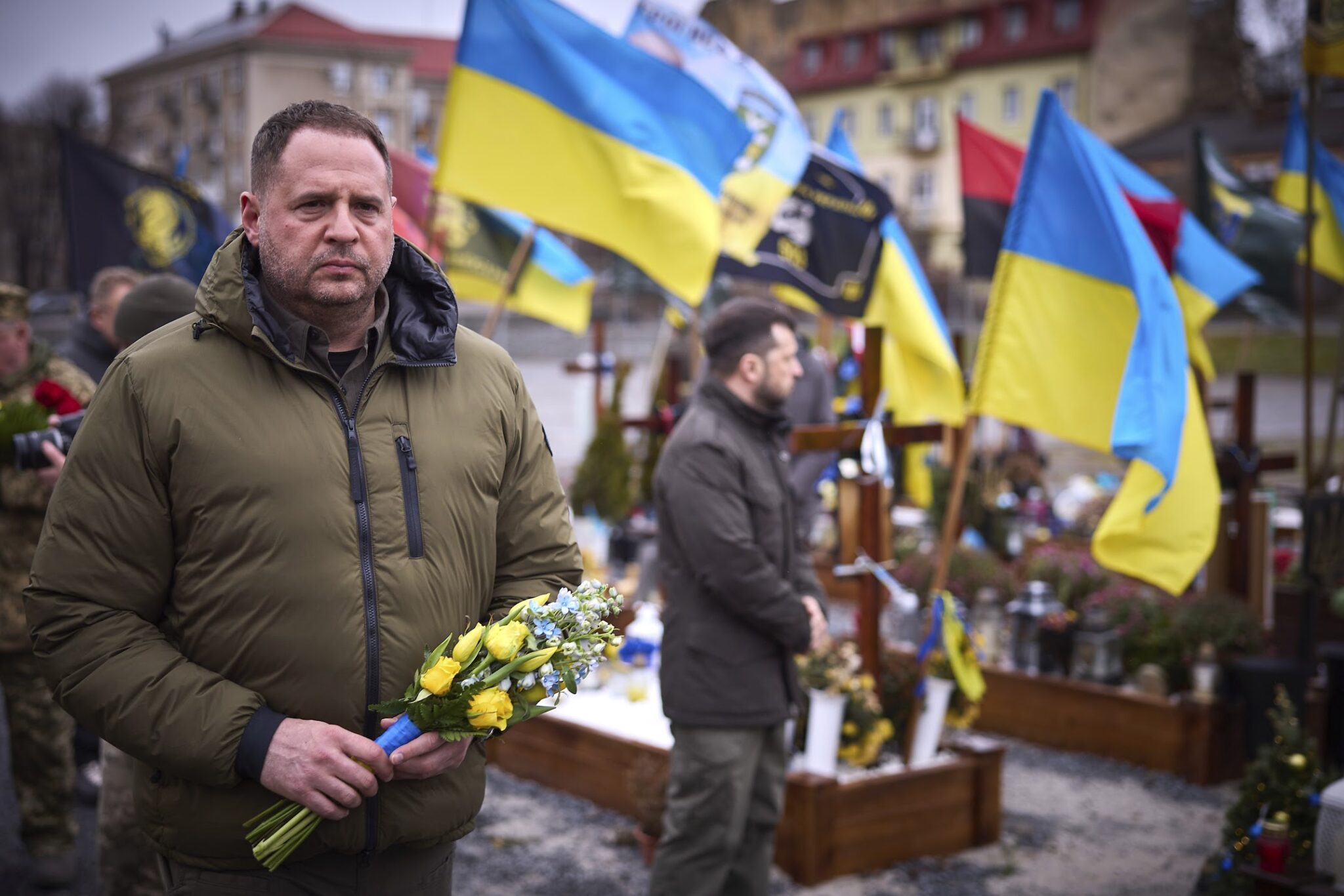
KYIV — Nearly four years after Russia launched its war of aggression, Volodymyr Zelensky once again stands in front of the presidential palace at 11 Bankova Street in Kyiv, looking straight into the camera. The choice of setting is no accident. The photograph taken last Friday is meant to echo a video from February 25, 2022, a clip that proved more decisive for the war than any weapon system: “We are here,” Zelensky said then, one day after the Russian attack, flanked by four loyal aides. “We are defending our independence.”
The president risked his life for his country. He gave people courage.
Now Zelensky is trying to rally Ukraine behind him once again. Back then, more than six years ago, when he first stepped into politics, he carried the carefree confidence of a young man convinced the world was his to shape. A suit, a smooth face, an athletic frame. Now he looks older. He appears worn down, and that impression is intentional. Zelensky is asking for forgiveness for his missteps in domestic policy because he still carries the burden of guiding his country through war.
That burden has grown heavier in recent weeks. The corruption scandal involving his closest associates — culminating in Friday’s dramatic resignation of chief of staff Andriy Yermak — has shaken the administration and raised questions about the president’s inner circle at the worst possible time.
“One of the most difficult moments in our history has arrived,” Zelensky says, his tone heavy, his gaze fixed straight ahead. “For Russia, nothing is more frightening than seeing Ukraine united.” And then: “Now more than ever, we need unity so that a dignified peace can prevail in our country.”
In the trenches
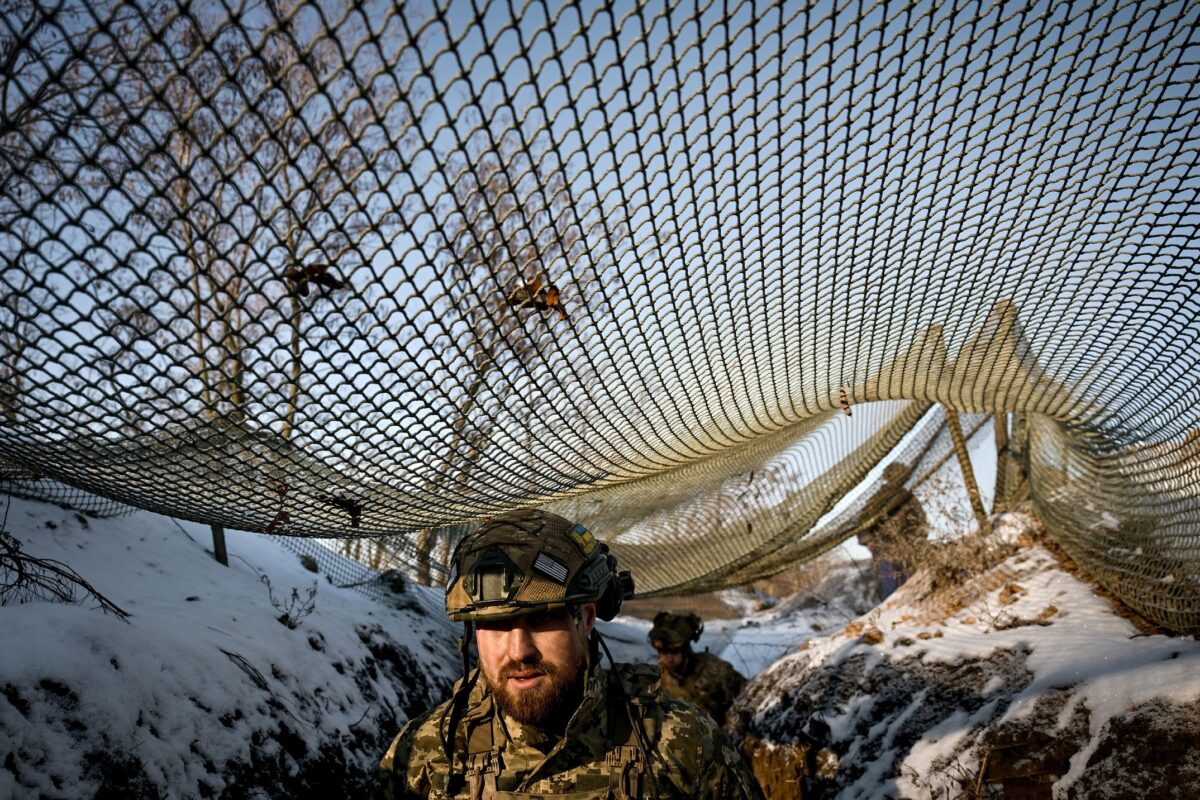
Unity. Whenever the situation becomes particularly bleak, Zelensky appeals to it. He wants to prevent tensions from erupting between those who left the country and those who stayed, between those fighting in trenches and those sitting in the bars of the capital. Without unity, Zelensky and his closest circle are convinced, the existence of the country itself is at risk. A divided society cannot win a war.
If Zelensky falls, Western politicians fear, Ukraine will not be far behind. As president, he has held the country together since the Russian invasion. But can he still do that? And what if he cannot?
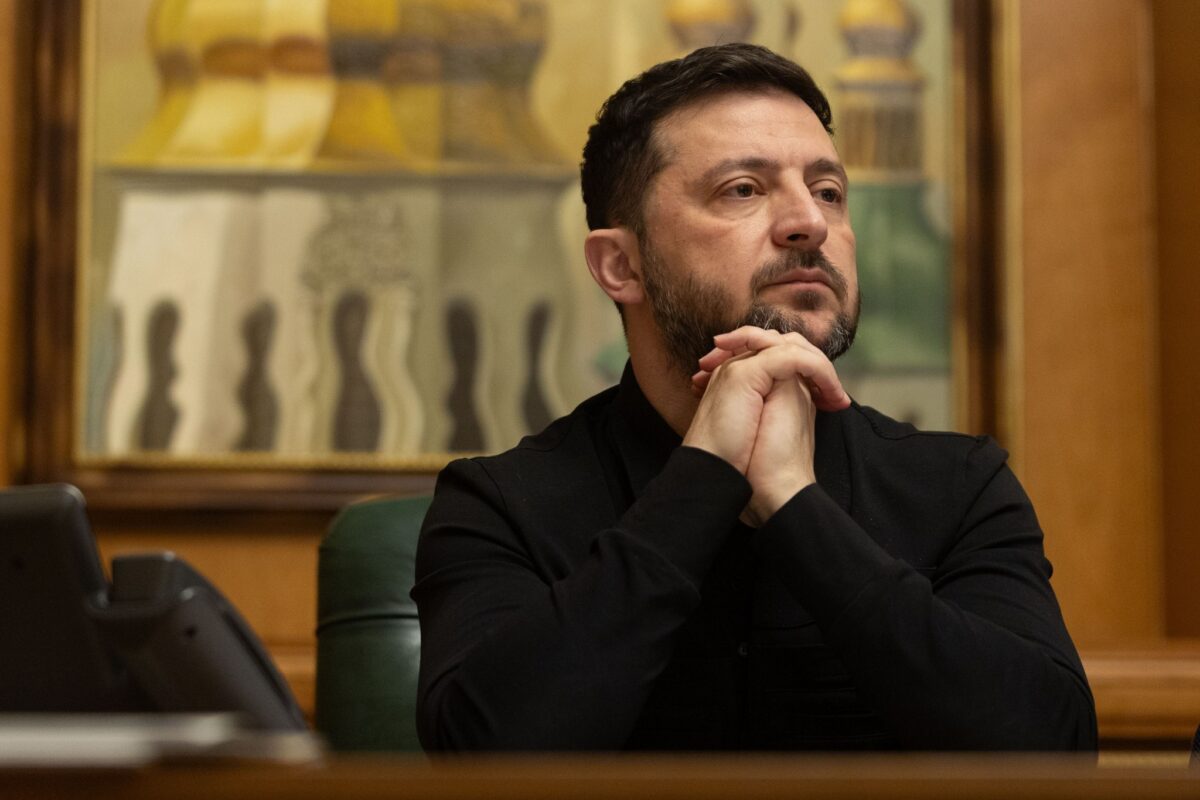
Never has the pressure on Zelensky been greater than it is now. Donald Trump wants desperately to wash his hands of the war in Ukraine, and he would even accept a settlement dictated by Moscow to do so. The Europeans continue to stand behind Zelensky, but they find it increasingly difficult to explain this support to voters at home.
Zelensky benefits from a phenomenon Ukraine now describes as the White House effect.
In these circumstances, Zelensky benefits from a phenomenon Ukraine now describes with its own expression: the White House effect. Whenever foreign policy dominates the news in Ukraine, Zelensky’s approval ratings rise, especially when he is under attack. When Trump humiliates the Ukrainian president, Ukrainians tend to close ranks.
That is what happened when Trump humiliated Zelensky in the Oval Office at the beginning of the year. Ukrainians saw the slight against their president as a slight against the nation. Now that Trump has cornered Zelensky with the pro-Russian peace plan, influential military figures and opposition politicians in Ukraine, including the head of military intelligence, once again appealed for unity. In this darkest moment, the nation must hold together. Because if Zelensky falls, they fear, the country will fall with him.
But there is also a counterforce in Ukraine that undermines the White House effect: corruption among those closest to the president. Zelensky once ran for office promising to break with the corrupt political class that came before him. Now he finds himself dealing with yet another corruption scandal, one that threatens to spiral beyond his control.
The current situation is connected to Zelensky’s own leadership style. He relies on only a few trusted confidants when he needs to respond quickly to a move from Washington or a shift on the front. Zelensky, a successful entrepreneur in the entertainment industry before entering politics, gravitates toward people who think and operate like managers. He brought his closest friends from his days as a comedian into government. He expects them to deliver and to solve problems fast.
Questions are not welcome
The former head of the state railway, for instance, became internationally known during the war because his trains reliably carried refugees to safety and delivered weapons to the front. Zelensky appointed him Minister of Strategic Industries and later brought him into the Presidential Administration as an advisor. When you sit across from this polite, self-assured man and ask about Zelensky’s policies, he quickly waves it off: “I do not see myself as part of the political game but as someone who must deliver results. You will never hear me give an opinion about anyone.”
Conversations with many of the president’s confidants go this way. They shield Zelensky and fend off criticism. “There are people Zelensky really likes,” says political scientist Volodymyr Fesenko, who advises the president’s party. “Then he becomes attached to them.”
But there is one thing Zelensky does not tolerate: internal conflict. This has always been true, but martial law grants him even greater authority, and he uses it. Those who question too much are pushed out, insiders say. If Zelensky feels the government is working too slowly, he reshuffles the cabinet. Since the invasion, he has ordered two such “relaunches,” promising fresh faces even without an election. That promise proved hollow: certain controversial figures always remained.
Beyond reach
Only one person, Fesenko says, was thought to be beyond reach: Andriy Yermak, Zelensky’s longtime associate who has headed the presidential administration since 2020. Yermak was the second most powerful figure in the country. No one was closer to Zelensky, or more divisive in Ukrainian politics. He was one of the four men who stayed in Kyiv in February 2022 and appeared with Zelensky in the video in front of the presidential palace: tall, self confident, known among diplomats for his brusque manner. Zelensky has known him since the days when Yermak worked as a media lawyer, and Zelensky ran the production company that made comedies rather than handling war crimes.
The two had developed a close friendship, and Yermak had wide-ranging decision-making authority and was considered key to keeping morale up. He often determined who could see Zelensky, functioning as a kind of gatekeeper and problem solver, before becoming a problem himself.
Was Mindich warned by the secret service?
The current corruption scandal is part of that problem. Several of Zelensky’s associates are suspected of extorting the equivalent of 93 million euros from companies in the energy sector. One of Zelensky’s old friends, Timur Mindich, managed to flee abroad shortly before his arrest. Was he warned by the secret service?
Just this summer, parliament passed a law that would have effectively gutted the very two anti corruption agencies that have now uncovered the scandal. Even then, rumors spread that Yermak had obstructed their work, though Zelensky must also have supported the bill. After several days of protests in Kyiv and international criticism, he restored the agencies’ independence.
Public trust
Then new rumors swirled in Kyiv that Yermak interfered with investigators and prosecutors in the anti-corruption bodies and was therefore involved, which eventually led to his resignation, shocking Kyiv’s political system.
It was long suggested that Yermak’s influence was excessive, unaccountable, and potentially damaging and this is now impossible to ignore. Many civil-society leaders say the scandal proves that Zelensky’s inner circle has become too insulated, too loyal, and too powerful for the country’s own good.
Then the Russian side torpedoed the so called peace plan, and the White House effect kicked in again. Zelensky explained the gravity of the moment to the public and called for unity. Yermak survived that crisis for a while, remaining in place and was even tasked with leading the Ukrainian delegation in Geneva in negotiations with Europeans and Americans.
But what if more details emerge? A new fear is spreading in Ukraine: what if Zelensky himself knew about the corruption? And allowed it?
Solemn days
The president still sees himself as someone who knows what people want, someone close to ordinary citizens. Yet his home, the presidential palace in the government district, is a restricted zone. Anyone entering must obtain permission and pass soldiers at the checkpoints, followed by two additional security controls. Some windows are sandbagged.
On the fourth floor, Zelensky meets journalists for confidential discussions. These days, he appears solemn and no longer asks questions with the humor he once displayed. At times, irritation flashes across his face when a question strikes him as disrespectful. Deep under the presidential palace there is a nuclear bunker. That is where Zelensky and Andriy Yermak sleep and work out together, according to the Financial Times. Olena Zelenska and the couple’s two children, 12-year-old Kyrylo and 21-year-old Oleksandra, live elsewhere in Kyiv at a secret address.
The president, an advisor says, constantly thinks about how to lift public morale whenever the national mood sinks again, whether because rocket attacks intensify or because a new proposal surfaces that demands Ukraine’s capitulation. Just over a year ago, Zelensky pressed his team to negotiate particularly hard to ensure that several prominent Ukrainians could return home in a prisoner exchange. The images briefly lifted the country’s spirits at a time when Ukraine was anxiously awaiting the outcome of the U.S. presidential election.
People increasingly distrust the mobilization authorities.
But dissatisfaction with Zelensky is rising. Because he concentrates too much authority among a small group. Because he delays needed reforms. And because he has failed for years to introduce a fair system of mobilization. People have been waiting for Zelensky to revise the legal framework, and they increasingly distrust the mobilization authorities. It is widely known that those with money or connections can avoid military service or obtain safer posts.
A man who works in a ministry says during a walk in late October: “Honestly, we are already tired of Zelensky.” His wife quickly warns him: “Remember you are talking to a journalist.” The man shrugs: “Everyone knows we feel this way anyway.”
A soldier fighting in the southeast asks bitterly: “Can you imagine? Some of them sit in a trench for weeks and others sit in Kyiv getting rich.”
A communications consultant in Kyiv writes: “I feel sick.” She is responding to a statement from a Zelensky advisor who insisted in an interview that the corruption scandal was a plot by Moscow.
Ukrainians did not love Zelensky before the war, and they will not love him after it. But for now, he is a president whose fate is tied to that of the country.
And Ukraine is facing the hardest moment in its history. For almost four years, the country has endured the Russian war of aggression. When Zelensky launched his presidential campaign, in that unreal and distant time more than six years ago, his advisors said he would have to fight two wars: one against corruption and one on the eastern front. With Yermak gone and the scandal emerging, it is now clear that Zelensky no longer appears willing to fight the first war. How the second war ends may become clear in the coming weeks.