-Analysis-
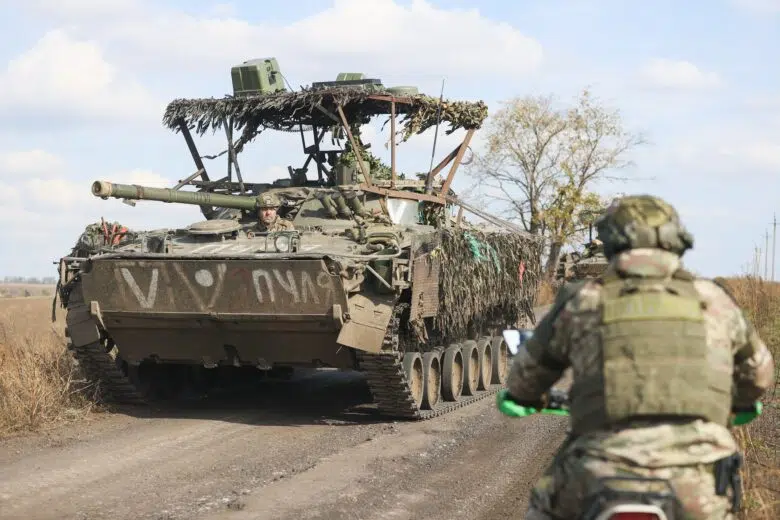
PARIS — With all the talk about the newly prominent role of drones in the fighting in Ukraine, it is easy to forget that war is first and foremost about humans fighting humans. This is what is happening in the strategic city of Pokrovsk, in eastern Ukraine, where the Russian army is on the offensive, fighting to conquer the next street, building, block of houses.
For the latest news & views from every corner of the world, Worldcrunch Today is the only truly international newsletter. Sign up here.
Moscow has declared victory a little too soon, no doubt to try to demoralize the Ukrainian army, which has admitted to being in difficulty in this city. Russian units have managed to enter Pokrovsk in small groups of soldiers, looking to sow confusion among the city’s 5,500 strong Ukrainian defense, through sabotage and targeted attacks.
The Ukrainian army has sent reinforcements, particularly special forces, to contain the Russian advance, and claimed its first successes Monday, with the recapture of three villages north of the city. Drones are also playing an important role here, notably in supplying the advance units of each army. Still, this is urban combat, and therefore primarily a human battle.
Pokrovsk is located in the Donetsk region, one of the Ukrainian provinces that was annexed by Moscow shortly after the 2022 invasion, even before it had effective control over them. Vladimir Putin wants to make the would-be fait accompli he declared on paper three years ago real on the ground, without the means to achieve it.
Frontline pressure
This city is a strategic crossroads, and if it fell, Russia would be able to make new advances, undoubtedly faster than the very slow ones of recent months. Other offensives are taking place at several points along the long front line of more than 1,000 kilometers between the Russian invaders and the Ukrainian defenders.

Above all, one of the issues at stake is control of as much territory as possible before possible negotiations on a ceasefire. Putin’s maximalist position, which scuppered plans for a meeting with Donald Trump last month, was that Ukraine should abandon the entire Donetsk region. Ukraine is prepared to negotiate on the basis of the existing front lines.
“Russia poses a lasting threat, motivated by hostile intentions.”
As long as Putin believes he can win this war militarily, he will not stop. However, his troops are making progress that is too slow in gaining territory for this to be decisive. Unless they manage to make a breakthrough, as in Pokrovsk.
Higher stakes
But the stakes are even higher. An important study published today by the French Institute of International Relations, in association with other European think tanks, assesses the impact of the war in Ukraine on European defense strategies. The study concludes that “Russia poses a lasting threat, motivated by hostile intentions and a fundamental dispute over the European security structure.”
Through Ukraine, writes Thomas Gomart, director of IFRI, in his introduction, “the Russian regime is imposing a confrontation on Europe that is set to last regardless of the outcome of the fighting on the ground.”
If this is the case, what is at stake in Pokrovsk is not just a twist in a distant conflict, but a test that is of concern to the security of the entire European continent.