–Analysis–
PARIS — The Middle East no longer dominates the headlines — but that doesn’t mean that the conflicts are resolved. For the past few days while I was in Beirut, an Israeli drone circled constantly above the city, emitting a haunting sound, as if to remind the Lebanese that their southern neighbor does what it wants, when it wants.
For the latest news & views from every corner of the world, Worldcrunch Today is the only truly international newsletter. Sign up here.
In Lebanon, Gaza, the West Bank, or even Iran, none of the conflicts of the past two years are truly on the path to resolution. Pressing “pause” provides relief for the populations and offers a respite where the clash of weapons was causing havoc. Nothing more.
The Hezbollah question
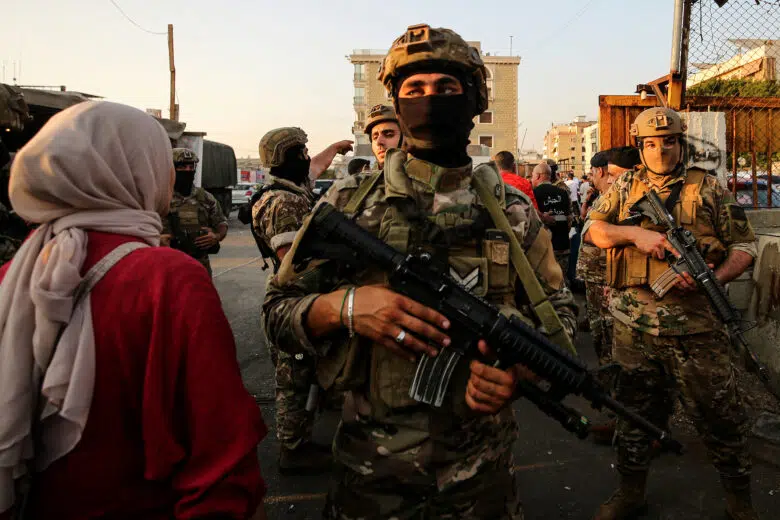
In Lebanon, up to the highest levels of government, the question is not if a new war with Israel will happen, but when. Since the ceasefire signed 11 months ago, Israel has bombed targets in Lebanon almost daily — two people were killed on Sunday in the south. And the key issue of Hezbollah’s disarmament, which is unsolvable according to a well-informed Western diplomat, risks triggering a new confrontation.
The Lebanese Council of Ministers voted to disarm the Shiite militia, which was considerably weakened by last year’s war, but not annihilated. The Lebanese army is supposed to disarm Hezbollah, but due to lack of drive and experience, it is moving too slowly for the Americans and Israelis. Hence the American warning to the Lebanese government: “If you don’t disarm Hezbollah, Israel will.”
Between two evils, that of an Israeli war appears less divisive.
The Lebanese dilemma, according to my contacts in Beirut, is a choice between the risk of civil war by forcing Hezbollah’s rapid disarmament and a new Israeli intervention. No Lebanese political leader will risk a new civil war, after the one that still marks the country three decades after it ended. Between two evils, that of an Israeli war appears less divisive. A month before a planned visit by the Pope to Lebanon, this is not an encouraging outlook.
Gaza and West Bank dilemma
What can be said of Gaza, where, with the first phase of the Trump plan almost complete, the transition to the second, more political phase seems mission impossible. Once again, there is the question of disarmament, this time of Hamas.

The impasse is perilous: Hamas has, in fact, regained control of the part of the Palestinian territory evacuated by the Israeli army — that is, about half. There is a risk that this new separation line could become a permanent border for a territory that has been amputated and ravaged.
Who will disarm Hamas as stipulated in the Sharm el-Sheikh peace plan? The United States and Israel have refused to let Mahmoud Abbas’ Palestinian Authority do so. Who else could do the job? An international force has been slow to emerge: It’s hard to see Arab soldiers, regardless of their nationality, shooting at Palestinians after what they’ve suffered. That leaves only the Israelis, even though, in two years of merciless war, they have failed to eliminate Hamas.
Finally, in the West Bank, violence by settlers protected by the army is reaching record levels, with complete impunity amid international silence. Nothing is provided for in the Trump plan for this colonized region.
Should we be surprised by such a perilous regional landscape? Not really. A ceasefire in the Middle East is not peace; it is not even the beginning of peace, despite the false hopes of Sharm el-Sheikh.