
-Analysis-
WASHINGTON — “Perhaps the worst is already behind us,” a German friend who, like me, follows America closely said recently. He held my gaze for a moment, almost checking whether I might think he had lost his mind.
Optimists, or even people who simply hold on to a bit of hope, have a hard time these days when the subject is the United States. They are surrounded by people like me who, during the first 10 months of Donald Trump’s second term, have settled into a kind of teeth grinding, almost aggressive fatalism. People who accuse anyone who sees even a faint glimmer at the end of the tunnel of mild or moderate delusion.
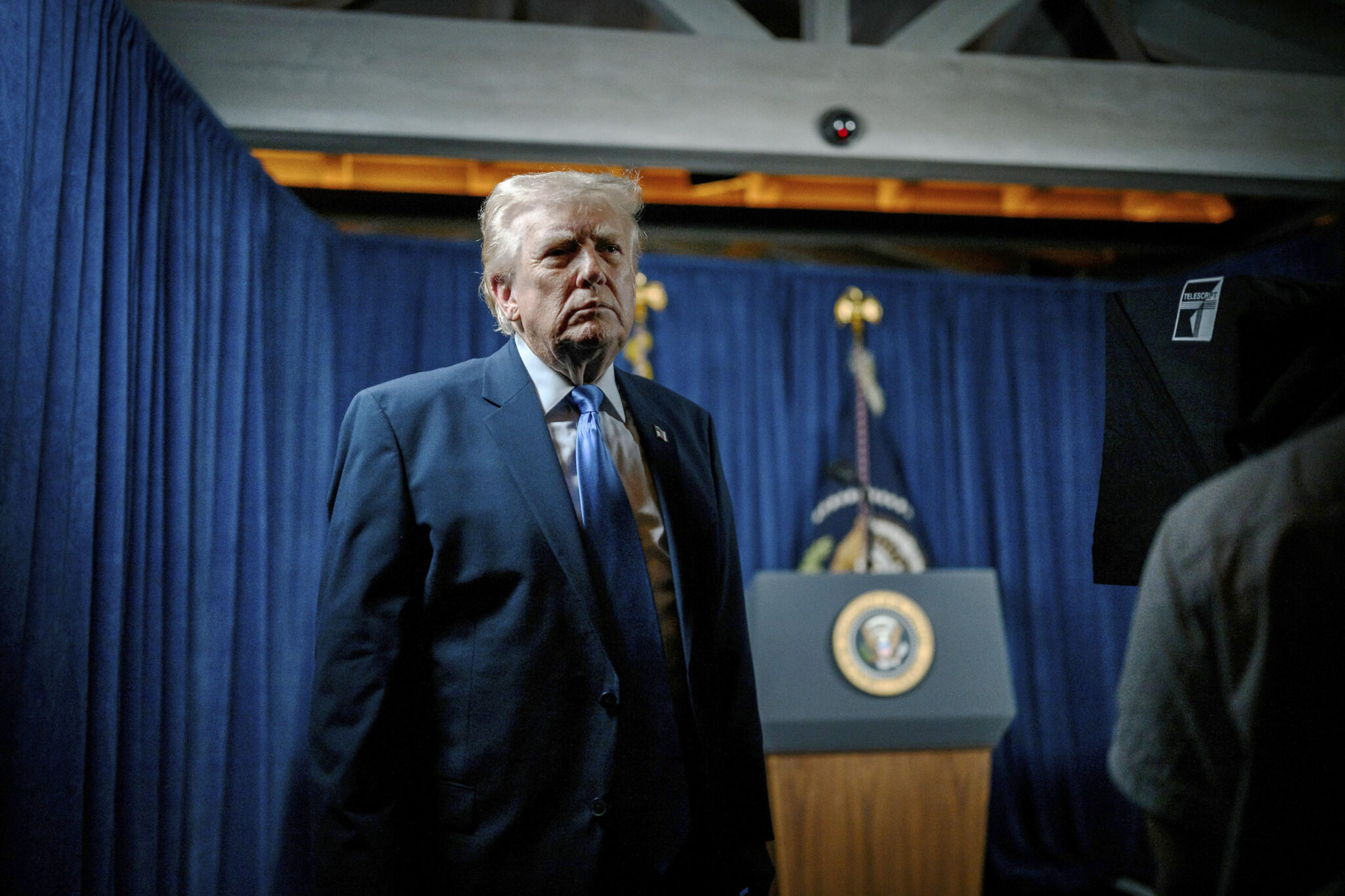
But at the risk of drifting from one coping mechanism to the next, let me spell out the thought: we have weathered the worst. Ten months after taking office, Donald Trump is weaker than ever. From here on, it may only get harder for him.
The timing of this observation might seem odd. In recent days, Trump has once again kept Europe on edge with another absurd reversal of his Ukraine policy. American media published a U.S. peace plan that read like a neat summary of Russia’s most extreme demands. Once again, German Chancellor Friedrich Merz and legions of European diplomats dropped everything to renegotiate the worst. How long will this last? No one knows. Trump clearly still has enormous power. And yet there are strong signs that the foundation of his power inside the United States itself has begun to crack, which matters deeply for Ukraine as well.
A different kind of “golden age”
Flashback. January 20, 2025. Donald Trump declared in his inaugural address that America’s “golden age” had begun. It soon became clear that the promised gold was largely installed inside the White House itself. The rest of the country, by contrast, received a direct injection of Project 2025, a detailed government program from the fundamentalist Christian and nationalist right that had long been ready. Listing everything Trump has done since then would fill volumes, and one day it certainly will. But his actions can be grouped into a few major projects:
First: He wants to make America “whiter” through mass and brutal deportations of migrants, without judicial review and often unlawfully. People are seized by masked units.
Secondly, he wants to dismantle or bend large parts of the administrative state, which at its best acts as a buffer against executive arbitrariness. He aims, for example, to pursue people he sees as personal enemies, like former FBI Director James Comey or New York State Attorney Letitia James.
Third, he wants to intimidate and weaken civil society and its institutions. This includes attacks on law firms, on publicly funded broadcasting, and on other media companies. After the assassination of Charlie Kirk, the government also threatened non-governmental organizations, using Russia as a hashtag, as well as philanthropists, using Hungary as a hashtag. Vice President JD Vance even urged Americans to report any colleagues who expressed satisfaction at Kirk’s death.
Fourth: His actions aim to broaden the executive power of the president. He is working to make it very difficult for Democrats to win the congressional elections in the fall of 2026. Among other things, Trump instructed several loyal governors to redraw electoral districts in favor of Republicans. He even mused about a third term.
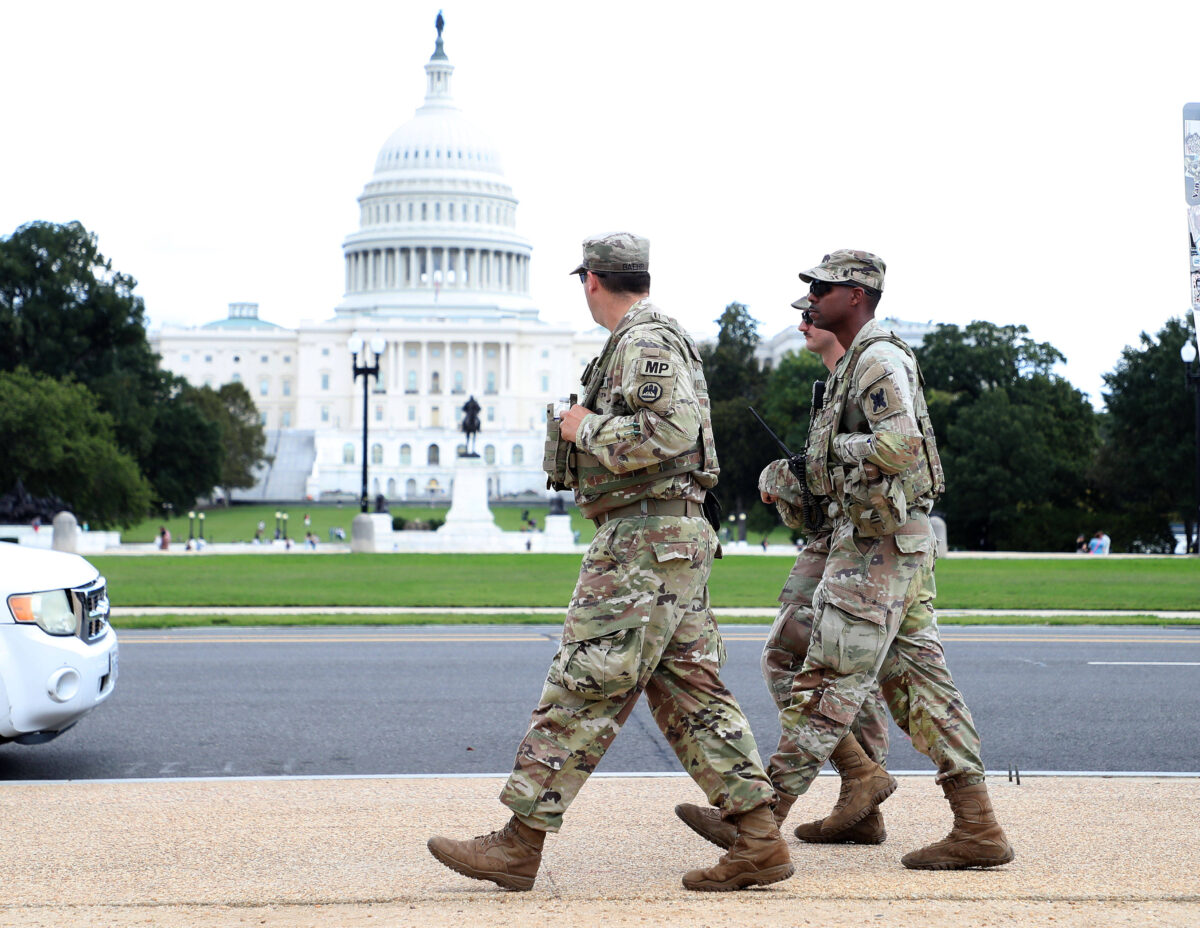
Fifth: Trump uses the National Guard within the country whenever possible, as a show of force and a tool of intimidation.
Trump is pursuing economic policies that transfer enormous amounts of wealth from the bottom to the top.
Sixth: Trump is pursuing economic policies that transfer enormous amounts of wealth from the bottom to the top. Tariffs have become the preferred tool of his politics, the instrument with which he threatens, punishes, and performs acts of political theater. Officially, tariffs were meant to bring manufacturing back to the United States. In reality, Trump has used them for foreign policy punishment, for example against Brazil after it prosecuted right-wing former President Jair Bolsonaro, his ally and friend, and as leverage against American CEOs who effectively bought tariff relief with political support.
America seemed to be moving faster and faster toward authoritarianism during those first 10 months. Much of what Trump and his circle did echoed the playbook of leaders like Viktor Orban, who were democratically elected and then slowly reshaped their democracies so thoroughly that losing power became nearly impossible.
A blitz of power plays
Trump followed a similar path, only at breakneck speed and with a strategy designed to overwhelm. The country would not be allowed to catch its breath until its institutions were in ruins and its democracy hollowed out. And for much of the year, this seemed to be working. The Trump virus seemed to disable the democratic immune system.
Trump controlled the Republicans, and with them Congress, through methods that felt almost mafioso. If you do not play along, I will ruin your future. Law firms caved. CEOs dismantled their equality programs and stayed silent. The Democrats, even though Trump was deeply unpopular and sinking in the polls, grew quieter and more paralyzed. ABC temporarily fired comedian Jimmy Kimmel because he had said the wrong thing about Charlie Kirk.
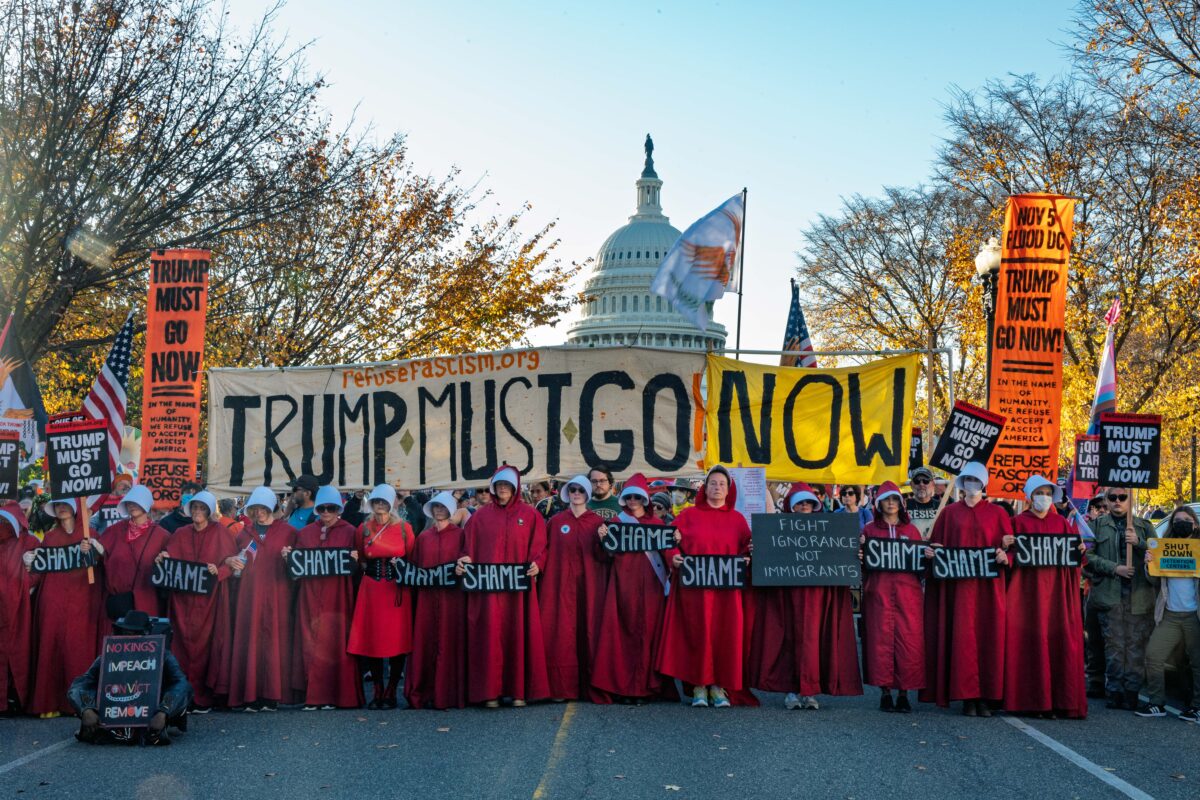
Twice, in June and October, millions marched under the banner “No Kings.” Given the scale of Trump’s project, even this seemed small.
Ordinary Americans sometimes protested and occasionally helped block deportations in their neighborhoods. Twice, in June and October, millions marched under the banner “No Kings.” Given the scale of Trump’s project, even this seemed small. There were no strikes. And although the courts tried hard, they were too slow, drowning in backlogs as Trump’s lawyers kept inventing new forms of obstruction.
Trump appeared like a furious demigod, driven by past grievances and dragging the most powerful country on earth to the edge in his campaign of revenge and self-enrichment.
Then autumn arrived. It was not one major event that shifted the dynamic and broke Trump’s authoritarian momentum. It was a series of events and developments that fed into one another. And it is difficult to say which of them came first.
The price of morning coffee
Exit polls showed that Democrats won off-year elections largely because of one issue: the high cost of living. Trump had won in 2024, in part, by promising to lower it. But this autumn, the consequences of his economic policies had become impossible to hide. For a long time, American companies absorbed much of the cost of his tariffs. Now inflation had returned.
The labor market remained solid but companies were hiring fewer people. Senseless foreign policy skirmishes, like the retaliatory tariffs on Brazilian goods, briefly threatened the American morning coffee. Farmers struggled under the weight of the trade conflict with China. And next year, a sharp rise in healthcare costs looms, caused by Trump’s policies.
Many Americans were no longer willing to see all of this as an unfortunate economic storm. They blamed the Trump administration. Even Trump indirectly conceded the connection between rising prices and tariffs, and after the cost of living election on November 4, he rescinded several tariffs, including those against Brazil.
Trump’s defeat in court
Meanwhile, Trump has suffered several defeats in court this autumn. A judge quickly dismissed a billion dollar lawsuit against The New York Times as unnecessary and unfounded. The case against James Comey may never go to trial either. Trump had fired a prosecutor who refused to indict Comey. His successor, as a judge pointed out during a hearing, had handled the case with surprising incompetence.
On Monday, the lawsuit was dismissed, and the Justice Department announced an appeal. Another judge retroactively ruled that the deployment of the National Guard to Washington, D.C. had been unlawful. A separate panel of judges overturned the Texas gerrymandering plan, which Republicans had hoped would secure them five extra seats in the House. The case is now before the Supreme Court.
These developments were what my friend had in mind when he ventured that the worst might be behind us. Trump’s authoritarian project was slowing down, and for anyone who cares about democracy, that was good news. The outlook could even become better. Because the events of recent days have set something in motion, a dynamic that only strengthens itself.
Fear and power
With the exception of one early deportation case, Trump has so far complied with court rulings. He has crossed legal lines repeatedly, sometimes for short moments, but has ultimately stepped back. Respect for the separation of powers runs deep in American society, and apparently also within his administration. The risk of openly challenging the American public would be too high.
That Trump would respect the courts was not always a given. He played the autocrat, imitating Putin and Xi in expressions and gestures, sending the National Guard onto the streets, summoning American generals to Washington, and deploying aircraft carriers. He pressured the courts and left open whether he would abide by their rulings.
All this gave him power, a power that came from widespread fear of losing the protection of institutions and being exposed to Trump alone. But the more consistently Trump complies with rulings, the clearer the bluff becomes. His intimidation loses its sting.
A similar dynamic may be unfolding within the Republican Party. The past weeks have pushed the party back into genuine political competition. It can no longer assume that a broken media system will allow it to extract thousands of dollars from the middle class each year without electoral consequences. Nor can it assume that the congressional elections can somehow be manipulated. Nor that voters’ anger at Democrats will simply carry the day.
Democrats had spent the summer stuck in the polls. Now one survey predicts they may win the 2026 congressional elections, while Trump’s popularity has dropped to its lowest level since January 6, 2021. Republicans must once again ask: How do we actually win? With what political platform? And most crucially, with whom?
The fragile MAGA dream
The Trump system resembles an old style feudal order in which all power flows from the ruler. He indirectly controls campaign funds, political appointments, and economic advantages. The past few weeks have shown how fragile this system is and how easily its self-reinforcing effects can unravel.
So is it possible that we really have come through the worst of it? Will fatalists like me soon have to crawl out of our gloom, squint into the daylight, and pay tribute to American democracy? To praise its resilience and admire its immune system? In short: is hope allowed again? Could transatlantic loyalists even raise a glass to better times?
It is no coincidence that he recently doubled down on his demand that Ukraine be forced into a quick peace agreement with Russia.
Despite all the good news of recent weeks, this would be premature. First, because a weakened Trump can be especially dangerous. It is no coincidence that he recently doubled down on his demand that Ukraine be forced into a quick peace agreement with Russia. His domestic political weakness plays a role here.
And second, Trump has reshaped the world so profoundly that he has also reshaped the very idea of hope. Since his return, people have started hoping for the strangest things. That the MAGA firebrand Marjorie Taylor Greene, of all people, might prevail. That he might turn out to be nothing more than a chaotic president who damages the economy but whom the institutions can outlast. And that, in the end, Trump will be too much of a narcissist, too much of an amateur, and not enough of an ideologue to become a successful autocrat.
On this strangely distorted spectrum of hope, one can say this much: yes, there has not been this much hope in quite some time. For around 10 months, it disappeared completely. And now it has returned.