-Analysis-
PARIS — If a reminder were needed of the deep divisions within Israeli society, the 30th anniversary of Yitzhak Rabin’s murder would be enough. The timing is significant: the intense phase of the war in Gaza has temporarily stopped, and Israeli hostages have been released. The memories of Nov. 4, 1995 return, still with little consensus.
For the latest news & views from every corner of the world, Worldcrunch Today is the only truly international newsletter. Sign up here.
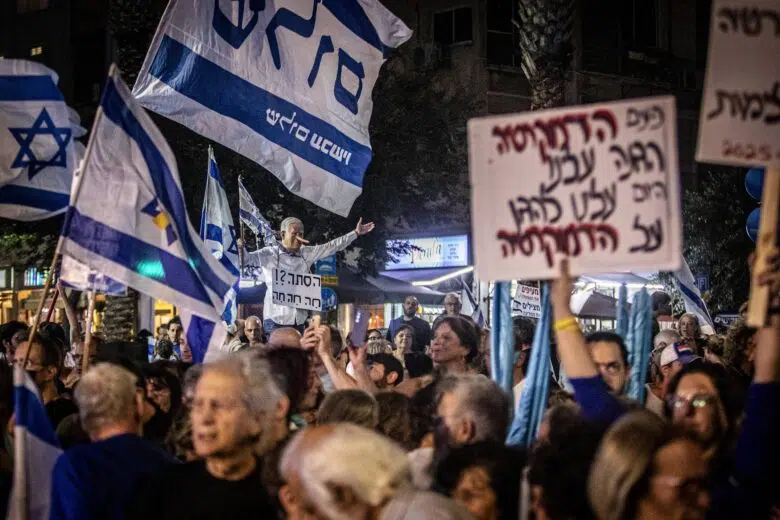
On Saturday evening, more than 100,000 people gathered in central Tel Aviv, near the square where Rabin was killed, to pay tribute to the former prime minister who signed the Oslo Accords in 1993. But today’s prime minister, Benjamin Netanyahu — who was fiercely opposed to Rabin — chose not to attend either Saturday’s rally or the official state ceremony honoring the former military hero and prime minister.
A recent poll highlights the divisions: 51% of Israelis view Rabin’s legacy positively, 28% negatively, with the rest undecided. Only one-third believe the country would be better off if Rabin had survived. More worrying, two-thirds of Israelis say they fear another political assassination.
A divisive legacy
Yitzhak Rabin and his foreign minister Shimon Peres, leaders of the Labor left, secretly negotiated the Oslo Accords with Yasser Arafat’s Palestine Liberation Organization. The Rabin–Arafat handshake on the White House lawn on September 13, 1993, remains one of the most iconic images of the 20th century.
It was a compromise that was meant to allow two peoples to live in peace.
Today, that memory divides Israelis. Though marginalized 30 years ago, those who opposed the accords are now central to the political scene. On the Palestinian side, Hamas had a hand in bringing down Oslo through suicide bombings. On the Israeli side, the far right — now allied with Netanyahu — is continuing the political line of Rabin’s assassin, Yigal Amir, the then 23-year-old religious extremist who remains in prison.

In this sense, the anniversary brings back a memory that remains relevant: a compromise that was meant to allow two peoples to live in peace, still opposed by the same forces that fought it then.
Wall of hatred
The hopes created by Oslo quickly faded, and Rabin’s assassination effectively ended the peace process. Since then, the October 7 massacre has built a wall of hatred that only a minority of Israelis resist, while Israel’s harsh military response in Gaza has had the same effect on the other side.
Commemorating one of the most tragic events in Israel’s political history inevitably brings the idea of compromise back into public discussion. The 100,000 people who gathered in Tel Aviv on Saturday do not all support a two-state solution, but they share the memory of a man who was a formidable war leader, but who came to believe that the Palestinians had to be offered a political future.
I was a correspondent in Jerusalem when the Oslo Accords were signed. I can testify that a majority of Israelis and Palestinians sincerely believed that peace had arrived — before the process stalled and failed. The memory of Rabin, the soldier who shook Arafat’s hand, can at least serve as a reminder that such a moment once existed.