-Analysis-
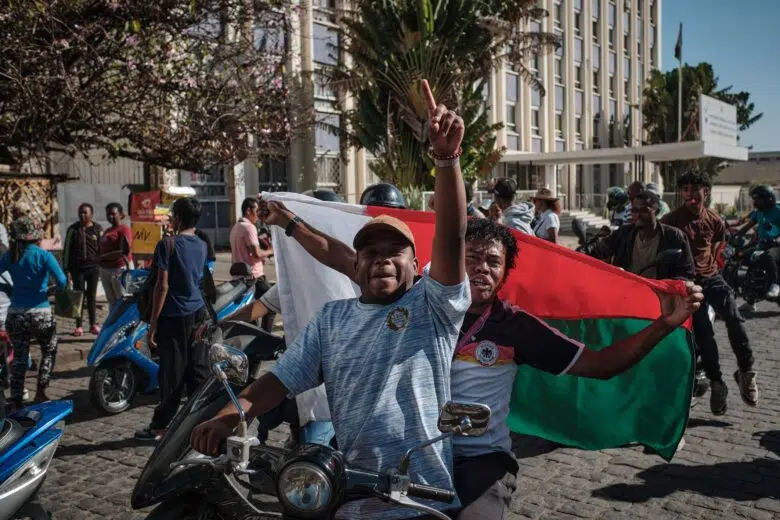
PARIS — The revolt that began last month by Madagascar’s youth fed up with the catastrophic state of the country ended on Tuesday with the army seizing power. This coup marks the latest, if likely temporary, chapter in a movement that echoes Generation Z revolts elsewhere, from Nepal to Morocco.
In Madagascar, that generational frustration has driven President Andry Rajoelina to flee abroad — and brought the military to power.
Young Madagascans, both educated urbanites or unemployed residents of working-class neighborhoods, initially mobilized against repeated cuts of water and electricity. They adopted the same symbol as in other countries in revolt, a character from the world’s most widely read manga, “One Piece”: a skull wearing a straw hat. This manga was created in 1997, the year the first Gen Z babies were born.
For the latest news & views from every corner of the world, Worldcrunch Today is the only truly international newsletter. Sign up here.
It is a movement without leaders or spokespeople, coordinated enough to continue, but not enough to assert itself in the outcome of the political crisis.
The military leaders who seized power Tuesday are promising a two-year transition. But with events speeding up, uncertainty hangs over the country. What will the Gen Z protesters do now? And within the army now at the helm, who will end up calling the shots?
Roots of the crisis
This is reminiscent of the series of coups that have taken place in recent years in French-speaking Africa: Mali, Burkina Faso, Niger, Guinea-Conakry, Gabon. The military rarely keeps its promises of transition to a return to civilian rule; and, in those countries of the African Sahel, the consequence has been the establishment of authoritarian rule that does not tolerate the slightest protest.
The common thread linking these coups is the negligence of the overthrown regimes and, all too often, corruption. In Madagascar, 80% of the population lives below the poverty line; the ousted president failed to keep his promises of change.

France’s role has also come under scrutiny. The ousted president was flown out of the country on a French aircraft sent to collect him. Rajoelina holds both French and Malagasy nationality, and many of the slogans shouted by young protesters directly targeted the former colonial power: “France, take back your Andry Rajoelina, we don’t want him anymore!” read the placards.
Forces of darkness
Speaking on the sidelines of his visit to Sharm el-Sheikh on Monday, Emmanuel Macron — who made an official trip to Madagascar last April — called for respect for the country’s institutions. Twenty-four hours later, the army seized power, a reminder that the current political dynamics in Africa are well out of French control.
A new generation has simply had enough.
Just ten days ago, the ousted Madagascan president had claimed that “foreign forces” were behind the uprising, denouncing “robots and the forces of darkness” allegedly engaged in “mass manipulation of young Madagascans to sow chaos and stage a coup.” The coup did indeed occur, but there is no evidence yet to support the claim of foreign involvement.
The social realities of Madagascar are stark enough to explain the unrest on their own. A new generation has simply had enough. Whether their voices will be better heard under military rule remains to be seen.