
-Analysis-
Not long ago, an old friend from Iran sent me a message that I thought would be appropriate to share here. His story reflects the mood of Iranians these days and an atmosphere in which few people believe the country’s regime will even make it to the Persian New Year in March.
“Almost everyone is waiting for [the regime] to go, and it will, sooner or later, but [there should be] no burning and explosions! Some say their expiry date has passed and those who brought [the ayatollahs] have decided to take them away! Others are saying that for the foreigners, who better than these mullahs to destroy the country so anyone coming along can plunder it at will! A weak, helpless and destitute country,” my friend wrote.
In any case, there is clearly a strong, pervasive view in society that the regime is bound to go. In the minds of most Iranians, the Islamic Republic has already fallen, and all that remains is to hold its funeral and burials.
But the important question remaining for so many Iranians is what happens afterward. Perhaps that question is what has delayed the regime’s funeral pyre and kept Iranians in a state of expectant observation.
Stoking fears of chaos
The regime is all too aware of this public concern, which is something it fuels and exploits. By promoting the idea that “if we leave, the country will fall into chaos, civil war and disintegration,” it is trying to keep people away from the protest scene and impede any action on their part to break the regime’s foundations. It may even seek to boost this mentality in society in a targeted and controlled manner, with acts of terrorism or by fueling insecurity in certain regions (like Sistan and Baluchestan on the Pakistani border).
My friend says the regime is highly experienced in stoking fears then clamping down, and has always managed to deceive a part of society with such tricks, though it is deplorable how members of our political and intellectual elites continue to ignore it.
While some of them are unequivocally collaborating with the regime, declarations and suggestions by others, like calls to hold a referendum to amend the regime’s constitution, also practically play along with a regime that has shown it has no competence in any field. Its 40-year record makes that glaringly evident.
What kind of system?
Today, Iranian citizens, regardless of their political orientation, are no longer thinking about the regime’s continuation but about what happens tomorrow. Any concerned citizen would now ask themselves what kind of system they want for Iran’s future: constitutional monarchy or republic.
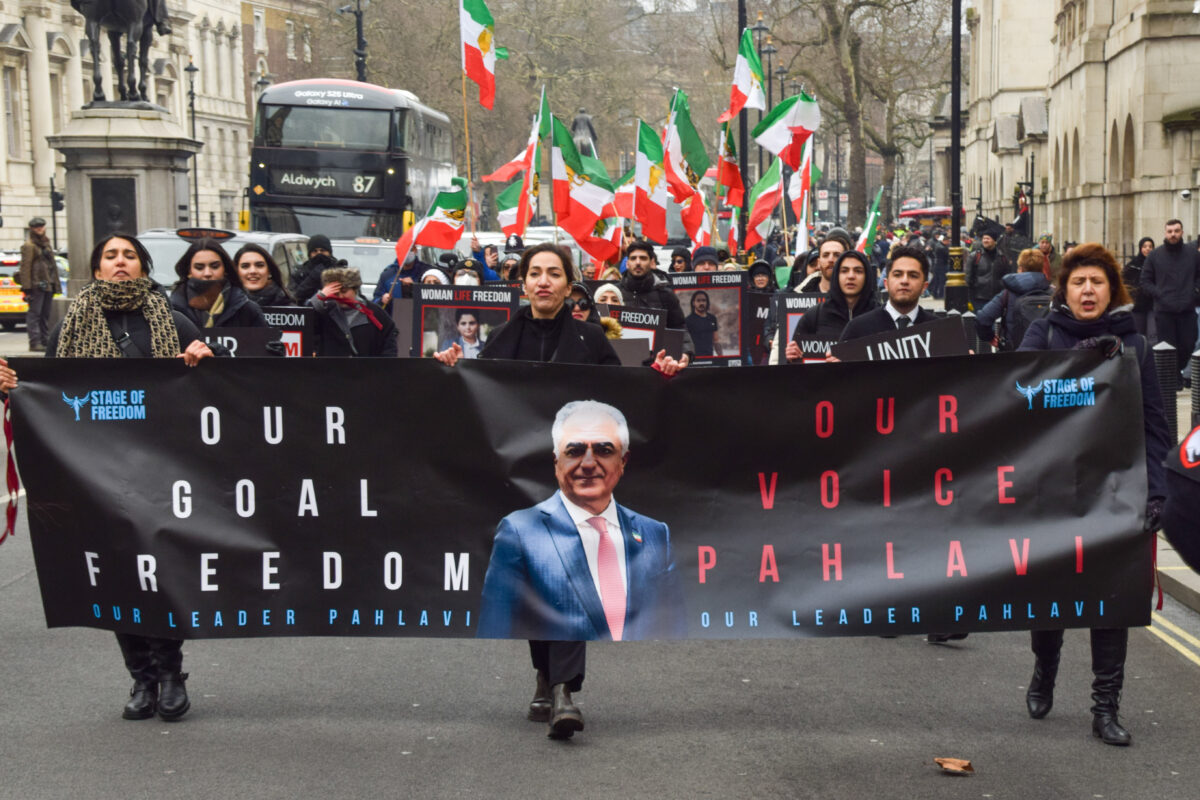
Iranians already have a fairly clear mental picture of the monarchy and its distant and recent history, with a dose of nostalgia for the Pahlavis and sense of the monarchy’s ability to maintain national unity and safeguard Iran’s integrity. Iranians know what to expect from a Pahlavi restoration. They have an idea of the monarchy’s goals and record, its leader’s identity, his views on what makes up a constitutional monarchy, and his position and status within the country and abroad. With this option, the shape of the future is already drawn out in the collective mind.
The other option, a republic, is anything but clear for the ordinary citizen. First, what is meant by a republic and which model of republic is in mind? An Islamic republic (with some changes)? A secular republic? A federal republic? A democratic republic? A republic of councils, or a combination of two or more of these models?
Additionally, our first experience of a republican system has entailed horrific damage to the country. How can Iranians be sure this bitter experience is not recreated in another guise or with another name?
A bitter experience
In Iran, with a population of 90 million, each of the republican models has (more or less) its portion of supporters. We have republicans with completely opposing goals who even now cannot stand each other.
The day after the fall of this regime, one can imagine the various political camps raising their respective flags in line with their intellectual origins and personal or group interests. In such a case, while a constitutional monarchy has the potential to accommodate all lines of thought while fully respecting their members’ civil rights, the various and even contradictory republican tendencies (especially when it comes to winning power) lack this potential to create cohesion and unity across society. This is especially true in a region with Middle Eastern cultural traits, where democracy and compromise among political groups are a rarity.
Iranians must clarify where they stand with themselves and their history.
Of course, you wouldn’t criticize another for choosing a different political path or rob them of the right to do so. But we may be critical of those who by their intent and identity as “the elite” and as self-styled reformers of society, have given us advice, instructions and even warnings that have led us to where we are and a less-than-enviable situation.
When the social elite refuses to see the realities of the historical past and future dangers, thinks in ideological terms, and conjures its vague and likely less-than-desirable vision of a “republic,” common people are inevitably unnerved by the prospect of more instability and dysfunctionality.
The devil you know
Ultimately, we may get a system that differs but slightly — in its name or appearance — from the current regime. The result of the counsels of these reformers and “liberalizers” is that instead of trying to topple the regime and embracing an unknown and perhaps tumultuous future, Iranians would cautiously stick with “the devil you know,” or the regime’s own stepchildren who would tweak their methods in return.
This view is loudly supported both inside and outside the system, thanks to the regime’s extensive media capabilities. And it has the advantage of ruling out punishment and accountability for the misdeeds of past decades and reassuring regime hands and their relatives that they needn’t fear losing everything they have amassed through cronyism and connections.
That is why I say that right about now, Iranians must clarify where they stand with themselves and their history. Considering the historical and regional considerations, we have but two options for our country’s political future, to be chosen today with our political action: either a republican system, with an unclear perspective that could simply mean stagnating in our present state (while hoping this viper of a system could one day give birth to a dove); or a constitutional monarchy, i.e. the reconstruction and modernization of a successful historical experience (and only possible with the end of this wicked regime).