
-Analysis-
BERLIN — Europe is rearming, and many agree that the best way to do so is together. The 27 member states of the European Union collectively have around 1.3 million soldiers, the same number as the U.S. military. Together, these 27 countries spend more than 340 billion euros annually on their defense, a colossal sum. Germany, France, Spain, and Poland together possess a powerful arms industry. A truly united Europe would be a major global military power.
But reality is different.
In July 2017, Emmanuel Macron had just become president in Paris, France and Germany agreed to jointly develop a new fighter jet, the Next Generation Fighter (NGF). The aircraft is intended as a central component of a unique armaments project. The Future Combat Air System (FCAS) is designed to link various, mostly national, weapons systems and develop new ones. A Combat Cloud is also planned to network fighter jets, drones, and other defense systems to enable data exchange.
The development of FCAS was described by the Berlin-based German Institute for International and Security Affairs as Europe’s most significant armaments project. Technologically and militarily, the project had the potential to set new standards and transform the use of air forces. Even more important was its political significance. Germany and France, Europe’s leading powers, joined forces. Later, Spain joined as the third contractual and industrial partner.
Frustration factor
Back in 2017, Russian troops were already stationed in Crimea and eastern Ukraine. In Washington, Donald Trump had threatened for the first time that the U.S. might soon abandon its European allies.
Macron also spoke of a profound revolution when he and Angela Merkel, then governing in Berlin, signed the agreement on the arms project. Ursula von der Leyen, then Germany’s defense minister, added: “It is much wiser for us Europeans to develop the next generation of equipment and technologies together.”
Eight years have passed since then. Eight years in which Russia has attempted to capture Kyiv and now regularly sends drones westward. In Washington, Trump is once again issuing threats. The urgency of defending Europe together is greater than ever. And everyone, whether Macron, Germany’s current leader Friedrich Merz, or von der Leyen, now in charge in Brussels, is invoking the historic challenge facing the European Union. Weapons systems are therefore to be integrated, armaments projects coordinated, and investments jointly financed.
But ironically, Europe’s most important defense project, FCAS, has made no significant progress over these past years. On the contrary, whether a joint fighter jet will ever take to the skies seems less likely than ever.
A great deal of frustration has built up on both sides, in France and in Germany. As early as last summer, Berlin was saying it might be better to abandon the project altogether. Now, the Financial Times has reported on considerations in Paris and Berlin to abandon the plans for the aircraft and continue FCAS only in a scaled-down form. A final decision is expected later this year. Back in the summer, Merz had already admitted that there was absolutely no progress on this project.
National ego
Two companies are primarily responsible for the development and construction of the planned fighter jet. The French defense company Dassault is taking the lead. Airbus, itself already a multinational corporation, is involved through its German and Spanish defense divisions. In Berlin, there has long been criticism of the French for their national egoism.
Dassault has repeatedly insisted on its intellectual property and refused to share technological know-how with its partners. Conversely, the French family-owned company complains about the cumbersome coordination processes with the Airbus Group, which also has a dual presence with its German and Spanish subsidiaries.
“I cannot be expected to discuss every technical aspect necessary for such a sophisticated aircraft with three people at the table,” Dassault CEO Éric Trappier recently grumbled publicly.
But behind the companies’ dispute lie larger, fundamental differences. These primarily concern the respective interests of the countries involved. The jointly developed aircraft is intended to eventually replace the Rafale jets in France and the Eurofighters in Germany and Spain. This would also lead to a redistribution of jobs, which is why, for example, the IG Metall union in Germany views the project with suspicion. The defense companies are competitors. France recently agreed to sell up to 100 Rafale fighter jets to Ukraine.
Differences in strategic cultures
In addition to competition, there are differences in strategic cultures. France has always strived for maximum military autonomy. The state and defense companies are therefore closely intertwined. Dassault, while a private company, is a purely French corporation. The Rafale fighter jets, for example, carry French nuclear weapons and are thus part of national sovereignty. This results in different requirements and sensitivities, which has repeatedly hampered the development of FCAS.
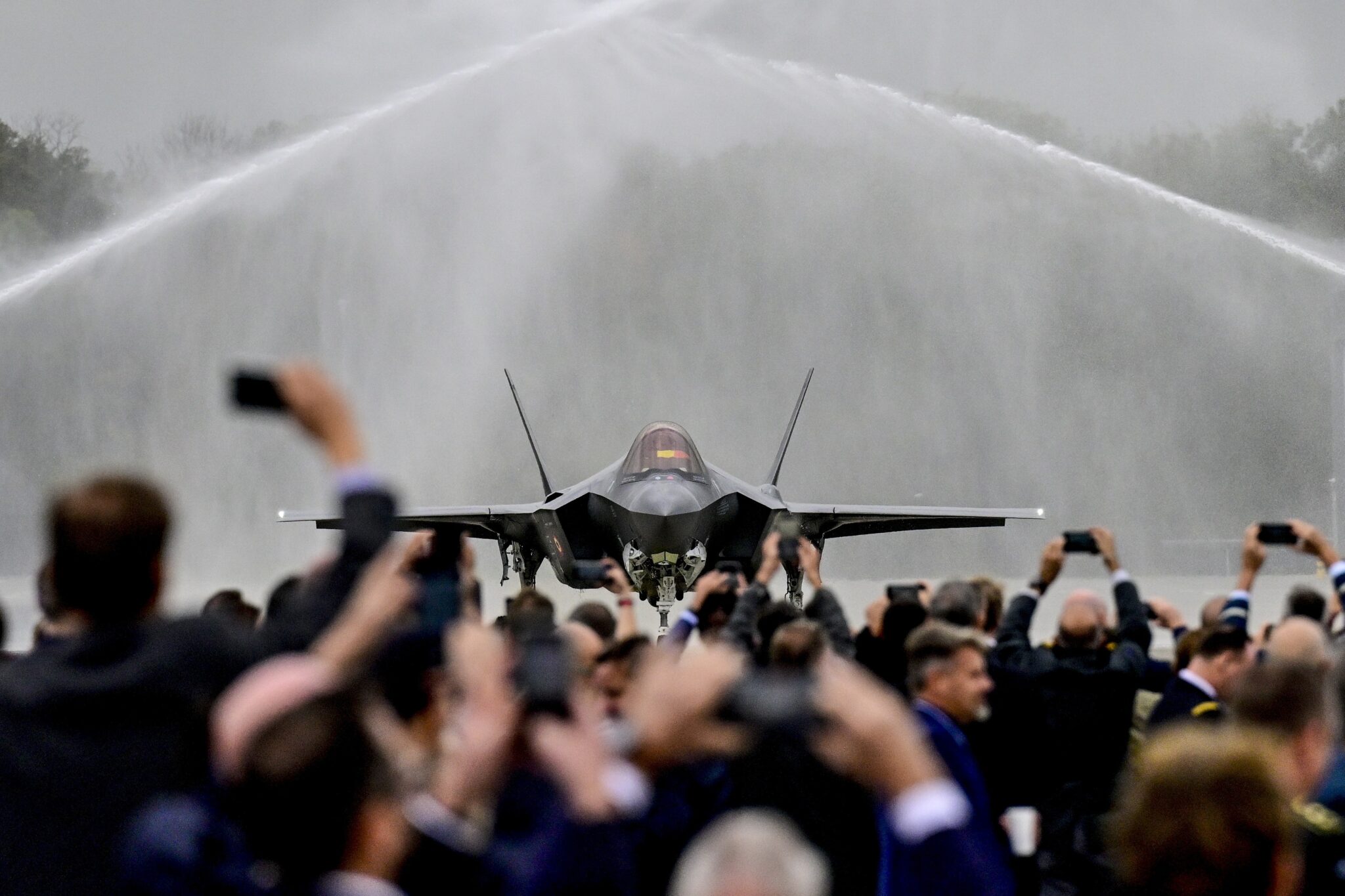
Theoretically, the governments in Berlin and Paris agree that Europe must reduce its military and technological dependencies. But France sometimes finds it difficult to share its national preferences. And the German government continues to buy American F-35 fighter jets unabated. In Paris, therefore, there are doubts about how serious Berlin really is about European sovereignty.
FCAS has always been described as much more than just an arms project. Politically, this multinational project is a litmus test for Europe’s ability to cooperate on security policy, develop its own capabilities, and put national interests aside, the SWP analysis stated. It looks increasingly likely that Germany and France will fail this test.