A New International Landscape: Time for Some Geopolitical Realism in Europe
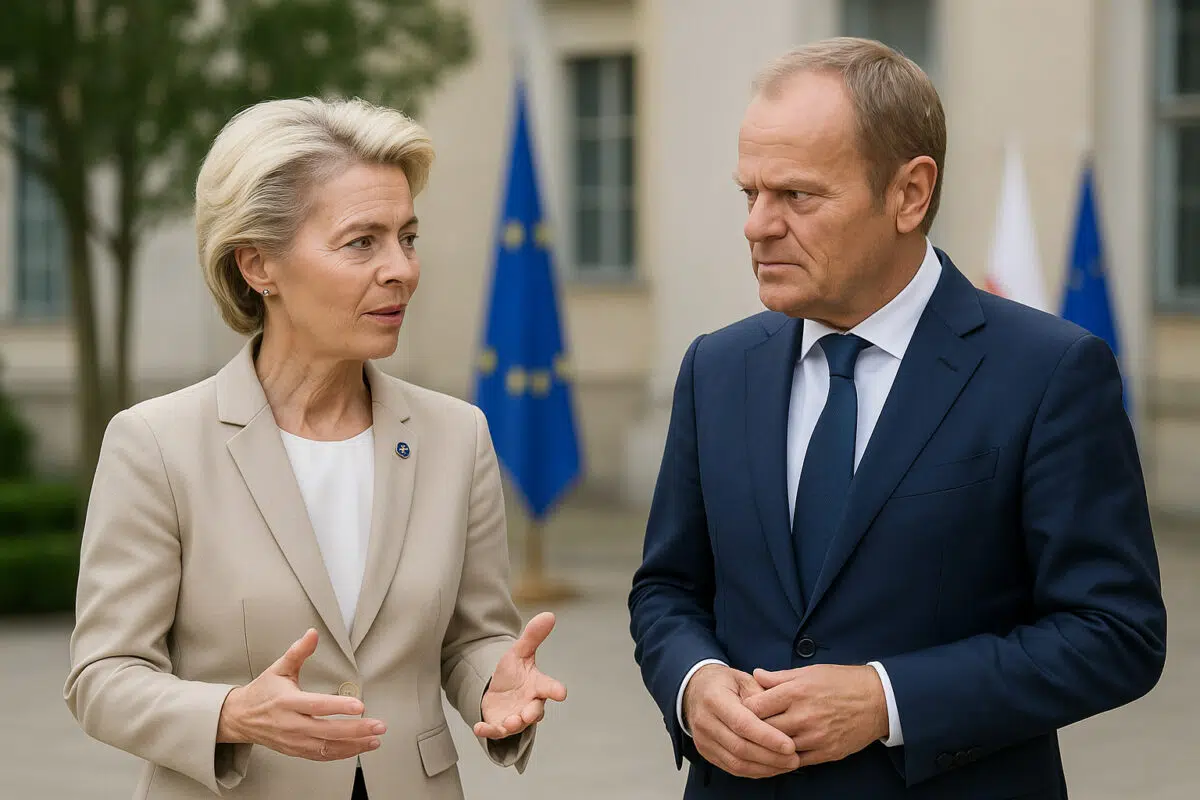
“We have to be coordinated, precise and fast with the surge in our defence posture in the European Union and specifically in the frontline states.” These recent comments from Ursula von der Leyen to Polish President Donald Tusk highlight the extent of Europe’s awareness of the defence challenges it’s facing. The real task now is to move from theory to action, especially in those capability areas where the gaps remain most glaring.
The end of the Cold War was supposed to have symbolised the final victory of Western liberal democracy and was described as the “end of history” by American political scientist, Francis Fukuyama. Three decades on, it seems history has come back with a vengeance. The return of high-intensity warfare to European soil, long thought unthinkable, has shaken the global geopolitical landscape to its core. The Trump administration has made it abundantly clear that American security priorities now lie elsewhere—notably in the Pacific and the Middle East—and that Europe must now respond accordingly. The recent summit held in Anchorage, Alaska, between President Trump and President Putin further raised alarm bells in Brussels as the shifting security landscape was once again laid bare, and Europe has been forced into facing some deep existential questions with urgency. Rhetoric is following suit, at least. European Council President Charles Michel argued in the Financial Times that “strengthening EU defence will not undermine NATO—it will reinforce it.” Oratory ambition is all very well, but realism dictates that only action now can buttress Europe from an otherwise inevitable strategic crisis.
Capabilities gaps, it’s time to address them
For decades, most European militaries (notably the UK and France) were structured for limited expeditionary operations. Think peacekeeping in the Balkans, counterinsurgency in Afghanistan, or interventions in Africa, all limited in scope, logistically manageable and politically workable. But the war in Ukraine has revealed the intrinsic limits of this model, ill-suited for sustained, large-scale conflict characterised by attrition in manpower, ammunition, and materiel. It is therefore being re-engineered under pressure. A UK Parliament report bluntly finds that while operational readiness is proven, “warfighting readiness … is in doubt,” citing capability shortfalls, stockpile shortages and overstretch across the force. France has also pivoted: national-level exercises and doctrine now emphasise high-intensity warfare after years of counterinsurgency, with Politico reporting that French forces have been training specifically to face an enemy that can match French firepower.
NATO Secretary-General Mark Rutte recently warned that Europeans must rearm “at the speed of fear” to face current threats. The European Commission’s White Paper on the Future of European Defence (Readiness 2030) identifies seven priority capabilities, among them: air and missile defence; deep and long-range strike (missiles, artillery, ammunition); strategic enablers such as logistics, satellite reconnaissance, and cyber. Most of these have historically been supplied by the United States. A Bruegel report concluded that “defending Europe without the U.S.” would require a massive increase in European defence spending, particularly for air defence and strike systems. Ukraine’s experience adds weight to the warning. As former Commander-in-Chief Valery Zaluzhnyi observed, “modern warfare is far from what NATO is now operating.”
Concrete examples highlight the challenge facing Europe. Germany’s permanent deployment of a brigade in Lithuania is already stretching its armed forces’ limits, while Poland’s massive tank and artillery purchases highlight both its determination and its reliance on non-European suppliers. Despite EU schemes such as ASAP (Act in Support of Ammunition Production), ammunition stockpiles remain insufficient. The timeline is unforgiving: developing a new armament program takes 20–40 years from conception to retirement, the White Paper warns. Europe must therefore meet immediate needs (2025–2030) while preparing for the long term (2030–2040).
Contradictions in politics and industry
This European defence dilemma is as industrial and political as it is military. EU leaders proclaim a preference for European procurement, setting themselves a target of 65% of major programmes sourced from within the Union. But contradictions abound. On one hand, initiatives such as the ReArm Europe Plan, SAFE (Strategic Autonomy Fund for Europe), and the European Defence Fund, are designed to strengthen indigenous capacity with tens of billions in funding. The sustainability of these measures is not guaranteed, and their implementation depends on government decisions, also constrained by their national socio-economic situations. On the other, member states continue to buy U.S. systems off the shelf, sometimes undercutting their own programmes. The acquisition of U.S. Tomahawk cruise missiles, for instance, risks sidelining European deep-strike projects, not to mention the $750 billion in US equipment (including arms) purchases permitted under the customs agreement granted by the Commission.
For the commentariat, industrialists, and many political decision-makers, the sovereignty issue is acute. Some U.S. platforms, like the F-35, come with operational restrictions and “kill switch” concerns, raising doubts about Europe’s freedom of use in wartime. Saab CEO Micael Johansson has warned that Europe needs its own “golden dome”—an integrated missile-defence system—or it will remain “permanently vulnerable”.
Some steps forward
Faced with this situation, bilateral frameworks can help pull the rest forward. The Franco-British Lancaster House 2.0 treaty covers operational issues ranging from nuclear deterrence to the corps-sized CJF. It also includes a major industrial component, expected to sustain 1,300 high-skilled jobs in the UK alone. The treaty addresses pioneering domains such as AI-coordinated strikes and radio-frequency weapons, and above all seeks to step up efforts to close the strategic gap in deep-strike capabilities. Alongside upgrading the Storm Shadow/SCALP lines, it launches the development phase of the FC/ASW deep-strike programme, with the aim of providing both countries’ armed forces by the 2030s–40s with the ability to penetrate adversary defences and neutralise high-value targets in the air, on land, or at sea.
At the multilateral level, and still within the deep-strike autonomy sector, the European Long-Range Strike Approach (ELSA), was launched in 2024 by France, Germany, Italy, and Poland, and since joined by the UK and Sweden. It has been described as “a coalition of volunteers and sovereign states, and it has been achieved without getting bogged down in the bureaucratic red tape,” by Jean-Louis Thiériot, a French deputy who sits on the National Assembly’s defence committee. ELSA’s 13 development clusters span strategic projects to upgrade existing systems—such as the Taurus, promoted by Germany and Sweden—as well as more speculative concepts like a German British solution with a 2,000-kilometre range. Others are already moving towards maturity, notably the Land Cruise Missile championed by France and likely of interest to Poland. Pawel Bejda, the Polish Minister of Defence, and Emmanuel Chiva, Director of the French DGA agency, recently signed a letter of intent regarding a land-based cruise missile.
Adapting to new realities
In a speech to the European Parliament marking the launch of Denmark’s six-month term as holder of the EU presidency back in July, Prime Minister Mette Frederiksen admitted that “cutting our defence spending in the past 30 years was a huge mistake.” The urgency is obvious. Training regimes, stockpiles, and production lines must be adapted to the demands of high-intensity, long-duration warfare. Europe faces a historic choice. It can continue to oscillate between lofty rhetoric about sovereignty and heavy reliance on the United States, or it can invest politically, militarily, and industrially, in the difficult road toward genuine autonomy, of which the two abovementioned examples constitute a first step.
Europe has no shortage of ideas or expertise, but its resources are finite. With national budgets constrained by sluggish growth and electoral cycles, only the most coherent projects stand a chance of enduring. These are the ones that best meet operational needs, maximise cost-effectiveness, safeguard European sovereignty, and support recovery through re-industrialisation and job creation. Such initiatives alone can secure lasting public backing and the unwavering commitment of governments.
This content was produced independently from the Worldcrunch editorial team.