
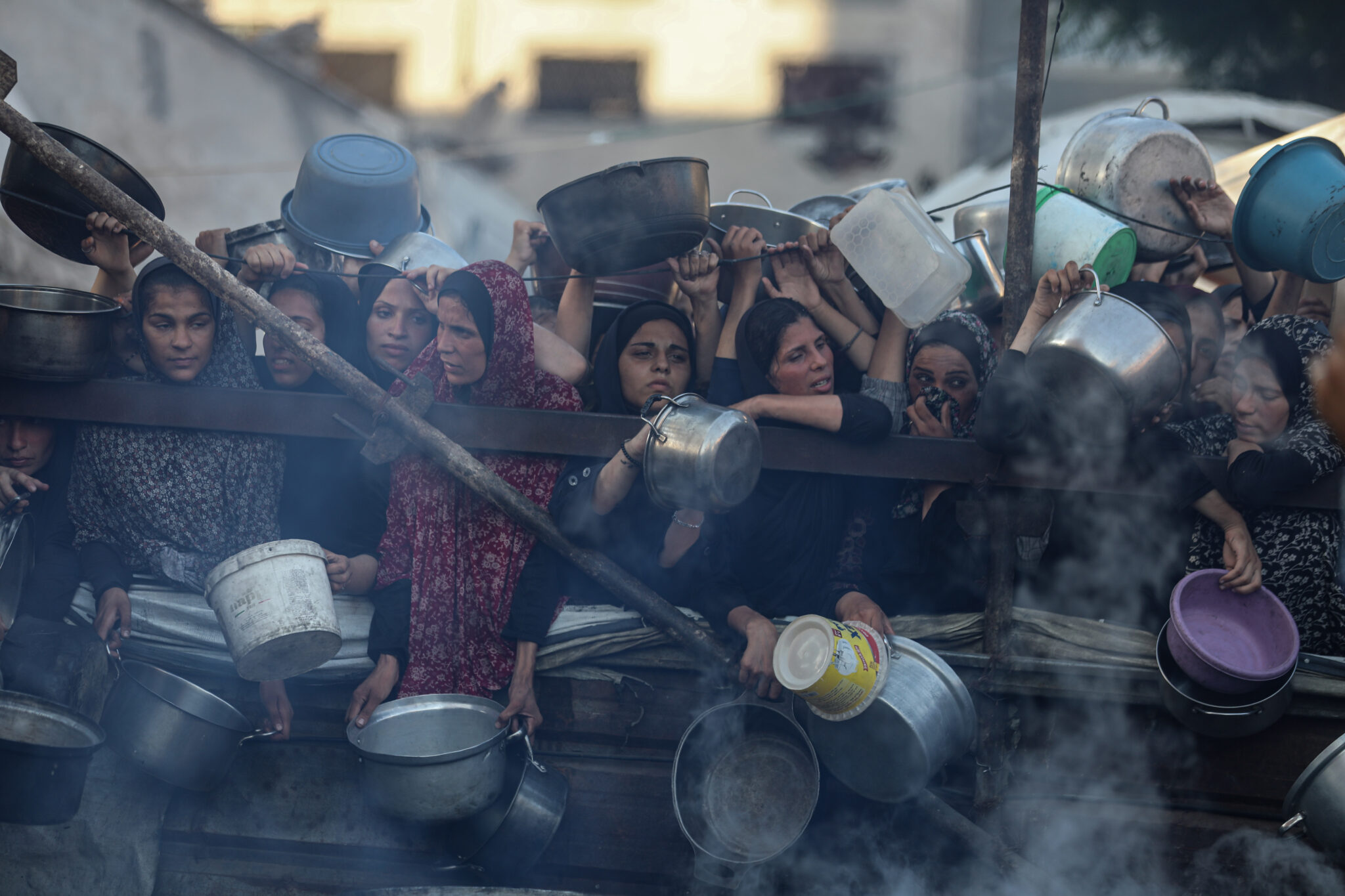
“All night, the explosions continued, the sound of helicopters getting closer, bursts of gunfire and drones.”
In Gaza, Israeli forces have been launching a major new assault over the past 24 hours, and the evacuation orders are creating major additional disruptions for humanitarian aid. In recent days, scores of civilians had been killed by Israeli troops while attempting to get food and other basic supplies for their families. Britain, France, Canada and 23 other countries released a statement Monday that the war “must end now,” as civilian suffering in Gaza had “reached new depths.”
Alessandro Migliorati is project manager in Gaza for Emergency, the Italian NGO, which runs medical services at two clinics in al-Mawasi and al-Qarara, in the southern governorate of Khan Yunis. “This latest evacuation has cut off the only road that was still partially accessible in the area, and now we can no longer reach our clinics,” he says.
Since early Monday, coordinated strikes by Israeli ground and air forces have targeted the Deir al-Balah area, mostly inhabited by people who had already been displaced from southern Gaza. According to the Gaza Health Ministry, the attacks left 134 dead and more than 1,000 wounded.
Medical emergency
The forced evacuation by Israeli forces has also hit Emergency’s team hard, compromising the ability of its clinics to operate at full capacity. “Some of our Gazan colleagues had to flee with their families because their tents were located in the zone affected by the evacuation order,” Migliorati explains. “Thanks to staff living in other areas, we’ve managed to keep our medical services going, but we need everyone we have in order to provide care for the population.”
Emergency’s clinics see about 250 patients each day, “a workload we simply can’t manage with reduced staff,” says the project manager.
The evacuation order and subsequent strikes hit the very area that, up until the March ceasefire, had been designated as a “humanitarian zone,” offering shelter to around 70,000 displaced people and humanitarian workers.
Worldcrunch 🗞 Extra!
Know more • The presence of Western NGOs is virtually the only independent testimony of what is unfolding in Gaza, as the foreign press has been virtually shut out since the war began in October 2023. With the growing reports of civilian deaths, French Foreign Minister Jean-Noel Barrot on Tuesday called on Israel to allow the free press into Gaza to “show what is happening there and to bear witness.”
Speaking on France Inter radio, Barrot noted that the French news agency AFP had just circulated a lengthy statement about the health and safety of its local contributors in Gaza, including a photographer who said he was too weak and malnourished to take photos.
Israel’s foreign ministry on Monday accused Hamas of “deliberately acting to increase friction and harm to civilians who come to receive humanitarian aid.” —Roy Greenburgh (read more about the Worldcrunch method here)
In addition to roughly 40,000 Gazan civilians, the evacuation directly or indirectly affected a large number of NGOs. “That’s another serious blow to humanitarian efforts,” Migliorati notes. “Some of our local staff are based in those areas and have already had to relocate three or four times. The few places still available for people newly displaced are in even worse condition than the previous ones, especially considering that reaching them means traveling on a road now under a separate evacuation order.”
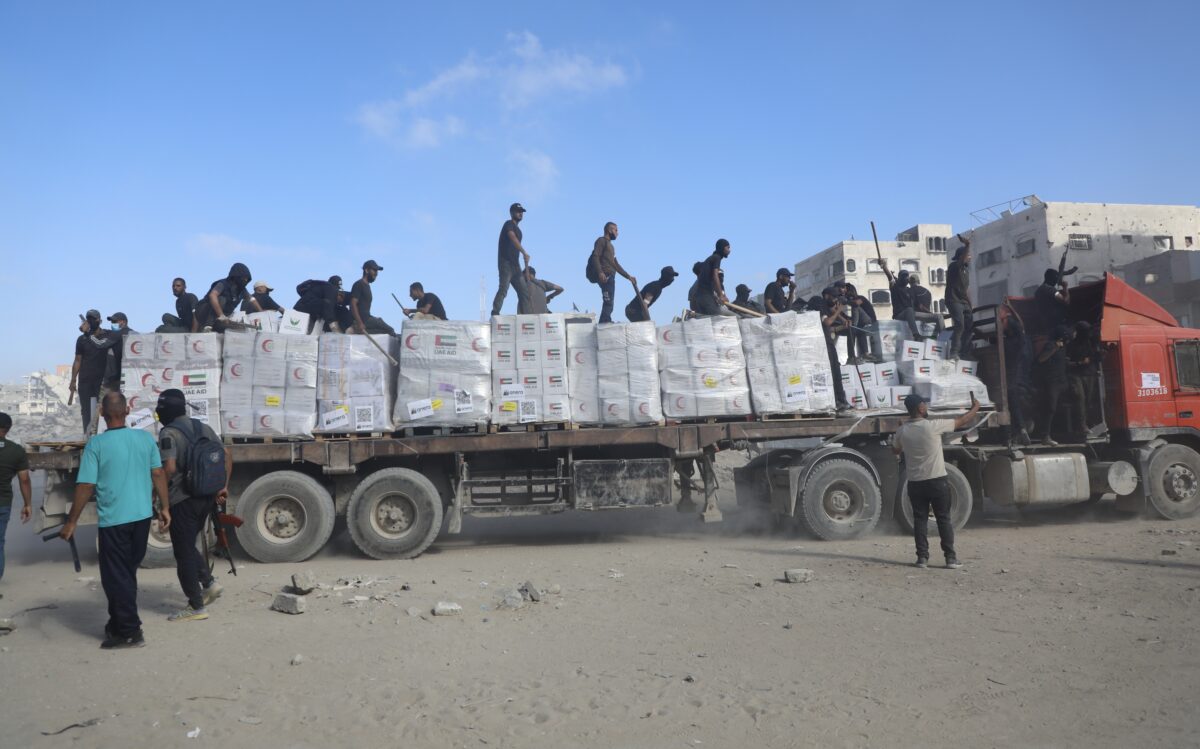
Split in two
There are also members of the NGO’s international staff on the ground in Gaza, where since January the organization has been offering first aid, basic medical and surgical care for adults and children, reproductive health services, and post-operative nursing care.
They also collaborate with local groups such as the Culture & Free Thought Association (CFTA). Raffaela Baiocchi, a gynecologist and coordinator of medical activities, says: “Deir al-Balah, where our guesthouse is located, is very close to the blocks that were just evacuated by the Israeli army. Along with some of the Palestinian staff, we had to leave the clinic to avoid getting trapped and being unable to return home in the evening after work.”
“We had to leave the clinic to avoid getting trapped”
The evacuated area effectively splits the Strip in two, creating serious difficulties for the many humanitarian workers in the field.
“To reach the clinics, we need to cross through the Khan Yunis and Deir al-Balah governorates, so all staff living north of this dividing line had to leave early,” she says. As a result, only those living in the southern zones have been able to continue working in the clinics, leading to obvious staff shortages. “Yesterday we reorganized the work, and all the Palestinian staff who live south of the evacuated zone offered to run the clinic on their own,” says Baiocchi.
She concludes, “Even with fewer people, we are doing everything we can to treat as many patients as possible. They are now seeing more than one hundred people a day.”