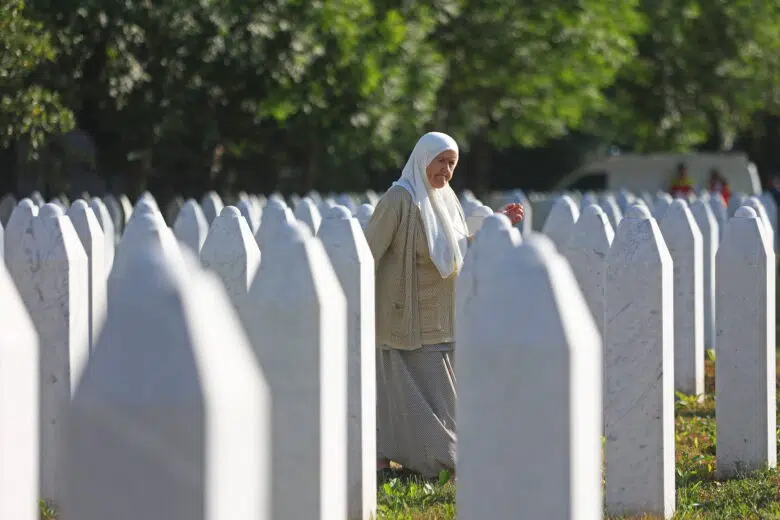
-OpEd-
HAMBURG – The genocide in Srebrenica shattered the Western belief that the worst crimes in history were behind us. The final decade of the 20th century had been filled with ambitious efforts to make the world a better place. Peace and disarmament treaties were signed, Europe came together, and politicians from Europe, Russia, and the United States embraced one another and promised lasting peace.
For the latest news & views from every corner of the world, Worldcrunch Today is the only truly international newsletter. Sign up here.
Then in July 1995, exactly 30 years ago, Bosnian Serb forces marched into Srebrenica. They took control of a city already overcrowded with refugees and people in despair. They separated the men from their families, expelled the women and children, and rounded up the men outside the city. There, they murdered 8,000 Muslims. The Yugoslavia Tribunal in The Hague classified the mass shootings and killings as genocide, calling them systematic and premeditated.
Back in the peaceful optimism of the 1990s, the war in Yugoslavia looked like a tragic exception. Srebrenica seemed like a lapse back into the horrors of the 20th century, something that could only have happened because the international community had let its guard down. But now, 30 years later, we have to ask whether Srebrenica was not so much an exception as a warning for what the 21st century might hold. Or perhaps a grim indication of a kind of normality that we Europeans, caught up in the brief euphoria of the 1990s, simply refused to acknowledge.
What happened in Srebrenica had been entirely foreseeable. The so-called “ethnic cleansing” by Serb forces had already targeted eastern Bosnia, where Muslims made up the majority. They expelled people from their homes and seized the land. Meanwhile in the west, Croatian forces and militants drove Muslims out of Herzegovina. A few months before Srebrenica, Croats had forced Serb residents to flee from Krajina, a region from which Croats themselves had once been expelled.
The goal is always the same: strip people of their homeland so their land could be taken over and make sure they never return.
These expulsions, along with the genocide in Srebrenica, followed a chilling tradition of the 20th century: killing or displacing people in order to take over their land. Serbs, Greeks and Bulgarians expelled Muslims. The Turks carried out massacres of Anatolian Armenians and drove out the Greeks. In the 1920s, British and French politicians downplayed the brutal expulsions of Greeks and Muslims, calling it a “population exchange.”
Later in the century, the Nazis carried out the Holocaust, exterminating Jews across Europe and enslaving Eastern Europeans. Stalin expelled and deported Estonians, Latvians, Chechens, Germans and Crimean Tatars, while resettling Russians, Ukrainians and Belarusians into the Baltic states. The goal is always the same: strip people of their homeland so their land could be taken over, and make sure they never return.

It can happen again, it already did
That was also the underlying idea behind Srebrenica. The genocide was driven by a twisted logic: eliminate 8,000 Muslim men, young and old, once and for all as potential combatants. Racist and religious hatred fed into this mindset. It was a calculated act of Christians murdering Muslims. In much of Western Europe, this element went largely unnoticed. And the Austrian Nobel laureate Peter Handke outright denied the Srebrenica crimes, even blaming the victims.
The fact that such ideas can even be voiced shows how far the window of what is considered acceptable has shifted.
Now, these kinds of arguments are back in fashion. Nationalists and ideologues have once again taken center stage in global politics and are repeating the same brutal tactics as before. Russian President Vladimir Putin’s war on civilians has displaced millions of Ukrainians, in a conflict that has already taken hundreds of thousands of lives. Hamas has carried out mass killings and inflicted horrific injuries on Israelis through coordinated attacks. Meanwhile, Israel’s government, dominated by far-right forces, has subjected Palestinians in Gaza to years of warfare, depriving them of even the most basic means of survival.
U.S. President Donald Trump, whom Israeli Prime Minister Netanyahu has now nominated for the Nobel Peace Prize, has floated a chilling idea: driving Palestinians out of Gaza and building luxury seaside resorts on their land. For now, these are just the musings of a man known for changing his mind by the hour. But the fact that such ideas can even be voiced shows how far the window of what is considered acceptable has shifted.
The belief that peace, prosperity or even just quiet can be achieved by expelling, neutralizing, or killing people has returned to the global conversation. And the memory of Srebrenica still stands as a stark reminder of just how far that kind of thinking can go.

