
*Updated August 18, 2025 at 5:45 p.m.
Since the beginning of the full-scale war with Ukraine, Russian authorities have
systematically restricted access to statistical data. In February 2023, the government was legally granted the right not to disclose official figures.
Moreover, a new development strategy for the national statistics system explicitly states that data from the Russian statistical office, Rosstat, may be concealed to avoid “negative consequences” from sanctions imposed by “unfriendly” nations. Such practices, of course, may also be used to shape current efforts to reach a ceasefire or long-term peace agreement that U.S. President Donald Trump is trying to orchestrate.
By the end of 2024, over 700 previously public datasets had been removed from
government websites, according to the “To Be Precise” project. Understanding what is happening in Russia — in terms of population, mortality and the economy — is becoming increasingly difficult.
From among the hundreds of restricted statistical indicators, the data team at Important Stories selected the most significant. Here’s how key statistical data disappeared from public view — and what it previously revealed about what’s happening in Russia and the government’s true priorities.
Demographics
By summer 2025, nearly all publicly available demographic statistics in Russia had
vanished. The following indicators are no longer available:
- Monthly data on population size and migration
In July, Rosstat published its report “The Socio-Economic Situation of Russia” for January–May 2025 but with one notable omission: The section on demographic data was gone. These reports used to provide monthly updates on population changes and both international and interregional migration.
- Monthly figures on births, deaths, marriages and divorces
Rosstat hid all operational demographic data even earlier. The last update to the section containing this information was in March. First, data broken down by region disappeared; then the nationwide figures were removed. Independent demographer Alexey Raksha noted that the shutdown coincided with a historic low: In March, only 3,012 babies were born per day on average — the lowest figure since systematic record keeping began (nearly 200 years ago).
- Annual number of deaths by gender and age
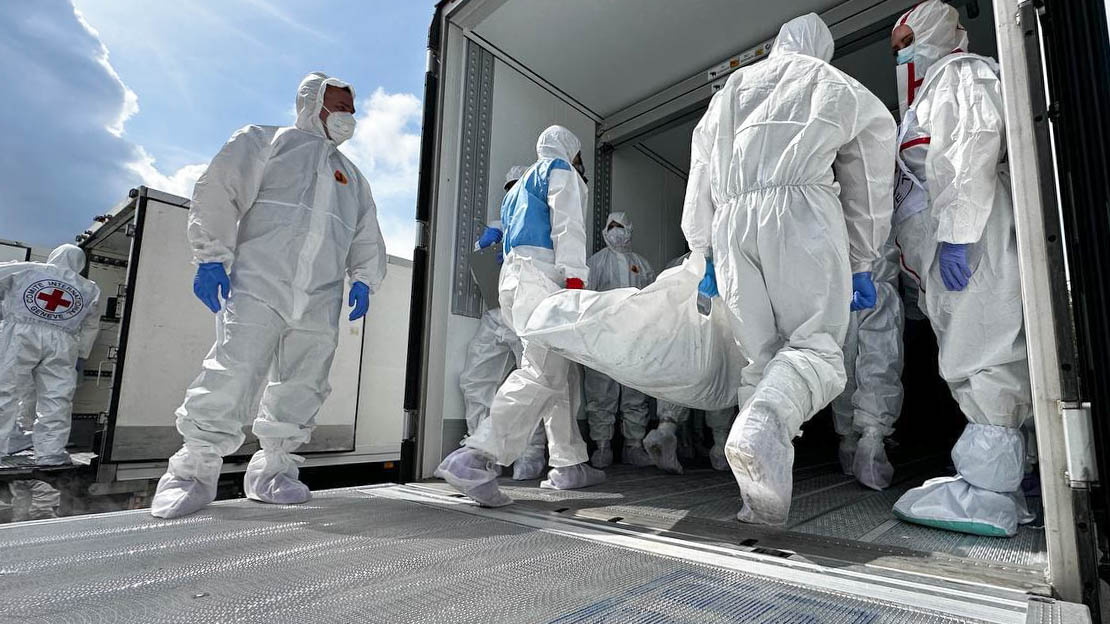
In 2025, Rosstat did not released the annual mortality data segmented by gender and age group. This breakdown was previously used to estimate how many Russian men had died in the war in Ukraine.
- Detailed breakdown of annual deaths by cause
Before the war, Rosstat published data on deaths by more than 300 specific causes. That has now been reduced to just 16 broad categories. Among the first to disappear was the breakdown of deaths from external causes — such as suicide, traffic accidents, homicide, and others — which could be used to estimate casualties from combat.
- Monthly estimates of life expectancy
Since autumn 2024, Rosstat has also stopped publishing another critical demographic indicator: the monthly estimates of life expectancy. This coincided with a steady decline in the figure, driven by high death toll among young men at war.
“It’s not entirely clear what happened to all the operational statistics, because even if the aim was to hide war-related deaths it wouldn’t make much sense to suppress all the data,” said a Russian demographer who spoke to Important Stories on condition of anonymity. “My guess is that the public discussion around demographic decline — especially rising mortality and possibly falling birth rates, even if that decline is gradual — caught the eye of a high-ranking official who knows nothing about demography. That official may have pushed to shut down all operational statistics.”
In addition to open data, Rosstat holds vast amounts of statistical data it shares with
researchers by request. Yet another demographer, also speaking anonymously, said the agency has already begun denying scientists access to this data. According to Alexey Raksha, demographic statistics will now be provided to Russian researchers under personal signature and the note “For Official Use Only.”
Migration and crime
In the summer of 2023, the Ministry of Internal Affairs (MVD) stopped publishing monthly statistics on migration to Russia from various countries and removed all previously published reports from past years. These have been replaced with quarterly bulletins that lack detailed statistical data but do include stories about the ministry’s efforts to combat “migration-related crime.” Meanwhile, migrants in Russia actually commit fewer crimes, on average, than Russian citizens.
The underlying reason for restricting this data is an aggressive campaign against migrants, a demographer told Important Stories: “Since 2022, officials, lawmakers and propagandists have launched an aggressive campaign to incite xenophobia — primarily targeting migrants. Alexander Bastrykin, head of the Investigative Committee, has been aggressively pushing anti-migrant sentiment for years, using MVD data but consistently misrepresenting it. He acts as though the numbers show a massive influx of migrants, when in fact the data says something entirely different.”
It’s no longer possible to track what’s happening with violent crime in Russia.
“Perhaps Bastrykin genuinely believed what he was saying, simply because he didn’t
understand MVD statistical terminology,” the demographer said. “For instance, he counted multiple temporary registrations for the same person as a total flow of new immigrants. The implication of his claims was that the MVD itself was to blame for both the ‘migrant crime wave’ and for there being ‘too many’ migrants. I suspect that was the final straw that led to the closure of the data. But the broader reason, most likely, is the shift in Russia’s entire migration policy — away from economic needs and toward security concerns.”
Until 2023, the Prosecutor General’s Office had published monthly crime statistics in detail, which allowed for independent verification — and refutation — of xenophobic claims made by authorities. These figures helped Important Stories demonstrate how Bastrykin manipulated data on migrant crime, and to report on the scale of domestic violence in Russia.
Now, without access to this data, it’s no longer possible to track what’s happening with violent crime in Russia, how many crimes are committed by minors, how crime rates differ by region, or other key indicators that reflect changes in society.
Budget spending
The Russian government continues to expand the share of classified spending in the federal budget. The amount of secret expenditures has reached one-third of the total budget — an all-time high in modern Russian history. A massive portion of classified spending goes toward the war. In the first quarter of 2025 alone, 3.6 trillion rubles were allocated to classified budget items. That’s a 44% increase compared to the same period the previous year, according to calculations by Janis Kluge of the German Institute for International and Security Affairs.
In 2024, Russia’s official military spending exceeded 6% of GDP — the highest level since Soviet times. Experts forecast that this figure will rise to 7.5% in 2025. According to Russia’s approved federal budget for 2025, in the fourth year of the war with Ukraine, Russia will spend 40% of its entire budget on defense and security. That is more than the country will spend on education, healthcare and social needs combined. It also surpasses the combined defense budgets of all EU member states and the United Kingdom.
Real estate
Since 2023, the State Duma, the lower house of Russia’s parliament, has classified data from the Unified State Register of Real Estate. Now, ownership information can only be obtained with the consent of the property owner. This has not only complicated due diligence for real estate transactions, but also seriously hindered anti-corruption investigations.
Previously, journalists and activists used Rosreestr data to expose the luxury assets of officials and lawmakers that far exceeded their declared incomes. For example, using Rosreestr records, opposition leader Alexei Navalny’s investigative team confirmed that Russian Railways head Vladimir Yakunin owned a palace with a fur coat storage room in the Moscow suburbs, and that then Emergency Situations Minister Sergei Shoigu owned an estate on the elite Rublyovka highway.
Following these high-profile investigations, Rosreestr began quietly scrubbing records of certain high-ranking property owners from the database and hiding their identities behind pseudonyms. Eventually, most of these properties were listed under the vague ownership of the “Russian Federation.” According to the media outlet Proekt, the Federal Security Service (FSB) had been pushing to shut down access to Rosreestr data for a decade — a move that was ultimately realized in 2023.
Other economic indicators
In 2022, the Federal Customs Service stopped publishing monthly statistics on imports and exports, citing the need to “avoid misinterpretations and speculation.” Although the data was later reintroduced, it appeared only in a highly aggregated format — insufficient for any meaningful analysis. Still, researchers and journalists have managed to demonstrate that Russia continues to circumvent sanctions and procure goods for military use — including from Western companies — by routing purchases through intermediaries in China, Kazakhstan and other countries.
The government has allowed Russian companies that are already under sanctions — or at risk of being sanctioned — to withhold financial reporting, conceal beneficial ownership, affiliated entities, counterparties, transactions and investments. The Ministry of Finance decides which companies receive this privilege. Additionally, sanctioned entities are no longer required to disclose details about government contracts. Overall, the volume of publicly available data on government procurement has dropped significantly since the beginning of the full-scale war, researchers note.
Key economic data has been systematically withheld. For instance, Rosaviatsiya (Russia’s Federal Air Transport Agency) stopped publishing airline and airport passenger traffic statistics. The Ministry of Energy no longer releases figures on oil and petroleum exports, as well as data on energy production and consumption. As independent online newspaper The Bell reported, “The consequences of closing economic data are well known for businesses: Forecasting and planning become less accurate, and operational costs rise — which will ultimately be passed on to consumers in the form of higher prices.”
Concealing information is a hallmark of all authoritarian regimes.
This is only a portion of the information that has disappeared from public view over the past three and a half years. Even the data that remains accessible is often highly questionable. For example, one of the country’s most important data sources — the latest national census — has been distorted to the point of being almost useless for serious analysis. Authorities have shifted the poverty threshold to artificially lower the number of Russians classified as living in poverty, inflated the reported number of Ukrainian refugees received by Russia, and manipulated healthcare statistics.
The suppression of information strikes the heart of the social sciences, civil society, and the ability to understand and evaluate what is happening in the country — and to hold decision makers accountable. Concealing information is a hallmark of all authoritarian regimes, notes political scientist Ekaterina Schulmann.
All autocracies — including Russia — follow the same playbook, she explains: They monopolize power, attempt to control the public sphere, and distort data. According to Schulmann, propaganda, information distortion, secrecy and data suppression are now playing a central role in preserving authoritarian rule.
*Originally published July 23, 2025, this article was updated August 18, 2025 with enriched media.