
-Essay-
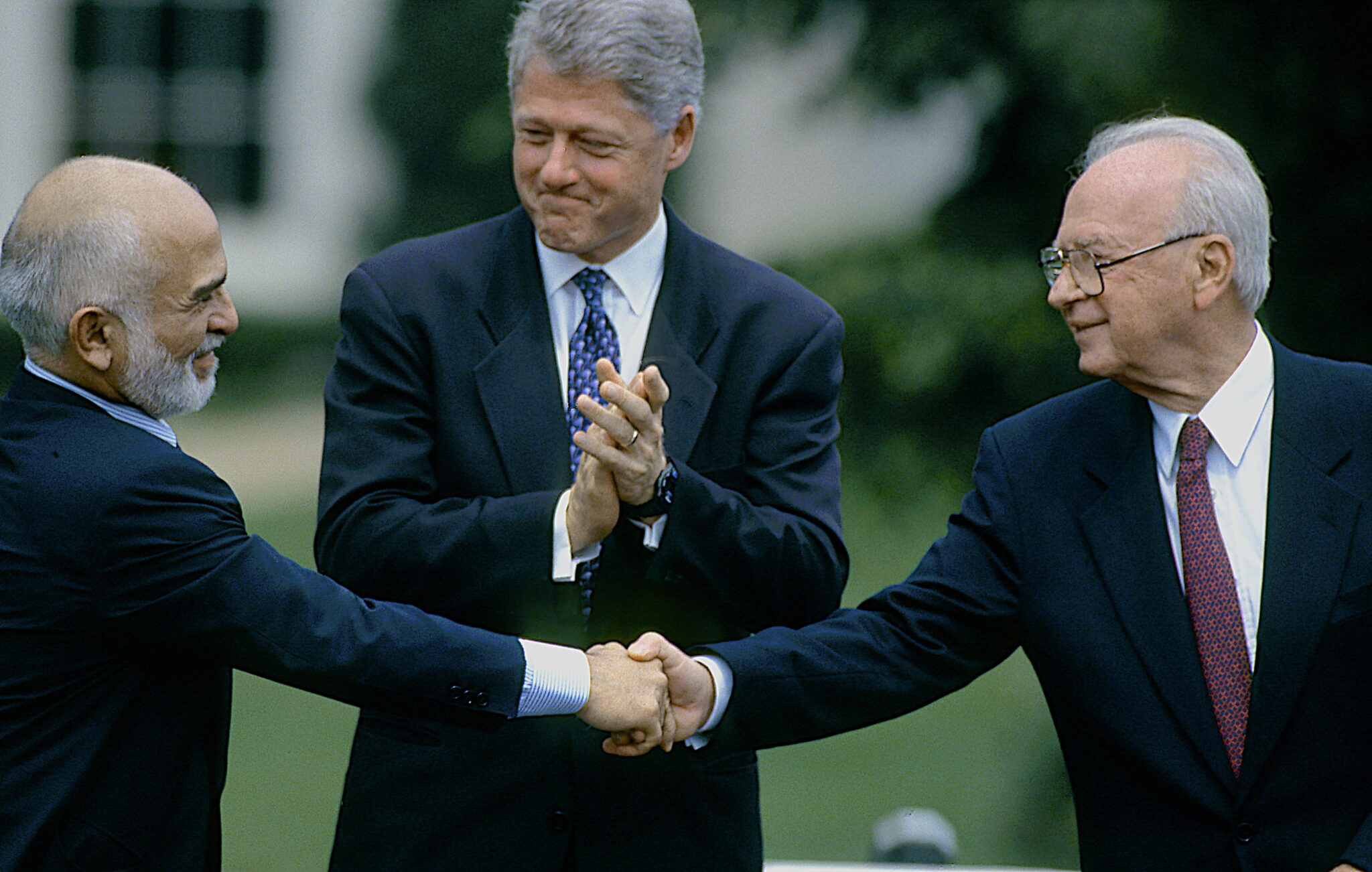
AMMAN — On a humid afternoon in July 1994, I sat alongside 10 Jordanian journalists in the famous White House Rose Garden to witness a historic moment being written by King Hussein of Jordan, Israeli Prime Minister Yitzhak Rabin and U.S. President Bill Clinton.
I was 31 years old, filled with excitement mixed with awe at meeting those we had learned to call enemies at school and at home. Jordan’s Royal Court had invited us to witness the signing of the Washington Declaration, which officially ended the state of enmity between Jordan and Israel, and paved the way for the Wadi Araba Treaty three months later. And although I held a press badge from the Reuters bureau in Jordan, I sat there as a Jordanian witness, biased toward my homeland, Jordan.
The scene was surreal — presidents, politicians, diplomats, journalists, security leaders and Israeli and global TV crews eager to document every handshake.
We saw with our own eyes Rabin publicly shaking hands with Hussein, after decades of secret meetings. The next day, Hussein invited us to a luncheon to personally explain his vision and concerns in light of the challenges of peace after decades of hostility. As usual, he was genuine, and made us feel that he understood that peace was a thorny decision fraught with danger.
“I chose peace because I understood the meaning of war,” he told us that day. His facial expressions reflected his hopes, dreams and beliefs at the time.
A time of hope
I accompanied the Jordanian delegation during the shuttle negotiations with Israeli delegations, which were held in border areas, to cover the news neutrally. Often, I would return to Jordan’s capital, Amman, in a car carrying Dr. Fayez Tarawneh, head of the Jordanian delegation, and a group of his colleagues.
Colleagues accused me of normalization, simply because I was doing my job and covering joint meetings, regardless of my emotions, fears and doubts.
On one of the trips, I couldn’t find the military driver I had come with in an official car under the agreement with Israel. After being stranded, I asked Tarawneh to return with him. His was the last car leaving “Beit She’an,” that is, Bisan. I sat in the front seat in silence. In the back seat sat Tarawneh and his Israeli counterpart Elyakim Rubinstein, on their way to Amman to resolve a misunderstanding. Their dialogue was combative, and I listened from the front seat, silently smiling at the quiet diplomatic exchange unfolding between them.
There was genuine willingness to move toward a better future for the new generations.
When things got complicated and negotiations stalled between the peace delegations in August due to disagreements over borders, water and refugee issues, the participants did not lose hope.
They submitted their recommendations to their leaders, who reviewed and approved them, and they became part of the treaty signed in Wadi Araba on time. There was genuine willingness to move toward a better future for the new generations, who had not lived through the painful past full of hostility.
Death of a moment
In November 1995, Rabin was assassinated by an Israeli right-wing extremist amid incitement by Zionist hardliners, simply because he chose to send his foreign minister, Shimon Peres, to sign the Oslo Interim Agreement with yesterday’s enemy — PLO leader Yasser Arafat.
A rare moment in our region’s history died. The course began to shift gradually, internal politics in Israel started to change. Likud was no longer just a ruling party, but became hostage to years of extreme nationalist and religious alliances. The left was assassinated, and with it the idea and spark of hope.
The Oslo Accords stipulated a transitional phase, the establishment of a Palestinian Interim Self-Government Authority for five years, and a legislative council elected by the Palestinian people in the West Bank and Gaza, leading to a final settlement based on UN Resolutions 242 and 338 by the start of the third year of the transitional period.
Nothing materialized due to challenges including the emergence of a Palestinian Authority plagued by favoritism and allegations of corruption, especially after Arafat’s death by poisoning in Paris — according to Jordanian and Palestinian officials who lived through that moment.
Hope fades
The occupied West Bank is undergoing systematic annexation, abuse and fragmentation — in blatant defiance of Jordan, which drew its borders with Israel, not with the West Bank, pending the signing of a permanent peace treaty. Jordan’s custodianship over Islamic and Christian holy sites is violated daily. The Judaization of Jerusalem accelerated, wars with Lebanon and Gaza erupted — culminating in the ongoing destruction of Gaza in the longest and fiercest conflict in modern Eastern Mediterranean history.
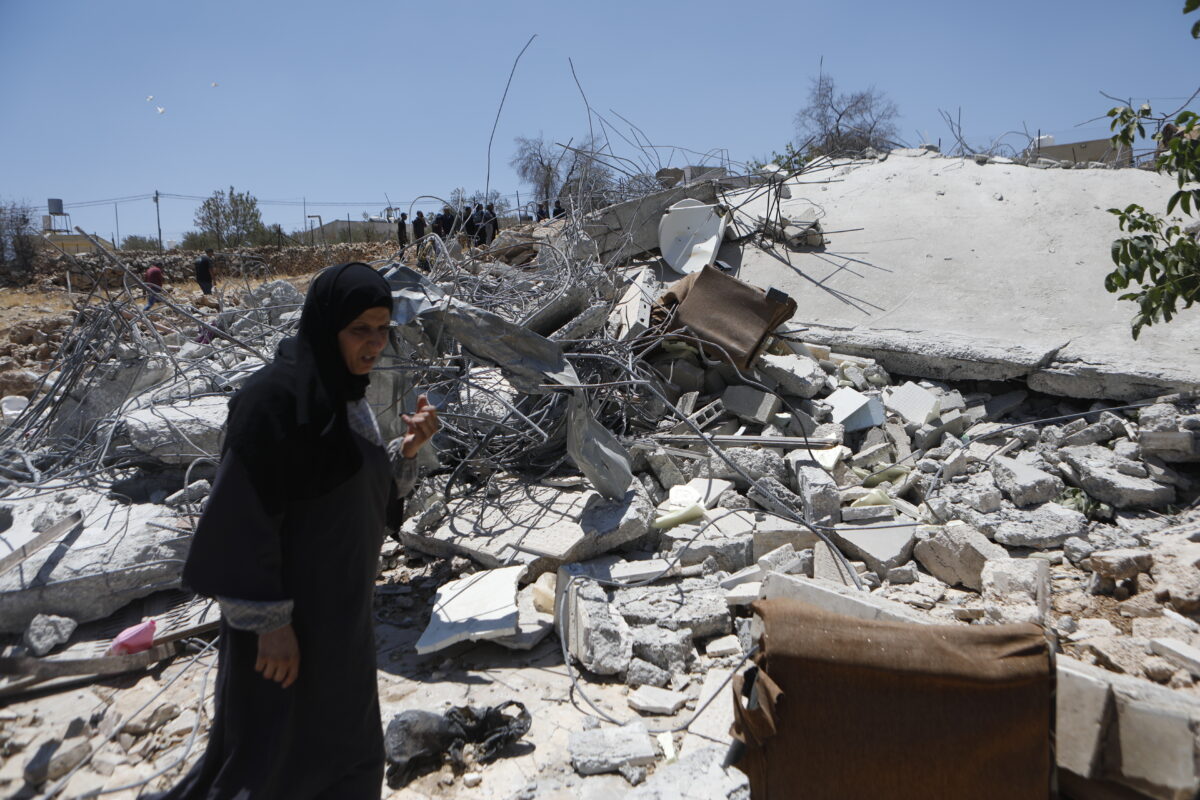
Israel now marches steadily toward annexing what remains of the occupied Palestinian territories to expand its borders, amid international silence and suspicious American cover — closer to complicity than diplomacy.
The raging occupation war on Gaza for nearly two years has decimated lives and infrastructure, killing tens of thousands through bombing, displacement and starvation — in open defiance of international legitimacy, met only with timid criticism from Western and Arab leaders.
Meanwhile, political relations between Israel and Jordan have worsened.
Meanwhile, political relations between Israel and Jordan have worsened — even if formal economic ties such as gas and water agreements, and intelligence cooperation on border security remain strong, much like they were before the treaty.
In July 2025, the Israeli Knesset voted by majority in favor of a symbolic law supporting Israeli sovereignty over the West Bank, including the western Jordan Valley. Though non-binding, the provocative law reflects a declared strategic direction, already enforced on the ground by settlements and a settler army.
The law, which defines the Palestinian West Bank as “an inseparable part of the historical homeland of the Jewish people,” came alongside Israel’s justification of its daily massacres in Gaza under the pretext of “national security.”
Two-state solution dies
But the annexation of land and forced displacement of residents spell the death of the two-state solution — which Jordan has bet on to establish an independent Palestinian state, rather than one that arises at the expense of its neighbors like Jordan. It means imposing unacceptable arrangements, like the displacement of 350,000 Palestinians residing in the West Bank who hold national numbers (Jordanian citizenship) — and reviving talk of a fragmented Palestinian state besieged by Israel, rendering it unviable without relying on Jordan.
Israeli politicians began floating the idea of a federation or confederation between the mini-state and Jordan — a threat to security, stability and the political order, which has rejected such proposals time and again.
Israel no longer views peace as a partnership with a neighboring state, but as a tool.
As for Europe, like most of the world shackled to U.S. policy — a world that stands firmly against violations by any other country, from Saddam Hussein’s Iraq to Iran’s mullahs, Hezbollah in Lebanon, and Hamas in Palestine — it merely watches and quietly condemns ethnic cleansing in Gaza, as part of expansionist Zionism executed under Benjamin Netanyahu.
Today, when the Wadi Araba Treaty — the second treaty with the Jewish state after Egypt’s in 1979 — is mentioned, questions resurface: Was it enough? Did it guarantee Jordan’s interests? Was Israel truly ready for peace? Did Hussein rush to sign it to preempt the consequences of Oslo, signed by Arafat? Even though Jordan participated in the Madrid peace talks, and the Palestinian delegation was allowed to participate independently but under a Jordanian umbrella that formed a joint negotiation team before the “Oslo betrayal.”
Peace as a tool
The bitter irony is that the treaty signed to secure Jordan’s borders, safety and stability has today become a looming threat greater than all other challenges facing this country — which grapples with economic hardship, water scarcity, poverty and unemployment — in a region ablaze with conflict and aerial flashpoints.
Israel no longer views peace as a partnership with a neighboring state, but as a tool to entrench occupation — imposing religious nationalist ideologies that even deny Jordan its historic role in Jerusalem and the holy sites. The Hashemite Kingdom of Jordan’s custodianship faces marginalization, and the “alternative homeland” narrative quietly returns to the minds of Israeli decision makers.
The West Bank is now under threat of complete annexation — which would detonate Jordan’s geography and demography alike. Under these circumstances, Jordan is no longer a neutral neighbor — but a directly threatened entity in its political, population , and economic identity. Every stone laid in a settlement is a direct threat to Jordan’s security.
Settlement madness, the Judaization of Palestine and systematic killing to displace — are not just security reactions or temporary policies, but a comprehensive ideological project to annex what remains of Palestine, and enforce permanent Israeli sovereignty from the river to the sea.
Israel goes rogue
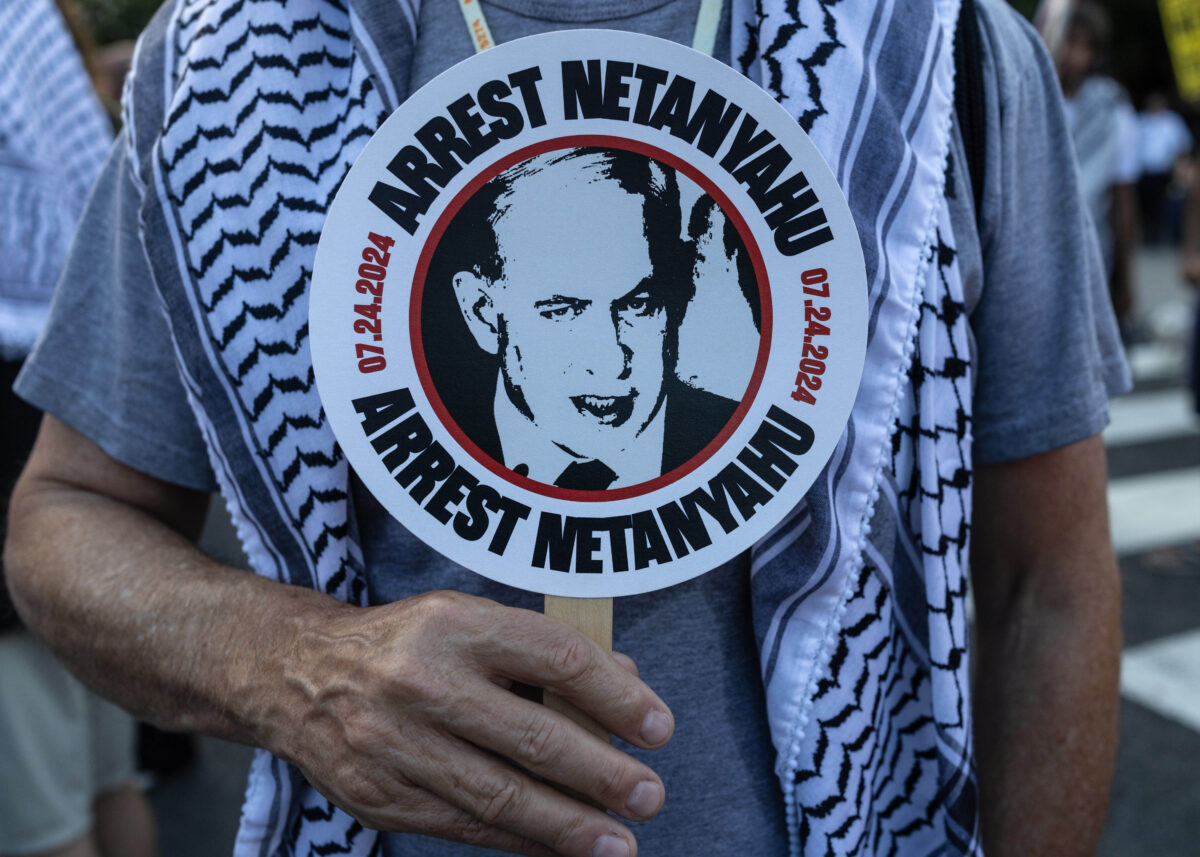
Under Prime Minister Benjamin Netanyahu, Israel has become a fascist state in its decision-making structure, rogue in its international behavior, and held hostage by extremist settler alliances, fanatical rabbis , and ideological militias. Figures like Itamar Ben-Gvir and Bezalel Smotrich — once considered extremist pariahs — now sit at the heart of political and military decision-making. They openly boast of ethnic cleansing policies, hatred of Arabs , and contempt for international law.
We lost a rare turning point in the region’s history
Netanyahu’s government works to undermine judicial independence, muzzle the media, and ignite regional wars — all while turning a blind eye to threats against Jordan and the incitement and violence against Palestinians and holy sites.
A growing part of the international community now sees Israel as a “rogue state” that defies international conventions and UN resolutions, disregarding both moral and legal deterrents.
After three decades, marked by brief calm and many battles, I am still convinced that Hussein was sincere, and Rabin truly wanted peace. In hindsight, I believe we lost more than two men — we lost a rare turning point in the region’s history, when two former enemies believed that wars were not inevitable. Whoever killed Rabin killed the last glimmers of hope for change in the Middle East.