

-OpEd-
HAMBURG — This piece, which calls for a bit of transparency, is being written under the very conditions it describes. The 10-year-old has barely left for tennis camp when the 8-year-old is already home from school vacation care. Although the 2-year-old’s daycare doesn’t officially close until Aug. 15 for a three-week break, staff shortages during this time of year are so severe that parents are already being asked to collect their children early in the afternoon. The children’s mother, who works as a teacher at another daycare center, is busy making sure other families get through the holidays.
Yes, maybe things have gone particularly wrong for some of us, including with grandparents, who unfortunately live far away. And maybe this institutionalized childcare crisis known as summer vacation hits others less hard, perhaps because they’re better connected with family and neighbors, because there are decent local activities for kids, or because volunteer support helps cover the gaps.
Maybe we’ve all just come to expect too much: Every summer, parents across the country somehow muddle through it all for at least two full months. This includes excursions, conferences, and announcements that “school ends at 12:30 p.m.” or there is “only emergency care due to a training day.” With help from understanding colleagues, maxed-out vacation days, and a talent for spotting workshops where kids might actually learn something, it always just about works out.
But the real question is: What kind of message are we sending, year after year? That parents must be endlessly resourceful to handle the situation? That they should be thankful for any scrap of help? And ideally, that they also have enough money (hello, tennis camp) to make it all work?
Stretched thin
There’s been plenty of speculation lately about why Germany’s birth rate hasn’t rebounded after the COVID-19 pandemic and, in fact, has dropped even further. Of course, easy explanations fall short, whether they point to global instability from war and climate crisis, a shift in dating culture and relationships, or the impossibility of recreating the happy (or unhappy) nuclear family model of one’s own childhood amid today’s lifestyles.
But COVID-19 does offer a good starting point for thinking about the issue in light of individual childcare needs. After all, the pandemic showed parents, and anyone considering parenthood, exactly what happens when society is under strain: Families get the short end of the stick.
If society wants people to have kids, then the right political signals are needed.
So now, every summer break ends up serving as a grim reminder of that time and all that it demanded. When push comes to shove, parents are expected to stretch themselves thin to deliver as much as humanly possible. Only then can they reassure bosses, teachers and their own kids that they really are doing all they can.
The irritated glares from children while you’re trying to work from home, your glazed-over reaction to their enthusiastic storytelling at night, the excessive screen time used to keep them calm from morning until bedtime, all of that, along with only middling performance at work, can ultimately be justified only with a weary, resigned sigh: “I’ve got nothing left to give.”

Families get the short end of the stick. — Photo: Oskar Kadaksoo
Don’t complain
At the same time, German parents aren’t supposed to complain too loudly. If they do, they’re promptly reminded by all political parties that other countries offer far less: less maternity leave, less parental leave, less financial support, less childcare. And that the only thing that’s longer and more widespread everywhere, whether in France or Albania, are school holidays, making the situation of parents in other European countries even harder to handle.
So what’s the point of raising a fuss? It just brings on scolding from educators who say children suffer when parents constantly whine in front of them. It draws rebukes from other parents who always seem to have a clever solution or new system to keep the kids “organized” even longer and more efficiently. As if that were the goal. As if parents exhausted by parenting didn’t long to spend calm, happy time with calm, happy kids.
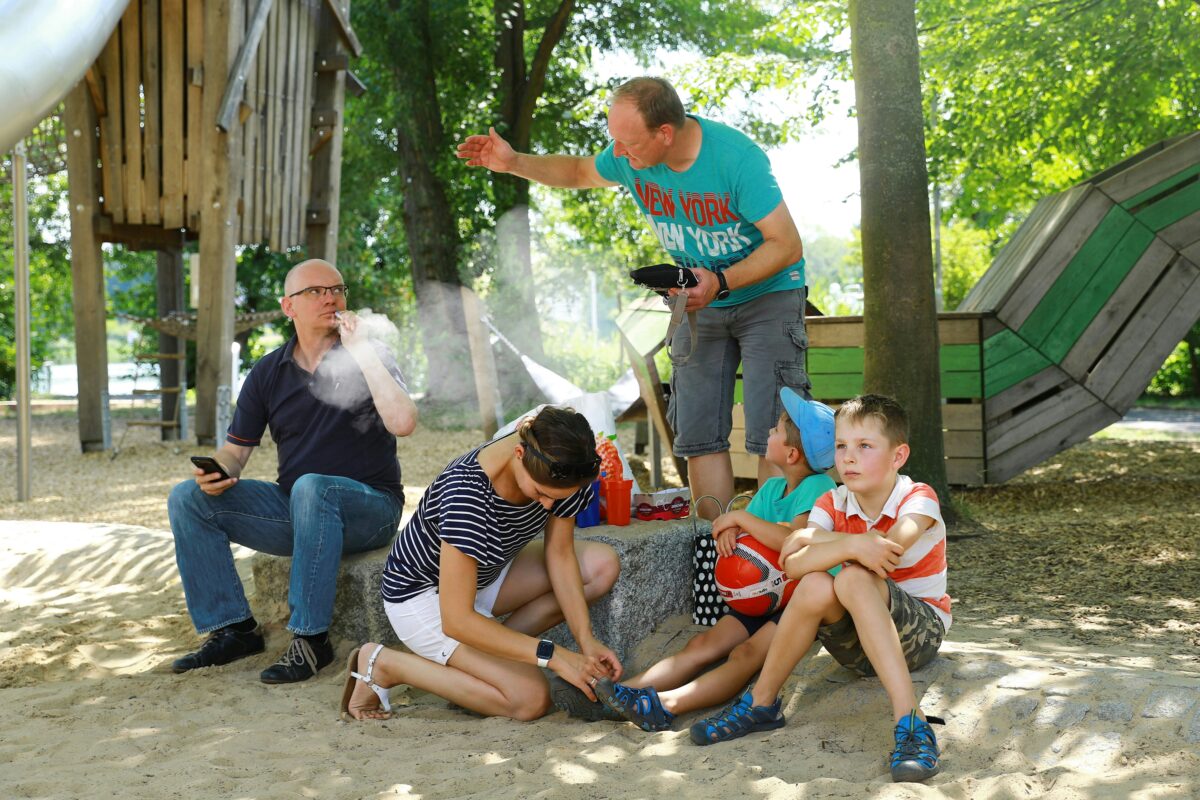
What’s the point of raising a fuss? — Photo: Ernst-Günther Krause (NID)
The right political signals
Instead, what we should be aiming for — for the sake of social cohesion, the future of our pension systems, and the well-being of both kids and parents — is to make people want to be parents in this world, and in this country. After all, no one owes parenthood to society.
There are so many options…
But if society wants people to have kids, whether for economic reasons or because a world without children is a bleak place, then the right political signals are needed.
And there are so many options: increasing parental leave and vacation allowances, or if that’s too expensive and too ambitious, providing continuous school holiday care at local schools so parents don’t need more time off in the first place.
Unlike the recent political campaigns targeting supposedly lazy part-time workers, practical welfare measures would send a clear signal of a country that is genuinely supportive of children. Or rather, let’s be precise: It would send a signal that the country that supports parents. Who, in turn, children depend on.