
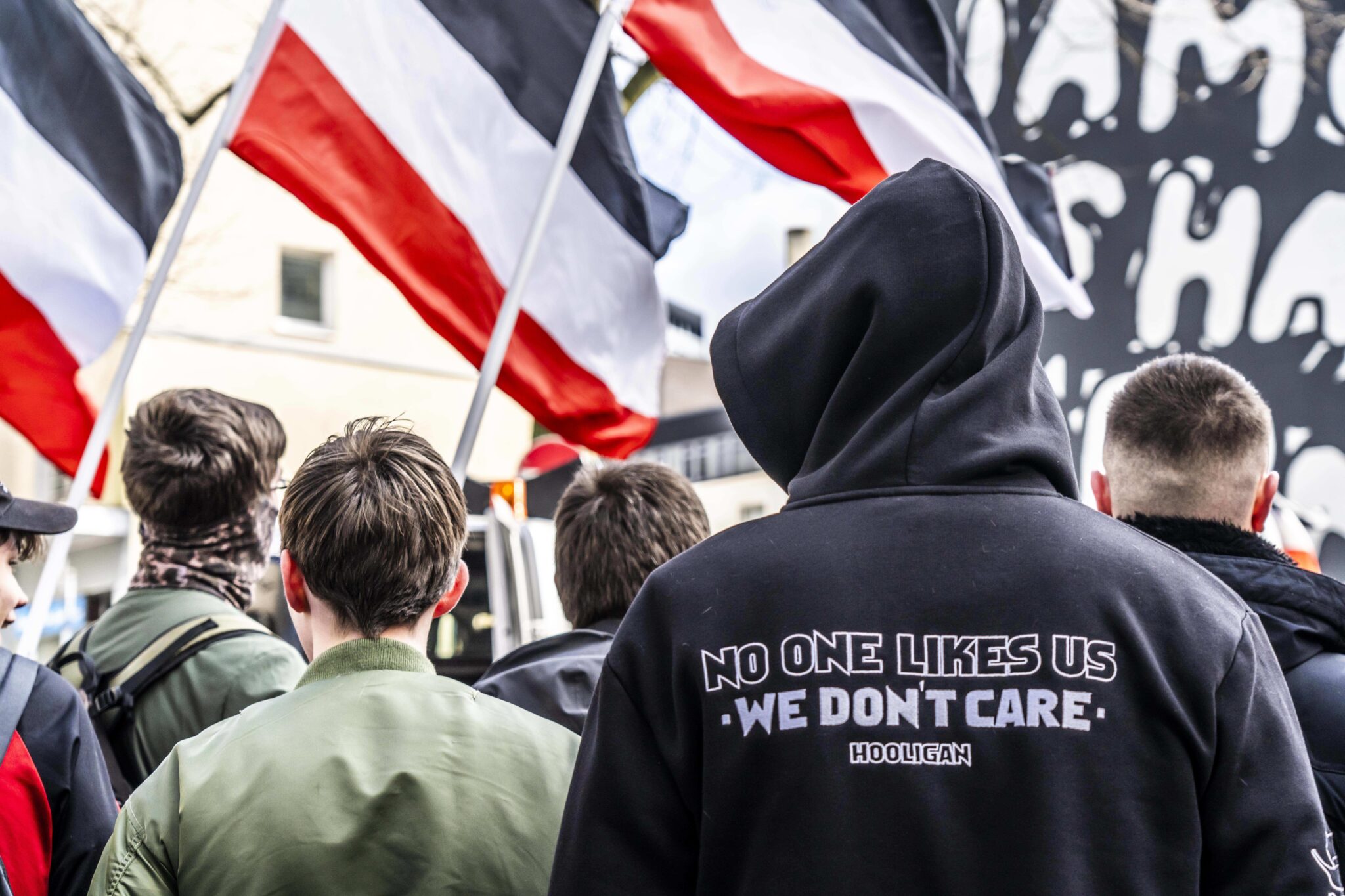
HAMBURG — Fabian K. describes himself online as a “defender of his own.” Crossed swords decorate his social media profile. The young man from Baden-Württemberg is part of Reconquista21, the branch of the Identitarian movement active in southwest Germany.
“Reconquista” originally referred to the centuries-long battles between Christians and Muslims for control of the Iberian Peninsula, from 711 to 1492. Today, that idea of religious conflict is being revived as a far-right fantasy. Online, far right “Identitarians” promote a “Reconquista for the 21st century.”
Fabian has been active on the far right for several years. In February 2022, he joined the notorious “mourning march” in Dresden, where hundreds of neo-Nazis gathered to denounce the Allied bombing during World War II. Now, as part of Reconquista21, he targets Germany’s asylum policy. In recent years, Identitarians in southwest Germany have repeatedly stirred hostility toward asylum accommodations.
Beliefs rooted in family history
Fabian’s political involvement has a personal backdrop: In 2017, his father set fire to a planned asylum center. The facility was intended to house 80 refugees. Because he lost his phone at the scene, police searched his apartment the next morning. They found pistols, a silencer, and more than 1,500 rounds of ammunition. The arsonist was sentenced to four years and ten months in prison. During the trial, it emerged that he had been active in a far-right group called “Hohenlohe (a province in southern Germany) wakes up.”
The group had been protesting against Germany’s asylum policy since 2015. Screenshots suggest that Fabian also feels aligned with them. In March 2023, he posted on the group’s Facebook page: “The political fight against the flood of asylum seekers and the corrupt government never stops until victory! May the struggle claim as many victims as possible.”
For many, the family home was a major factor in their political radicalization.
Father and son, both far-right extremists: Is that just coincidence? Researchers at Martin Luther University Halle-Wittenberg are currently examining the factors that shape young people’s political attitudes. Their study is called “Political Orientations of Adolescents and Young Adults in the Tension Between Family and Peers.”
The team conducted individual and group interviews with young people and their parents. Some of the interviewees were far-right extremists. Professor Heinz-Hermann Krüger, one of the project leaders, says: “From the stories that young people tell, it looks clear that, in many cases, the parents themselves hold far-right views or at least support their children’s attitudes.”
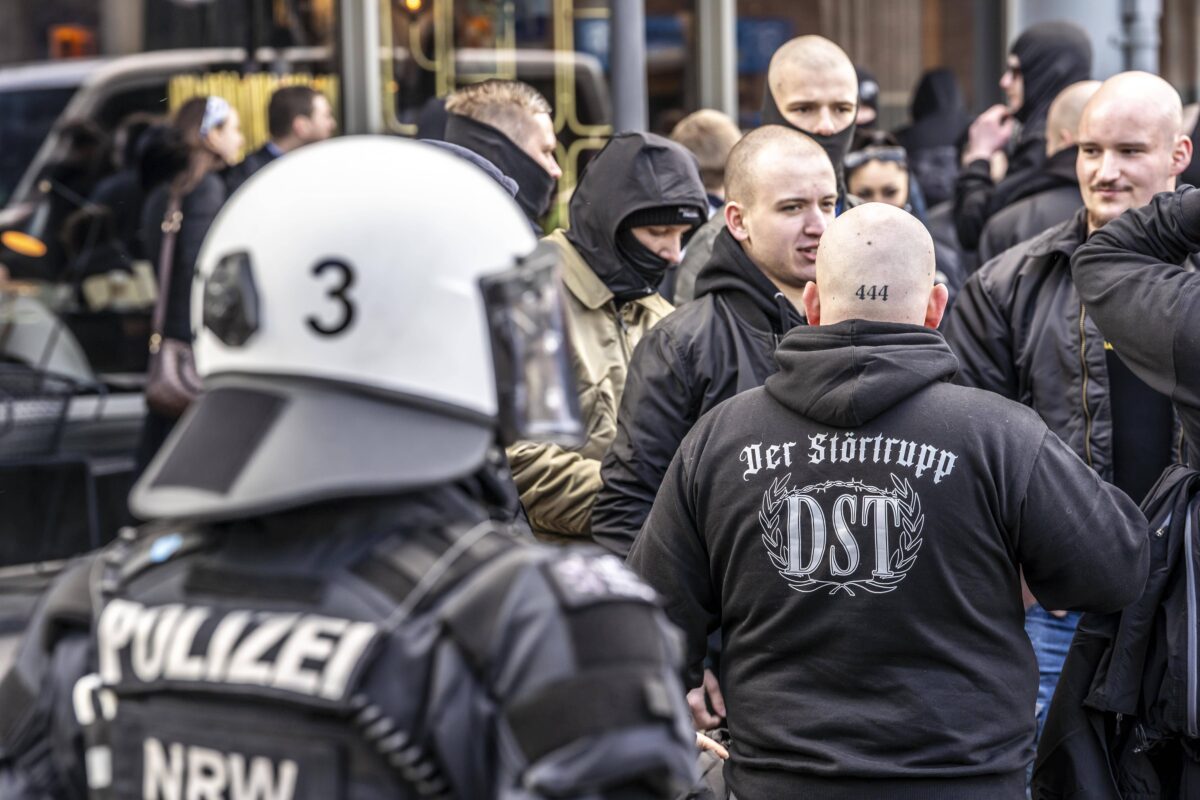
Neo-nazi parents
Like Fabian, Hagen R. also comes from Baden-Württemberg and has long been active in Reconquista21. His parents were members of the neo-nazi party NPD (now called Die Heimat). Years ago, his mother told the first committee investigating the National Socialist Underground (NSU) — a neo-Nazi terrorist group uncovered in 2011— in Baden-Württemberg that she had run as an NPD candidate in both federal and state elections and attended NPD federal congresses.
In October 2022, Hagen took part in a “community day” organized by the NPD’s youth wing. The Young Nationalists had set up a “Base Baden-Württemberg” and announced on social media that the southwest now had an “organized contact point in the fight for the people and the fatherland.” A few months later, in March 2023, he attended an “activist weekend” run by the Identitarians.
In the meantime, Hagen also appeared on the Junge Alternative Baden-Württemberg website as a board member of a district branch. He took part in its activities, including a boxing training session with the far-right Alternative for Germany (AfD) youth wing in June 2024. Fabian can also be seen in photo and video material the party shared online.
Political peer pressure
Young far-right activists like Hagen and Fabian show how extremist attitudes can persist across generations. For many, the family home was a major factor in their political radicalization.
But Krüger stresses that family is only one of the main influences on young people’s political development. Peer groups are another factor — meaning friends of the same age with similar interests. “Political attitudes often form through interaction with peers,” he explains.
According to Krüger, peers can play the same catalytic or amplifying role as social media when it comes to shaping political views. In far-right circles, these views often revolve around shared “enemies”: asylum seekers, for example, whom Reconquista21 targets through its actions, as Fabian seems to do.