BOGOTÁ — By the 1970s, Colombia had convinced itself that its only social and economic problem was drug trafficking — ignoring corruption, ideological vendettas, the breakdown of the social fabric and the state’s neglect of rural and outlying areas.
For the latest news & views from every corner of the world, Worldcrunch Today is the only truly international newsletter. Sign up here.
Stigmatizing drug use became the legacy of this harmful cocktail in urban areas, with attention and actions directed against the weakest link in the chain, the user, rather than the criminal, the one selling the drugs.
Separating drug use from drug dealing — which as the Constitutional Court has pointed out several times is the criminal offense among the two — is not easy. And that in part is for a combination of social phobias and populist political discourses that use and abuse the drugs issue at every election, and even misinform and fuel those phobias to win votes.
Purified alternative
Let us talk about drug use, which is not a crime. In its latest survey on psychoactive substance use, Colombia’s Ministry of Health was clear that access to and preference for marijuana and cocaine have decreased by up to 0.8 percentage points per year in recent years.
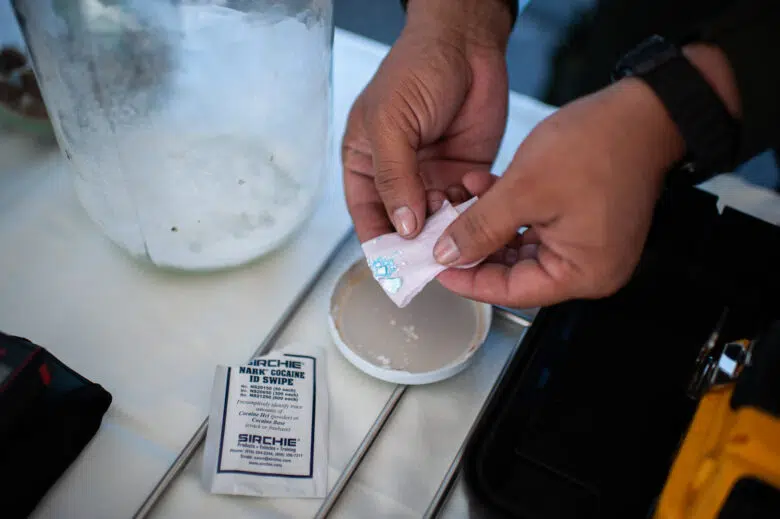
New substances being used include pink cocaine, sometimes called “tusi,” “tuci,” or “tusibi,” which is a mix of artificial ingredients. The approach here should not be to mimic the fight against the drugs like marijuana or cocaine in the 1990s, which focused on finding entry routes into cities of the purified, final product. Today, it is about understanding the formulas for mixtures that can be made in a home kitchen.

There is no exact formula or recipe for pink cocaine, only a minimum of elements it must contain. The problem is that in Colombia, the mixes very likely include other to make the doses last longer — like cement, sand, ground veterinary feed, lime or some other type of powder — and ensure every preparation yields more doses. It is in other words about boosting profits.
This technique also radically increases health risks, while its real effects are almost impossible to know, as one can never be certain what is being consumed.
New demons
This isn’t happening only with pink cocaine, and the Ministry of Health has identified 65 new psychoactive substances in the country. Beyond seeking “new demons to fight,” it is important to bring data that should be of greater importance than the popular stigmas around the “playground user.”
It may be time to end our double standards and start having serious discussions.
For example, among the main motivators for starting to use psychoactive substances are family or economic problems, and the first substance children encounter is alcohol, on average at the age of 7. Likewise, the first people to “push” the use of this substance are your own relatives.
It may be time to end our double standards and start having serious discussions on this issue, looking beyond the playground or park to home living rooms.

