
-Analysis-
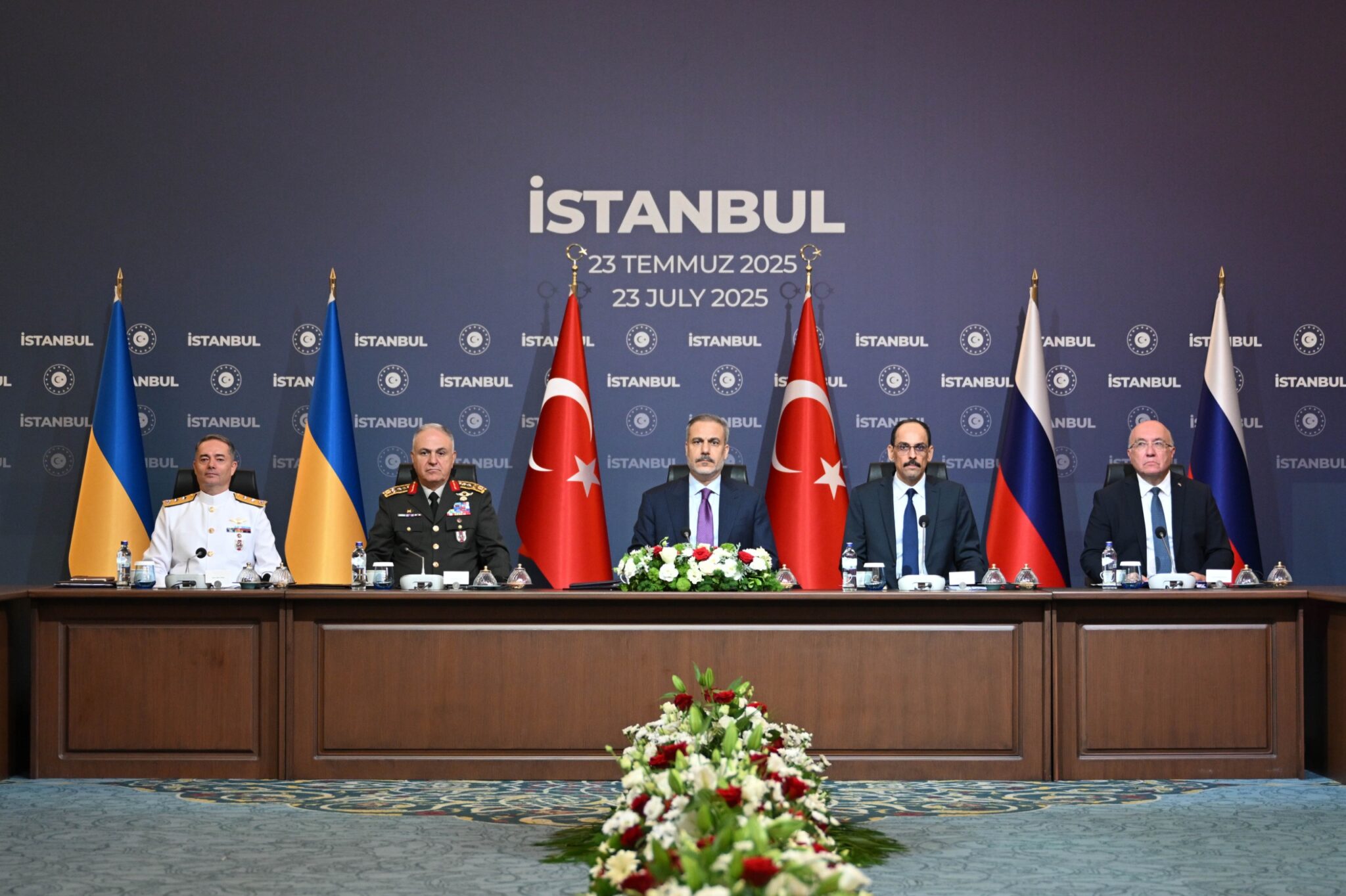
TURIN — We’ve come to see Istanbul as a place of mediation, a crossroads between the West and the global East, where the idea of dialogue still seems possible. In the case of Russia’s war on Ukraine, that hope has so far remained just that: a hope.
But this week in Istanbul, talks will also be held between Iran and Europe (specifically the E3/EU, made up of France, Germany, the United Kingdom, plus EU foreign policy chief Kaja Kallas).
In this case, there’s more room for optimism.
Unlike the talks between Moscow and Kyiv, where Ukraine wants a ceasefire but Russia clearly does not, when it comes to the Iranian nuclear issue, all parties involved have a reason to seek compromise. Everyone, that is, except Israel, which believes Iran should be “contained” by force instead. Although Israel has gone to great lengths to sabotage nuclear diplomacy by launching attacks against Iran in violation of international law, Tehran still wants an agreement with the West.
Its main goals are sanctions relief and avoiding the reimposition of UN Security Council sanctions through the so-called “snapback” mechanism, which had been suspended in 2015 following the Iranian nuclear deal. That was the deal the U.S. walked away from three years later, during Donald Trump’s first term as president.
As for the European countries, they, too, should be interested in reclaiming a meaningful role and restoring some international credibility, with the aim of keeping Iran’s nuclear ambitions in check.
Determined multilateralism
The recent attacks by Israel and the United States on Iran have shaken the region, dealt a heavy blow to international law, and effectively buried one of the very few agreements that ever managed to limit a nuclear program: the Joint Comprehensive Plan of Action (JCPOA). Signed exactly 10 years ago, the deal was left in limbo after the U.S. withdrawal in 2018. It was an agreement not only backed by Europe, but one in which Europe had played an active role.
Until the Trump administration violated it, prompting Iran to gradually stop complying, the JCPOA had shown that multilateral diplomacy, when pursued with determination, unity, and respect for international law, can be a powerful tool for resolving one of the most complex and existential problems in global affairs: the challenge of nuclear non-proliferation.
Today, that kind of thinking almost feels like a thing of the past. And yet history reminds us that the alternative (military strikes supposedly aimed at stopping or destroying a nuclear program) offers no better guarantees than diplomacy.
Lessons and courage
Take Israel’s bombing of Iraq’s Osirak reactor in 1981: It did not put an end to Iraq’s nuclear plans. On the contrary, it spurred President Saddam Hussein to double down in secret. Those efforts only came to a halt after the 1991 Gulf War. Still, U.S. distrust of Saddam ran so deep that fears of proliferation were used to justify the 2003 invasion of Iraq. The similarities with today’s situation in Iran are clear.
Acts of sabotage and military strikes risk setting off a dangerous game of cat and mouse with Iran’s nuclear program, one in which mistrust and the absence of inspections by the International Atomic Energy Agency (IAEA), suspended by Iran, fuel the sense that repeated military intervention is necessary. That, after all, is the path Israel is currently pursuing.
Over the long term, a more imaginative approach will be needed.
The current state of Western relations with Iran, marked by an all-time low in trust, could actually open the door to a new opportunity in Istanbul. Europe faces a critical choice: continue down the increasingly hardline path it seems to have taken in recent months, echoing Israel’s increasingly revisionist stance in the region, or try to regain some diplomatic initiative on the nuclear front and once again push for a U.S.-Iran agreement, as it did ahead of the 2015 deal. Even a modest deal (one that trades limited transparency for partial sanctions relief) could help revive dialogue. But over the long term, a more imaginative approach will be needed.
One option might be to propose a regional uranium enrichment consortium that includes Iran, Saudi Arabia, and the United Arab Emirates, with oversight by the IAEA and potentially with European involvement. The EU already has the technical know-how and diplomatic experience to take on such a role.
What it needs now is a measure of courage, independence, and initiative to defend its interests in nuclear non-proliferation and regional stability.