-OpEd-
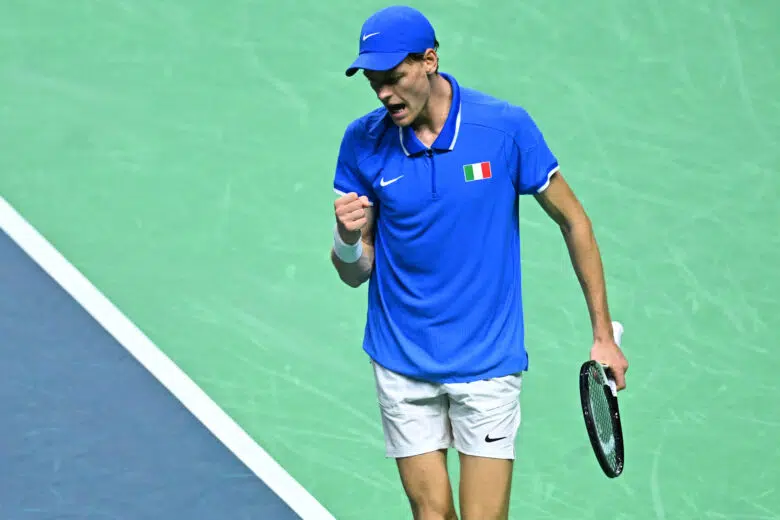
TURIN — When Sinner invites the ball girl under his umbrella to take refuge from the sun, a whole nation smiles. Today that smile naturally twists into a grimace, without filters and without moralizing. We react simply and instinctively, and yes, we have every right to feel bad about it.
For the latest news & views from every corner of the world, Worldcrunch Today is the only truly international newsletter. Sign up here.
Jannik Sinner’s decision not to play the Davis Cup, to prioritize his physical recovery and manage his schedule ahead of the ATP Finals, is not a moral stain. He has already helped Italy win the Davis Cup twice, in 2023 and 2024. It is not a disgrace. It tells us nothing about a tennis player’s worth or stamina, and it does not dent Sinner’s extraordinary career.
And yet, we do feel hurt: this is about tugging on the strings of empathy, which vibrate with small reminders and everyday gestures. That is how it works, which is why Sinner’s “no” lands like a slap and feels like a snub from the crowd’s favorite. He made himself beloved, and we fool ourselves into thinking he’ll return that love, even though he doesn’t have to. Love has no guarantees.
Champions and us
Italians watch and cheer, unsure how recovery really works for a body trained for exhausting seasons, and at the next outing in Turin for the ATP Finals they will be ready to let themselves be carried along and happy to be there. No judgments to taint the moment.
Yet hearing him count up rest days right after winning an exhibition event with a golden racket in hand makes us lose our bearings. It is a mood tied to attachment, to the fondness for a champion we have learned to follow, without pretending to know who he truly is. He can play where he likes, decide what serves him and what does not, but we still do not understand why there was no time for an afternoon with President Sergio Mattarella, and now we fully see the chance to spare himself the effort, yet we still feel like throwing it back at him.
The collective letdown is understandable and predictable
We always expect the most from champions, and they cannot be perfect or behave to order; it would be unfair to demand it. Even so, the collective letdown is understandable and predictable. And perhaps trying to avoid the reaction is not worth a week of rest, certainly essential and decisive; but if Sinner had taken the past week off instead, no one would have been upset.

Sinner is commanding, popular, persuasive: he climbed to No. 1 and can surely get back there. He won Wimbledon, which no Italian had done before him. All of that stands, grows over time, matters — and yet still does not touch the root of the irritation, which is more instinct than argument.
True grace, and yet
Sinner is also the one who thanks his opponent with genuine grace, who has made us relearn fairness through the way he approaches a match, who could umpire his own points and would not take a single one unfairly. He gave a generation the freedom to inhabit the role of the chosen player without being crushed by it, who removed another shard of the impossible from a sporting vocabulary that badly needs wider horizons, and who thanked his parents with a speech free of rhetoric.
That Sinner, even if it is only an idea of Sinner, has nothing to do with writing off the national team and treating the Italy national shirt as expendable.
The Davis Cup does not stir great patriotism. Federer helped win it once for Switzerland and then said he would not return; other prodigies have snubbed it. But while we are proud to have celebrated victory twice in two years, we are just as disappointed to lose our best striker this time, at home, in front of a crowd that paid, and paid well, to see him. It is disheartening to know he will not be with the team, even more than not being on court, where we might have understood how he meant to manage his strength.
The frustration does not come from a constant need to take sides or from a desire to see those who’ve earned their standing brought down. Who cares where Sinner was born or where he lives. He is a spectacular Italian, able to pluck champagne corks off tennis courts with casual elegance. That is why we applaud him with delight, and why we are bitter today.
Because without romance there is no sport. Money props up the system, but it’s passion that feeds fandom — unless you put a golden racket where the heart should be: not his, but ours.

