
-Essay-
ROME — This is how you spot a true Italian: it isn’t his accent or body language or our famous hand gestures. No, it’s in the fact that, in the moments that matters most in life, he will always thank his mother.
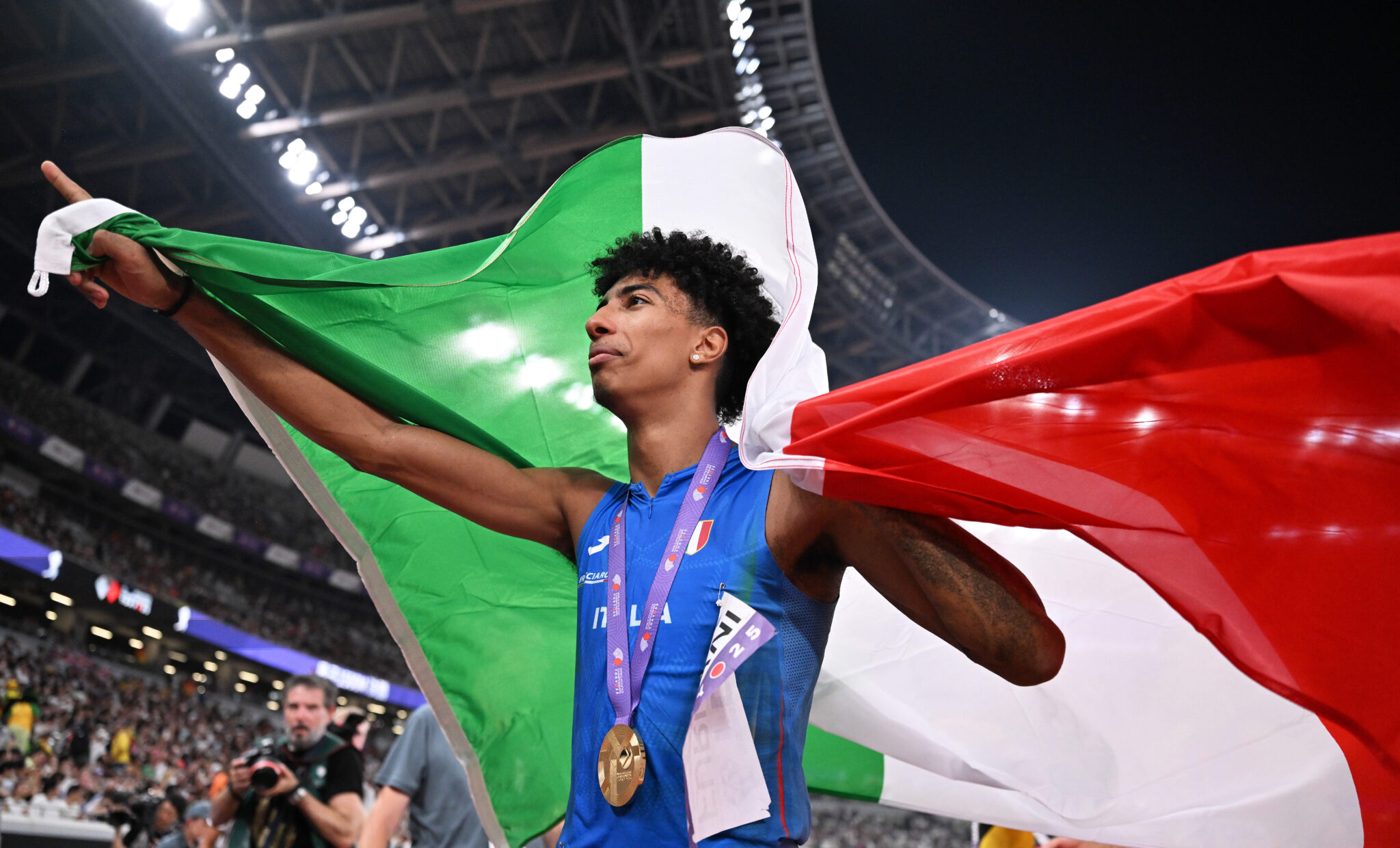
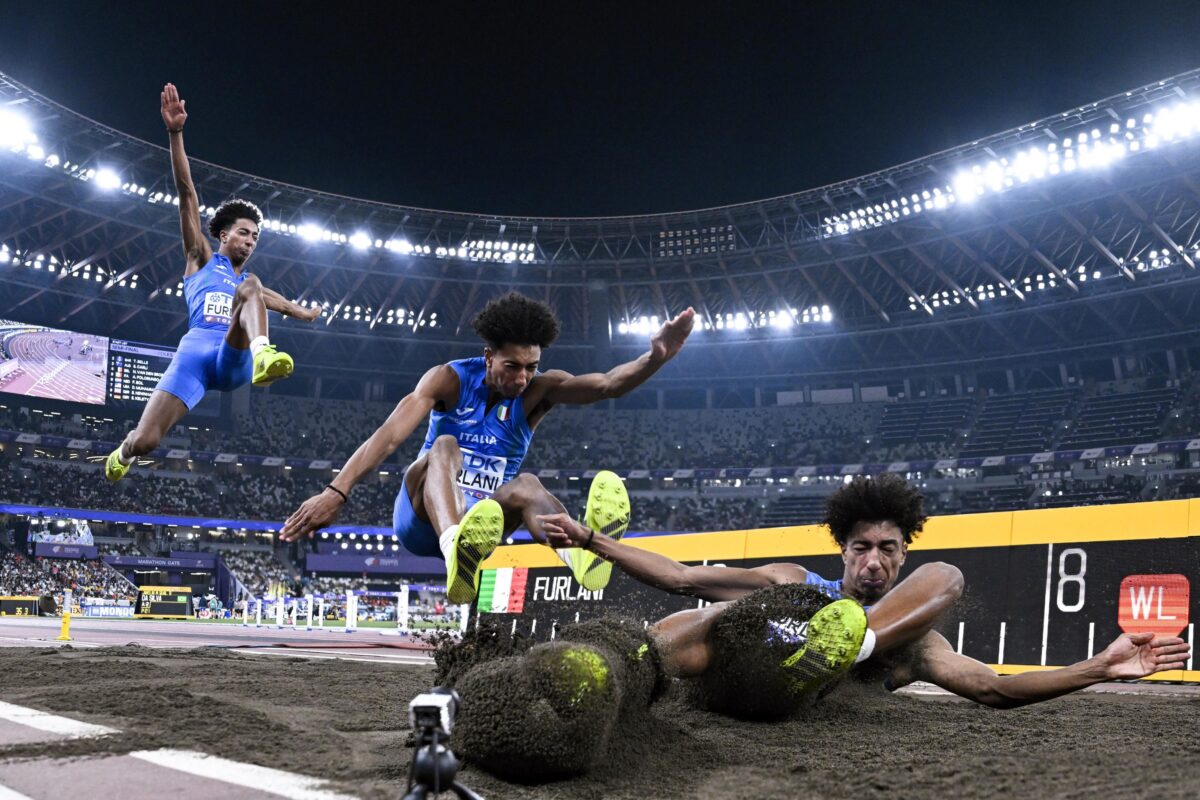
Mattia Furlani, just 20 years old, won the World Long Jump Championships last week, becoming the event’s youngest champion ever.
Last year Furlani responded to an interviewer’s question about his Italian bonafides: “I was born in Italy, I pay taxes in Italy, I eat Italian, I speak three languages: Italian and Roman and Rieti dialects. Is the color of my skin the problem? Come on.”
He’s right. The only reason to suspect any lack of Italian spirit would have been if he hadn’t thanked his mother, but thankfully that danger was averted, and everyone can go back to celebrating the medal.
Kathy Seck, a former sprinter, is both Furlani’s coach and his mother. And today I found myself wondering: how does a child decide to devote themself to such a precise discipline as the long jump, the high jump, or the pole vault?
Evelyn Lawler had four children, three of whom became champions in different sports, but above all she was the mother of a nine-time Olympic gold medalist: Carl Lewis, a sprinter and long jumper. Having a parent who believes in you and your passion, even if that passion is just to jump, is the most important thing a child can have.
Just a minute after winning the 2020 European Championship, and still on the field, Federico Chiesa pulled out his phone and told Siri: “Call Mom.”
From there, things can go better or worse. You might become a world champion at 20 or tear a ligament and watch your ambitions collapse. But dreams are free and never hurt anyone, always with the hope of avoiding the fate of Tonya Harding’s mother in I, Tonya.
Thanking your mother (the one who drove you to practice, who cooked your meals, who washed your uniform) after a win feels like the very least you could do. It remains etched in the memories of Italian mothers — especially those who took their children 8 a.m. matches on a muddy field at the edge of nowhere — when Federico Chiesa, just a minute after winning the 2020 European Football Championship, pulled out his phone while still on the field and told Siri: “Call Mom.”
Worldcrunch 🗞 Extra!
Know more • Mattia Furlani’s world title was widely celebrated across Italy, but it also drew the usual wave of online racism. Instead of focusing on his jump, some users on social media fixated on his background and skin color, as Furlani was born near Rome to an Italian father and a mother of West African origin. Posts claimed he wasn’t a “real” Italian, framed the victory as “Africa’s win,” or smeared him as an “imported” athlete. The backlash echoed what other Italian athletes like Paola Egonu, Marcell Jacobs, and Mario Balotelli have long faced: each time a Black or mixed-heritage Italian wins, racist campaigns try to shift the boundaries of who counts as Italian. [Gabriele Magro, Worldcrunch] (read more about the Worldcrunch method here)
You may be, like Chiesa, the son of a great footballer, someone who passed down talent, genes, and guidance. But if you win a European Championship, the first call is to your mother; and only afterwards, if there’s time, you thank your father. Just as unforgettable are the images of Italian tennis player Matteo Berrettini’s mother in the stands with her homeopathic drops, or Jannik Sinner’s mother crying after he lost in the French Open final.
And then there are the ruthless football mom-managers, like Kylian Mbappé’s, who once complained that her son gave too much money to charity and said if her cut of the earnings ever fell below 30%, she would escape to the Maldives. If anything, it goes to show that, in the end, many mothers are investing in all different way in the most precious thing they have: their child. And that’s why it only feels right to thank them.