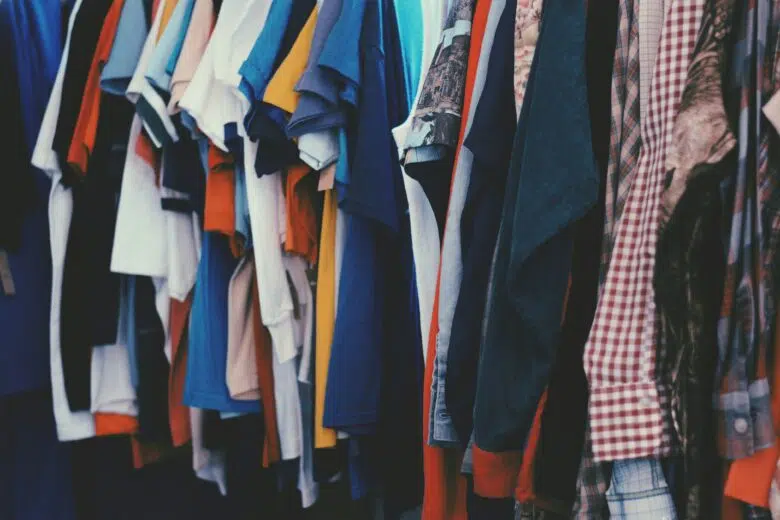
MADRID — In a warehouse on the outskirts of Sabadell, Spain, dozens of workers from the Fundación Formación y Trabajo (Training and Work Foundation) are busy sorting through an endless stream of used clothing: cotton shirts, sequined dresses, polyester sweaters, children’s jeans. Each garment represents, in theory, a small gesture of solidarity and sustainability: a donation to “close the loop” of fast fashion.
For the latest news & views from every corner of the world, Worldcrunch Today is the only truly international newsletter. Sign up here.
But the pace is frantic, the warehouses are full, and most of these garments “will end up in packages that will be sent abroad,” says Albert Alberich, founder of the Caritas social cooperative specializing in textile recycling Moda Re.
“The sheer volume is enormous, Europe simply does not have the sorting capacity to process it,” he adds. In fact, the amount of used textiles exported from European Union countries has almost tripled in the last two decades, reaching 1.26 million tons in 2024, according to the latest official data.
The European Waste Framework Directive, which came into force this year, requires member states to establish selective textile collection systems. It is one of the pillars of the European Green Deal and the Strategy for Sustainable and Circular Textiles, which seeks to reduce the sector’s environmental footprint.
In practice, however, the system is showing its seams. What was supposed to be circularity has often become a controversial detour: an increasingly unseen flow of tons of clothing leaving Europe to be sorted, resold, or simply stored thousands of miles away — and in working conditions that often violate international labor law standards.
This nine-month collaborative investigation based on exclusive trade data and customs documents, original carbon footprint analysis, and geolocation using Samsung SmartTags reveals how the European vision of textile circularity has partially become a new climate burden. A flow feeds an opaque, carbon-intensive trade that stretches thousands of miles and, in some cases, even returns to Europe.
A system on the brink of collapse
The overproduction of ultra-fast fashion, driven by empires such as Inditex, H&M, and, more recently, Chinese giants Shein and Temu, has flooded the market with cheap, low-quality, short-lived clothing. These garments, made largely from lower-quality synthetic fibers, are more easily damaged and difficult to reuse or recycle, as explained by Urška Trunk, senior campaign manager at the non-profit organization Changing Markets Foundation.
The United Arab Emirates is the leading non-EU destination for used clothing.
Most of these garments are still not collected separately: the latest studies estimate that only 10% to 12% of post-consumer textile waste generated in Spain is collected separately for reuse or recycling, which places the country between 2 and 4 points below the European average.

Even so, the increase in donations and textile waste has exceeded the capacity of European social centers and, in line with China’s massive entry into the second-hand market, has caused its value to plummet by more than half since 2022, according to Zoltan Gundisch of Aretex Romania. With these margins, “the system is no longer viable without public support,” Gundish claims.
Special Economic Zones
Among exports, there are a handful of destinations that stand out from the rest: the Emirati free zones of Dubai — Jebel Ali, Sharjah, and Hamriyah — and the export zones of Pakistan, such as the Karachi EPZ. These special economic zones facilitate exports and trade, but they also make it difficult to comply with labor and environmental regulations, as numerous experts have emphasized to La Marea.
According to a 2023 report by Oxford Economics, the United Arab Emirates is the leading non-EU destination for used clothing from Europe and the UK, with more than 231,800 tons worth $147 million, followed by Pakistan with 208,600 tons.
Six of the 28 SmartTags placed by this team have reached both countries, among the thousands of tons sent this year to be sorted—under poor conditions and often by underpaid workers. Four have ended up in the Karachi Export Processing Zone (KEPZ), highlighting Pakistan’s growing role in the trade of used European textiles, and two in the free trade zones of the Emirates — one of them deposited at the collection point of the H&M store in Barcelona.
The example Spain provides is revealing: the volume of used clothing sent abroad quadrupled between 2015 and 2023, and more than 27% of what Spain declared as exports during that period went to the Emirates, followed by Pakistan, with just over 12%, according to data reported by Spain to the United Nations statistics office for trade.
ModaRe, in fact, admits to exporting clothing without prior sorting, but denies that they import second-hand items from the UAE or Pakistan. Some of the Aeress entities also acknowledge exports to Pakistan and argue that there are aspects of the international operation of this market that are beyond their knowledge. Given the evidence presented in the report, Humana has acknowledged that on some occasions it imports from countries such as the UAE to supply its stores.
Other major operators in the sector, such as East West, have declined to comment. The companies in the UAE and Pakistan where the SmartTags ended up have not responded to requests for comment.
Distorted circularity
However, a large part of these items do not remain in these countries: they are re-exported, mainly to African markets such as Kenya, Tanzania, and Mozambique. But some of these exported items are even re-exported back to Europe, completing a type of distorted circularity that multiplies carbon emissions instead of reducing them. While Spain sends massive volumes of clothing to the Emirates, trade data reveals something surprising about what comes back.
Some 99% of exports from the United Arab Emirates to Spain are re-exports: the clothing arrives, is processed, and then sent back without transformation, usually through Dubai’s free trade zones, as Emirati sorters have explained to our reporters.
Sending clothing to Dubai to be sorted and resold in Spain triples CO₂ emissions.
Documents from Romania’s National Environmental Guard obtained by this team illustrate what could be happening: in 2023, Romania intercepted 26 tons of clothing from Germany, destined for a company located in the Sharjah free trade zone in the U.A.E. Although it was declared as reusable clothing and came with cleaning certificates, inspections revealed dirty and damaged items that should have been classified as waste, yet the export was still authorized.

The final buyer was the Slovakian subsidiary of Garson & Shaw, a giant in the second-hand sector. Subsequent data indicates further shipments from the UAE to Europe: a circular and unclear journey that raises questions about why a company that presents itself as sustainable would divert goods through multiple jurisdictions with little transparency.
An analysis by the consulting firm Inédit, commissioned exclusively for this investigation, quantifies the environmental impact of this model. Sending clothing to Dubai to be sorted and resold in Spain triples carbon dioxide (CO₂) emissions compared to doing so locally: 0.576 tons of CO₂ equivalent per ton of clothing compared to 0.195 tons within the country. If done by air, the impact is twelve times greater.
Although reuse continues to be less polluting than manufacturing new items, these international logistics dilute some of the climate benefits.
Beyond green buzz words
“It’s not fair: we are paying for and taking on a problem that we did not create. The responsibility lies with the producers,” denounces Maria Suau, from the Fundació Deixalles in Mallorca.
The European reuso network, of which the Fundació Deixalles is a member, has been warning about this drift for years: lack of real circularity, dependence on exports, saturation of second-hand markets, and lack of public funding. At the European level, the new Extended Producer Responsibility (EPR) was supposed to shift management costs to manufacturers. But its implementation is slow and uneven.
“It is a necessary change, but it comes too late,” warns Helene Fritzon, a Member of the European Parliament from Spain. “Between the ban on throwing away clothes and the lack of efficient recycling systems, there is a gap that threatens to collapse the sector.”
Europe has promised to close the fashion loop, and it already has the tools to do so.
In June 2025, Spain published a draft of Royal Decree 1055/2022 on packaging and packaging waste, but full implementation will not come until 2028. This regulation sets targets for 2035 of a 10% reduction in waste compared to 2027, 70% separate collection and recycling of waste generated, and preparation for reuse of 35% of separately collected waste. The last point is what social economy managers such as Albert Alberich of ModaRe see as the most critical and difficult to achieve.
“The big problem is not collection, but sorting. And we know this firsthand. Sorting plants don’t appear overnight. It’s not crazy to think that we can collect 300,000 tons, but it is absolutely crazy to think that we can sort 300,000.”
In France, the new Extended Responsibility law plans to penalize fast fashion with higher taxes per item produced, introducing the so-called ecomodulation that sustainable producers have been calling for for some time. “It can’t be that cheap to put a fast fashion item on the market,” says Suau. “This will be one of the great challenges for Europe.”
Closing the loop?
Europe has promised to close the fashion loop, and according to the experts, activists, and politicians consulted, it already has the tools to do so. “Outsourcing the problem is not the solution,” adds Rasmus Nordqvist of Denmark, a Green member of the European Parliament. “Taking full responsibility for what happens to a product from the moment it is created is essential.”
The Extended Producer Responsibility scheme could force fashion brands to invest in European sorting infrastructure, although it remains to be seen how it will be implemented and whether it will be sufficient to address the problem.
What is closing, many warn, is the window of opportunity to do it properly: with less production, more repair, and transparent management. Until then, the circuit will continue by boat and plane to Dubai, leaving behind a trail of CO₂ and empty promises.