-Editorial-
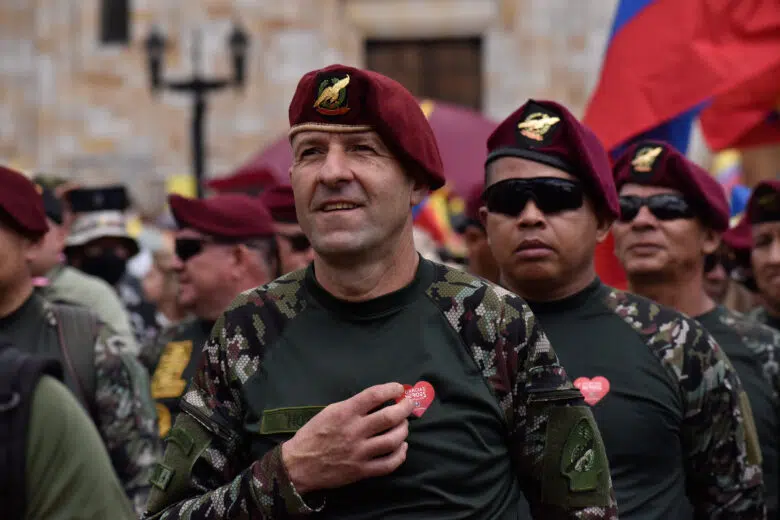
BOGOTÁ — In the debate over banning mercenary work in Colombia, the government of President Gustavo Petro and the parliament run the risk of facing a frustrating reality: without international cooperation, there is little our country can do on its own. The stigmatizing messages sent out against former Colombian military personnel who choose to work for security companies are also unhelpful, as part of the problem stems from the lack of opportunities offered to veterans. While it is laudable to try not to support violence in other countries, this is a much more complex and difficult conversation that might seem at first glance.
For the latest news & views from every corner of the world, Worldcrunch Today is the only truly international newsletter. Sign up here.
This is not an isolated incident. In the international security market, former Colombian military personnel are recognized for their excellent training, combat experience and for ending up being relatively “cheap.” In addition, once they retire from the national army, there are few support systems or job opportunities, so they end up unemployed.
In Sudan, for example, they are paid between U.S. $1,500 and $3,000 a month. On social media, one can read former military personnel defending this work by saying they are free to do it, knowing what they are up against, and by citing economic hardship in Colombia.
Petro’s bill
Sudan’s Prime Minister Kamel Idris recently asked the Colombian government to intervene in the deployment of mercenaries fighting in his country’s conflict. The Sudan war, which has been going on for more than two years, pits the government against the Rapid Support Forces (RSF), which are secretly financed with money linked to the United Arab Emirates. It has also seen infiltration by former Colombian military personnel and while the numbers are unclear, there may be as many as 2,000 Colombians fighting there.
It’s likely many recruiters are operating in clandestine fashion.
Petro sent an urgent message for an anti-mercenary bill, also writing on his X account: “Young ex-soldiers and officers, do not sell out. Fight for your country, do not die in foreign wars.” In a previous message, referring to the people who serve as intermediaries in mercenary contracts, he wrote “they wanted so much war inside Colombia that, as the war weakened in the country, they sought it abroad, where no one has harmed us.”
The government-backed bill essentially seeks two things: on the one hand, to make mercenary work a criminal offense; and on the other, improve the protection system for veterans. Yet experts doubt either measure will prove effective.

A difficult definition
In a column for Razón Pública, Fernando Estrada, a researcher at RePEC/IDEAS in Munich, explained that “it’s likely many recruiters are operating in clandestine fashion, using international networks and hard-to-trace contracts. Furthermore, some mercenaries are perhaps being hired directly by foreign governments, making legal prosecution even more difficult.”
Another question is how the term mercenary work is defined, as there are security jobs that do not involve intervention in armed conflicts, which means there is no reason to ban them as part of any Colombian’s rights and freedom.
So the conversation isn’t so simple. More than a bill, Colombia is seeing that the reality of our former military personnel requires a structural approach. A first step the government can take is to sit and talk with people who have gone to work as mercenaries and made it back, to understand the ins and outs of the problem.