
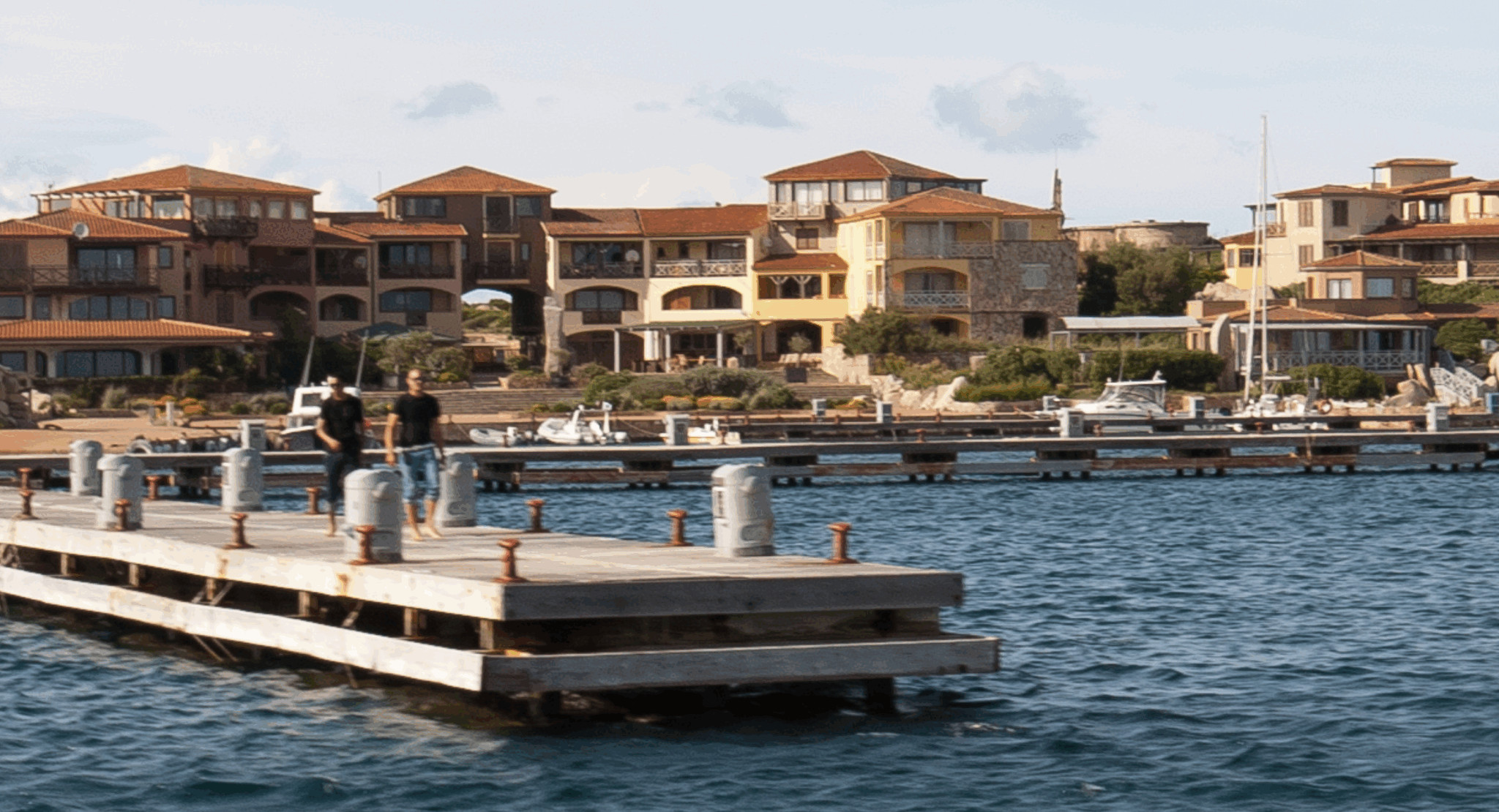
Cavallo, or “Cavaddu” in Corsican, is a 120-hectare islet composed of luxurious villas nestled behind granite rocks, where turquoise waters meet exceptional nature between Corsica and Sardinia. In this paradise, located in the municipality of Bonifacio, non-residents are not welcome — unless they are wealthy tourists. While the beaches are part of the public maritime domain, numerous reports speak of the “deterrent” presence of security guards employed by villa owners, who turn away visitors, illegally, on the grounds that the property is private.
Faced with this astonishing situation, which has persisted for decades, the Corsican community, led by the autonomists, recently decided to take back control. Cavallo is one of six priority sites covered by a development plan approved by the Corsican Assembly earlier this year. The program provides for some €430,000 ($499,075) of work to be carried out between 2025 and 2032, including the creation of a coastal path and the development of two access pontoons located in the north of the island. The municipality of Bonifacio, for its part, voted to take over the island’s port, starting in June 2026. Major resources seem necessary to remedy the urgent situation.
“While everyone seems to agree on the need to preserve its exceptional environment, it’s unfortunate to see a form of privatization of this island and the almost usual disregard for corporate, labor, tax, urban planning, and environmental law,” says Jean-Philippe Navarre, the public prosecutor of Bastia. Often described as one of Corsica’s jewels, the island of Cavallo appears in many ways to be above all “the island of lawlessness: economic or fiscal lawlessness, urban planning lawlessness, and environmental lawlessness.”
Bill Gates and Zidane
In Cavallo, houses are sold for millions of euros and are mostly occupied by wealthy Italians. Celebrities also regularly visit this isolated stretch of land in the Mediterranean, where discretion and seclusion are a way of life. Silvio Berlusconi sometimes stopped on the island while Bill Gates stayed there, as did French former soccer player Zinédine Zidane. The luxurious Hôtel des Pêcheurs, open to tourists, is the only establishment in the area and regularly welcomes celebrities, bankers, and captains of industry.
A few years ago, the rock also attracted mafia members and thugs of all kinds, eager to launder their money away from prying eyes. This explosive cocktail was made possible by a privatization process launched in 1968, under the leadership of Jean Castel. That year, the former “prince of Parisian nightlife,” who died in 1999, purchased the Lavezzi archipelago — a group of 23 islands, islets, and reefs that included Cavallo — for three million francs, including beaches. After its retrocession to the municipality of Bonifacio in the early 1990s, the rest of the archipelago became a classified nature reserve. Only Cavallo was exempt from these regulations, and Jean Castel succeeded in transforming it into an ultra-luxury tourism destination.
In 1993, an Italian mafioso named Lillo Lauricella took over the island. For several years, this Palermo native held the position of Chairman and CEO of the Compagnie des îles Lavezzi, which is responsible for the development of Cavallo. During his “term,” the island entered the era of concrete, amid racketeering, money laundering, and terrorist attacks. The man was suspected of laundering drug money, derived from trafficking operated by the Cosa Nostra, in Cavallo. Lauricella also established ambiguous relationships with the Corsican nationalist underground organization FLNC (National Liberation Front of Corsica). Several nationalist organizations began extorting money from the Italian mafioso, increasing their influence on the island. In a few years, several dozen attacks took place. In 2002, Lauricella was shot dead in Venezuela, near Caracas.

Autonomist attempt
Once they came to power as regional leaders in 2015, the autonomists tackled the island’s urban development, which they saw as a symbol of real estate speculation. In 2018, Gilles Simeoni, the nationalist president of the Corsican community, announced the pre-emption of a plot of land in Cavallo for €2 million ($2.3 million): “This pre-emption,” he argued at the time, “is a way for the public authorities to gain a foothold in Cavallo and show that the circus of the last few decades is over. The shell companies in Switzerland, the Cayman Islands, the mafia, the CEOs assassinated in Venezuela… everything you’ve seen.”
Except things didn’t go as planned. In September 2023, based on a report from the Regional audit chamber, the Bastia prosecutor’s office opened an investigation into alleged bribery. Gilles Simeoni was prosecuted for not collecting rent from a restaurant run by an entrepreneur with close ties to a criminal gang. The case was ultimately closed. But it illustrates all the difficulties encountered by public authorities to regain control of Cavallo.
Blowing the final whistle
In May 2025, the municipal council voted to take over the port area, starting in June 2026. The infrastructure has been managed by a private company for over 30 years. At the same time, the new local urban plan for the Cité des Falaises, which must be approved before the end of the year, seeks to establish the principle of zero new construction in Cavallo. “Cavallo is located in the municipality of Bonifacio, in the French Republic,” says Jean-Charles Orsucci, mayor of Bonifacio. “This is not about calling into question the existence of a residential neighborhood. It’s about turning a page on a place where there have been mafia and nationalist excesses.”
It’s a lawless island, and all the abuses have not stopped.
While the elected official wants to avoid “overcrowding” to preserve the peace and quiet of residents, he wants above all to “blow the final whistle of this lawless state.” “I’ve cared about this island since 2008 and my arrival in office,” the mayor says, boasting about his first results: “I succeeded in imposing financing for the construction of a wastewater treatment plant, to be paid for by private landowners. Now we’re going to reclaim the marina.” However, things seem far from over in the eyes of environmental associations that have been fighting for decades to preserve this territory.
In their sights are construction in Natura 2000 or protected areas: “Cavallo may foreshadow what could happen on the coasts of Corsica and elsewhere,” warns Vincente Cucchi, a member of ABCDE, an environmental protection association working in the far south of Corsica. “This island,” Cucchi believes, “is lost, due to very dense urbanization, which continues despite the years and our work to report suspect permits or leases. Several illegal permits have also been annulled by the administrative courts. It’s a lawless island, and all the abuses have not stopped. There are public statements that contradict the reality on the ground.”
For Vincente Cucchi, the island is also subject to significant real estate pressure: “No environmental protection measures established by law are respected. The Corsican community wanted to preempt a plot of land, but the benefit of this operation escaped us.”

Cavallo is an anomaly
In the middle of the Lavezzi archipelago, which is made up of 23 islets, most of which are unspoiled, the island of Cavallo is an anomaly: “The various investigations now being conducted by the Bastia economic and financial center attest to this reality, with the initiation of the first prosecutions for environmental issues or non-compliance with applicable construction regulations,” says Jean-Philippe Navarre.
Corsicans no longer have control. It’s over.
Various observers of the case have deplored and endured this sad realization for several decades: “We are in the heart of the nature reserve, with a port that has no place there, on a hyper-artificialized island with villas at astronomical prices purchased by companies based in tax havens,” says Vincente Cucchi. “Corsicans no longer have control. It’s over.”
There’s still the action of the justice system, on the front line to put an end to these abuses, as Jean-Philippe Navarre points out, providing an initial overview of the investigations: “The ongoing investigations reflect the convergence of diverse interests, private of course, often foreign, but also, for some, likely to be directly linked to the island’s criminal environment.” It embodies a land viewed as paradise by a few, but as hell by many.