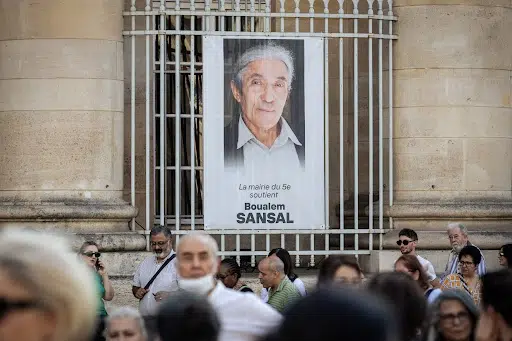
-Analysis-
PARIS — Thank you, Germany! Franco-Algerian relations are so fraught that it took the intervention of a third country to resolve the crisis that followed the arrest last year of writer Boualem Sansal.
Algerian head of state Abdelmadjid Tebboune, who has twice received medical treatment in Germany in recent years, was reportedly moved by the personal intervention of German President Frank-Walter Steinmeier, and has now granted the long-awaited pardon to Sansal on health grounds. Thus he was flown to Germany on Wednesday night — appearances have been preserved, and this is by no means a “gift” to France.
For the latest news & views from every corner of the world, Worldcrunch Today is the only truly international newsletter. Sign up here.
Rumors of a presidential pardon had circulated repeatedly in recent months, ever since the writer was sentenced to five years in prison in July. Several false alarms had led to disappointment, despite mediation attempts by Italy, the Vatican, and Germany, all unsuccessful until now. This time, however, the moment was right.
Why now? The political calculus has shifted, allowing for more conciliatory signals to be sent. There had long been two competing lines on the case within the French government, but since last month’s cabinet reshuffle saw the departure of Interior Minister Bruno Retailleau, only one line remained. Retailleau was an outspoken proponent of a “balance of power” approach with Algeria, while President Emmanuel Macron and the foreign ministry favored patience and quiet diplomacy, even at the risk of seeming weaker.
Cautious optimism
Retailleau’s successor at the Interior Ministry, Laurent Nunez, has publicly taken a different tack. On Wednesday, the presidential Élysée office stressed that a country cannot be transformed through sensational declarations, a clear rebuke of the hardliners, even if Macron himself briefly appeared to lean in their direction.
Paris has also made several gestures of goodwill. Notably, French ambassador to Algiers Stéphane Romatet attended a ceremony on October 17 commemorating the bloody repression of Algerians in Paris in 1961. Romatet, who had been absent from his post in Algiers for more than six months, made a significant return with that appearance.

Meanwhile, intelligence cooperation between the two countries was never entirely broken. On Monday, DGSE head Nicolas Lerner told France Inter radio that there were “signals” from Algiers indicating a readiness to resume dialogue.
State hostage
So can the crisis now be considered over? Not quite, it’s important not to forget that another French citizen remains behind bars in Algeria: journalist Christophe Gleizes, as much a “state hostage” as Sansal once was. He was sentenced to seven years in prison on baseless espionage charges. His appeal is scheduled for early December, and it is hoped that the current thaw could pave the way for his release.
It will take time to resolve all the disputes.
A second similar release could open the door to more substantive political dialogue, possibly including Nunez making a visit to Algiers and, eventually, direct contact between Presidents Tebboune and Macron. It is a long road to recovery, but one that will benefit both countries, even if it will take time to resolve all the disputes.
For now, the feeling is above all of relief to see that Sansal, who is 81 years old and in fragile health, has regained a freedom he should never have lost. To imprison a writer is always a sign of weakness.