-Analysis-
PARIS — On Thursday, Donald Trump issued a harsh indictment of South Africa and announced that the country will not be invited to the 2026 G20 summit under U.S. presidency. He added that the United States will halt all payments and subsidies to Pretoria.
For the latest news & views from every corner of the world, Worldcrunch Today is the only truly international newsletter. Sign up here.
This hostility says a lot about the U.S. president’s worldview — shaped by biased sources, fixated on the plight of white populations when they become minorities and resistant to facts that challenge his assumptions.
That’s what has happened with South Africa. Last May, Trump received South Africa’s democratically elected president, Cyril Ramaphosa, in the Oval Office — a setup reminiscent of what Volodymyr Zelensky endured. To Ramaphosa’s surprise, Trump presented him with images supposedly proving that a genocide of Afrikaners, descendants of early Dutch settlers, was underway in South Africa. Ramaphosa denied it, to no avail. Six months later, nothing has changed.
Post-apartheid South Africa is indeed grappling with record crime levels, which include incidents where Afrikaner farmers are killed on their land. But these white victims are only a small part of a wave of violence affecting all communities — and especially the Black majority.
Manufactured narrative
By focusing only on the murdered Afrikaner farmers, Trump is framing the problem as a kind of genocide. He is doing the same thing with Christians who have been murdered or kidnapped in Nigeria, even though they are not the only ones affected by terrorism or banditry.

In South Africa’s case, he has even welcomed a few dozen Afrikaner “refugees” to the United States — ironic at a time when he is persecuting so many asylum seekers with darker skin. The racial criteria carries particular weight in South Africa, which is still haunted by the horrors of apartheid.
Is that the only reason for his hostility? Probably not, because South Africa’s foreign policy is too independent for the Trump administration’s liking. It was South Africa that initiated proceedings against Israel before the International Court of Justice for genocide in Gaza; and it is part of BRICS, a group of countries in the global South, including China and Brazil that deeply frustrates Trump.
Chinese influence
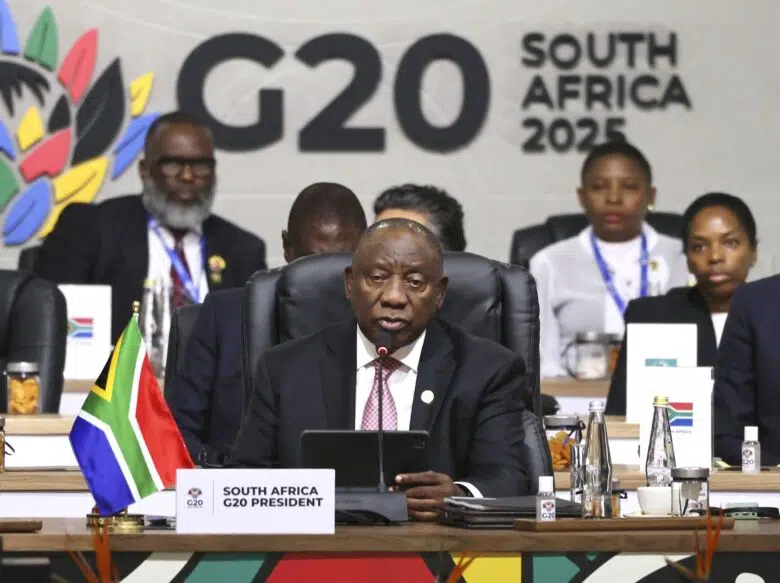
Last weekend, the United States boycotted the G20 summit in Johannesburg, prompting Ramaphosa to refuse to meet the low-level U.S. official who arrived at the end for the customary handover between presidencies. That, in turn, triggered Trump’s anger.
The American stance is surprising, as South Africa is one of Africa’s leading voices. Trump is taking the risk of boosting China’s already significant influence in the country and across the continent.
And that’s not all: France strengthened its bilateral relations with South Africa on the sidelines of the G20, which Emmanuel Macron attended. Trump is shooting himself in the foot by lashing out, under false pretexts, at a country that definitely has real problems, but doesn’t deserve to be ostracized.