BELÉM — The stuffed animals have to go, as do the dollhouses and the loft bed, and the pink walls need a new coat of paint. It is still her nine-year-old daughter’s room, but Regina Salles wants it to look like a hotel soon, like “business,” as she puts it. New beds, new lamps, everything brand new. “I want it to be perfect.”
Salles senses a big opportunity. She wants to rent out her house: five bedrooms, five bathrooms, a small garden, Wi-Fi. Minimum stay ten nights, just under 19,000 euros. Salles is hoping for even more.
For the latest news & views from every corner of the world, Worldcrunch Today is the only truly international newsletter. Sign up here.
In Belém, the idea of getting rich overnight by renting out your home is spreading fast. Hundreds of houses and apartments owned by private individuals are listed on platforms like Booking.com and Airbnb, ranging from bare rooms without windows to luxury suites. Many are charging far more than Salles for ten nights: 30,000 euros, 50,000, or even over 100,000. Demand will be higher than ever in November. The reason: the United Nations Climate Change Conference.
Every year in late autumn, representatives from around the globe gather for two weeks to negotiate the future of climate protection. Heads of state and ministers, diplomats and business leaders, scientists, activists, and journalists all need a place to stay. Around 85,000 people attended in Dubai in 2023, and more than 55,000 in Baku, Azerbaijan, in 2024.
Tens of thousands are expected once again this year. Only this time the venue is neither a Gulf emirate brimming with hotels nor a national capital.
Belém sits on the Amazon Delta in northern Brazil, near the equator, surrounded by water and rainforest. Nearly 1.5 million people live here, some in high-rise apartments overlooking the river, many in the shanties of the favelas. The city has few tourist attractions, though its colonial old town is slowly decaying. Incomes are low, crime is high. Belém depends on trade in local products such as açaí, cocoa, and tropical timber.
Brazil has chosen to invite the world here. So that they can see the Amazon.

Tourism? Hardly exists. Hotels? Almost none. Yet the Brazilian government has chosen to invite the world here. So that they can see the Amazon — the region that dominates so many of the talks.
The decision has been criticized for months. Complaints come from poorer countries that cannot afford such high costs for their delegations, from NGOs and activists who have already said they will not be able to take part under these conditions. And also from opposition politicians at home, who call the venue a mistake. The city cannot offer the standards many international guests expect.
In February, President Lula da Silva said expectations should be lowered. Anyone unable to find a room should sleep under the stars.
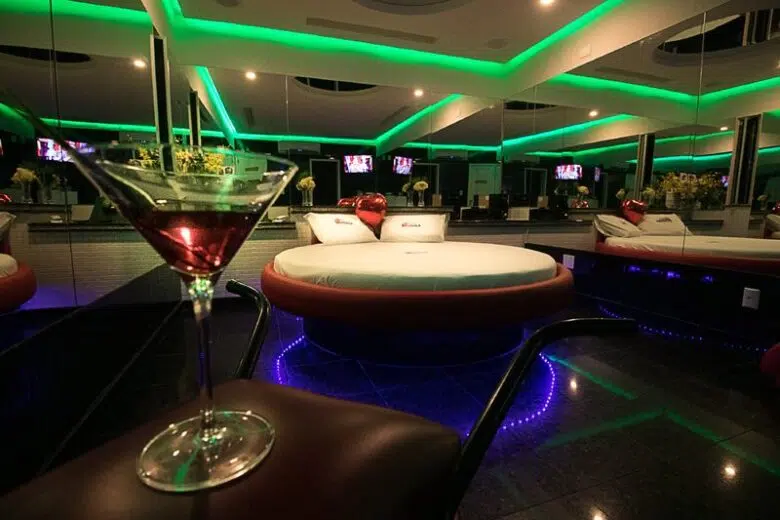
Yorann Costa does not run a regular hotel either, but he insists he can offer high-standard rooms. Costa, 30, runs a sex motel on the edge of the city. Young couples still living with family who need privacy, or those seeking something different, can book a room for a few hours. In November, diplomats are scheduled to stay here.
City of construction sites
Costa walks through the long corridors with red and green lights above the doors, keen to show off what he has to offer. Large double beds, bright bathrooms. Some suites feature red heart-shaped whirlpools or a sauna. And, if required, enough space for extra bunk beds. Costa shows an illustration on his phone of how it might look. He plans to replace the photos of naked women on the walls with ones of plants. Only the poles for dancing cannot be removed.
“We always knew there would be a serious housing shortage,” says Costa. “So it is a great chance to make money.” Along with the motel, he owns downtown apartments, 24 units spread over six floors, already booked by a European delegation. Seventy-two people for three weeks, paying around $400 per person per night, Costa says. That adds up to more than $600,000. He still needs to provide extra amenities. Guests have asked for a kettle, a safe, a sofa bed, and air conditioning in every apartment.
He is also in talks with several countries about the motel, and he hopes to earn $1 million from it during COP. But accommodation is not the only business booming, he says. Taxi drivers, cleaners, and restaurants are all making money. And construction is everywhere.
Since the decision was made 18 months ago to hold the climate conference in the Amazon, Belém has become a city of construction sites. Streets are being paved, facades plastered, and the airport expanded. The historic Ver-o-Peso market hall on the river has been repainted, its interior refurbished. Men in yellow and white helmets swarm the site, while trucks unload cement. The air rings with the screech of saws.
At the harbor in the old town, lined with colorful colonial houses, fishermen mend their nets. They wait for nightfall to sell their catch so it does not spoil in the heat. New paving stones have also been laid where they set up their stalls.
New optimism
COP30, as the conference is called, is everywhere. It is advertised on barriers and billboards. It is the reason for the traffic jams that have clogged the streets this summer. And it has sparked new optimism. Locals say their region has long been neglected, but at last money is flowing in. The state is investing the equivalent of 740 million euros, with much more from the private sector. On the waterfront promenade, where new restaurants have opened in renovated warehouses, an ice cream parlor has introduced a COP30 flavor: pistachio and Brazil nut with tropical fruit puree.

Public transport is poor. There is no recycling system. Water supply is inadequate, sewage treatment nonexistent.
But Belém suffers from more than a lack of hotels. Public transport is poor. There is no recycling system, even if new bins with separate compartments give that impression. Water supply is inadequate, sewage treatment nonexistent. Wastewater runs through open canals across the city before spilling into the river. Many of these canals were once unpaved ditches; now they are being widened and lined with concrete. Roads are closed for miles.
So it is with the Murutucu Canal in the east. Part of it is finished; farther down, wooden scaffolding and iron rods rise into the sky. Gray-black wastewater pushes through the gaps. Jorge Silva, 71, peers critically from his window as a truck tips red soil to pave the road. An excavator spreads it, men with shovels and wheelbarrows level the rest. Silva invites us inside to show the damage: cracks snake across the turquoise walls in the hallway and kitchen. He taps them with his crutch; some he has patched with plaster.
More worrying than the cracks are the red numbers painted on the facade a few weeks ago: 0.62 on one side, 0.57 on the other. Arrows above each. The couple know what they mean: the distance in meters their wall must be set back. Soon a proper road will run on either side of the new sewer. Neighbors’ houses bear the same marks: 1.33 meters, 2.26 meters, 4.10 meters.
Critical voices muted
They still hope the planners will change their minds, that their facade can remain and their living room not suddenly shrink by half a meter. Compensation, just a few hundred euros, would not even cover rebuilding the wall, says Jorge Silva. People like him and his wife are the losers of the boom.
What does he know of COP? “Nothing at all,” Silva says. Only that it is happening in November and that it is bringing money into the city. “The government is doing a lot.” The red flag of Lula’s party flies above their door.
Critical voices in the city are rare, only a few question whether Belém can handle the challenge. André Godinho is the city’s COP30 coordinator, responsible for ensuring everything is finished on time. On a Friday morning, he welcomes visitors at City Hall, a light-blue palace that also houses the art museum. All problems land on his desk, he says. The biggest one now? “Too many infrastructure projects and too many construction sites to complete in such a short time.”
And of course, there’s the price of accommodation. There is that TV quiz show, Who Wants to Be a Millionaire? “I sometimes joke that people in Belém think they are on the show. They believe they can become millionaires in a week.” But a price cap is out of the question, he says; Brazil is, after all, a democracy.
We believe the COP can be a new Belle Époque for Belém
His hopes for the conference are high. A hundred years ago Belém became rich through rubber. That was its Belle Époque. Since then the city has been forgotten. “We believe the COP can be a new Belle Époque, a new era of change for Belém.” Tourism, he says, could transform the city.
The government is counting on locals to increase the number of beds, on private landlords like Regina Salles and entrepreneurs like Yorann Costa. They insist capacity will be enough by November. A major hotel chain has been allowed to convert a vacant financial building into a five-star hotel. Summer holidays have been cut short by two weeks and moved to November, so children can be off during the COP and families can leave town. Classrooms will be used as accommodation.
Floating hotels
And then there are the floating hotels planned for the river. The government has booked two cruise ships with 6,000 beds. Delegations from the poorest countries will be able to reserve them at discounted rates of up to $220 per day.
The terminal for the ships lies north of the city, on Outeiro Island. Construction is still underway; concrete mixers roll in, cranes loom overhead. On the beach lie old pontoons, one already converted into a restaurant. Two men sit under the new roof, fixing the terrace railing. A Portuguese remix of Wind of Change blares from a nearby bar. The restaurant will serve cruise ship guests, one of the workers explains, with local specialties such as fish and açaí.
But is it really wise to have two giant cruise ships running their engines for two weeks during climate negotiations? Yes, he fears the images that will spread around the world, says André Godinho. Talks are ongoing, and there are efforts to use at least some biofuel.