
-Analysis-
PARIS — Since taking office, Donald Trump has developed a method for dealing with the rest of the world that works most of the time: he imposes prohibitive tariffs and then negotiates. But China is refusing to be intimidated.
Every time the U.S. president thinks he has struck a blow, he is forced to revise his position. Earlier this week, American and Chinese leaders met in Madrid for a round of trade negotiations, and the atmosphere was positive. An agreement was reached to allow the social network TikTok to continue operating in the United States — now under American ownership — and there was talk of a potential rare phone call between Trump and Xi Jinping on Friday.
On Wednesday, however, The Financial Times revealed that China had banned its companies from purchasing semiconductors from the U.S. company Nvidia, which put a damper on the budding optimism. This is no insignificant matter: Nvidia is the largest American company in terms of market value, and a manufacturer of specialized chips for artificial intelligence. China’s decision is a demonstration in the subtle art of negotiation.
Whether Democrat or Republican, successive administrations have had the same goal of blocking or at least slowing China’s technological growth. Sanctions and restrictions have been multiplying for nearly a decade. Nvidia was banned from making Chinese exports of its most powerful AI chips, AI being considered the number one field of rivalry at the moment.
Nvidia boomerang
Nevertheless, its CEO, Jensen Huang, who is of Taiwanese origin, negotiated an exception directly with Trump: a chip specially designed for China, so as not to close off the huge Chinese market, while controlling possible technology transfers.
But where America thought China would be satisfied with this, Beijing counterattacked with a ban on buying any Nvidia products. The American company’s share price plummeted following the scoop by the London-based business newspaper, as Nvidia is now suddenly shut off from a huge market.
Sanctions have boosted China’s efforts to become self-sufficient
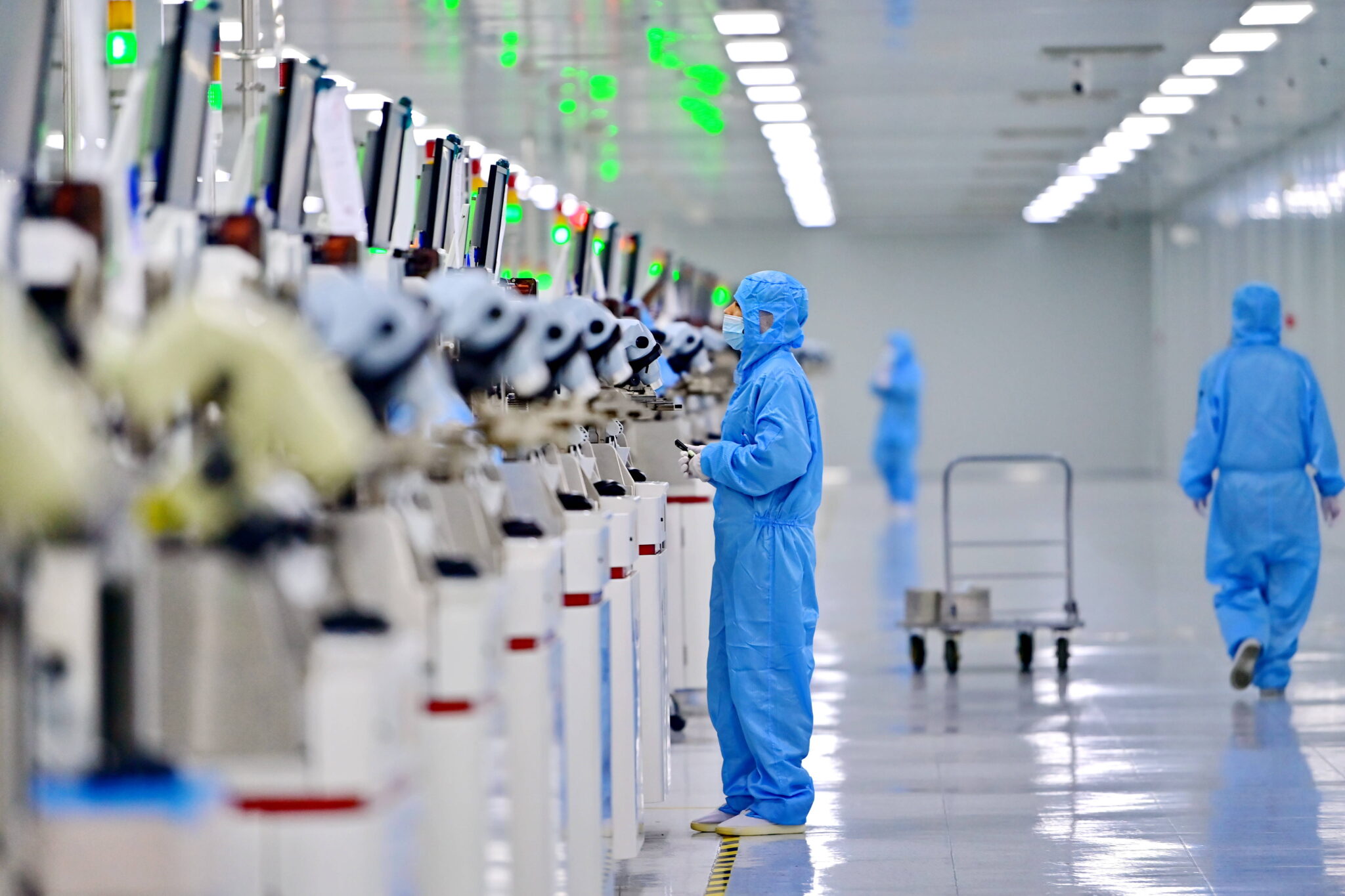
This is the great paradox of this Sino-American technology war: the sanctions have boosted China’s efforts to become self-sufficient, and though they may not have reached Nvidia’s performance levels yet, Chinese manufacturers are progressing rapidly.
It has become a strategic priority in China. Last April, the Political Bureau of the Chinese Communist Party devoted a day of study to AI. The political leadership reaffirmed its goal of providing China with an “independent, controllable, and collaborative” AI infrastructure. The money poured into this strategy amounts to tens of billions of dollars, and there are some big names involved, like Huawei, Alibaba, and Baidu.
This is China’s great challenge to the United States: technology is the foundation of American power nowadays, and the Silicon Valley giants wield considerable influence. Yet China also has its own giants and equally ambitious goals. The Nvidia case is yet another example of this, and the rest of the world, including Europe, is watching closely.