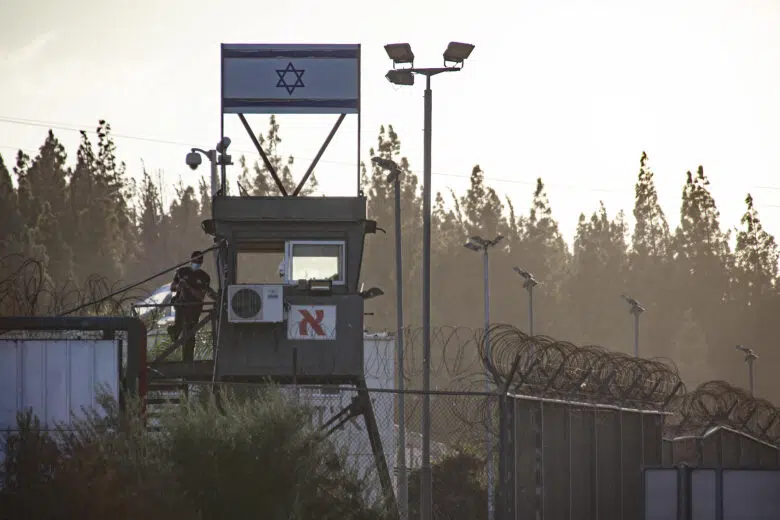
In Ofer Prison, there is a wing known as Section 23, reserved for inmates from Gaza. Ammar Jawabra was next door, in Section 24. At night, he could hear the screams from the neighboring cells — then, when the screams stopped, the guards would start banging on every door.
Each room had been given a name. They would shout: “The dog room must bark,” and the inmates barked; then came the donkey room’s turn, and the inmates brayed. Of those nights, Ammar remembers the sound of iron striking against the doors, the signal that the beatings were about to begin.
Speaking this week during a long interview with La Stampa, he remembers the humiliation, the helplessness. And, above all, the nudity. The nights when guards burst in, ordered the prisoners to strip off their shirts and pants, and began body searches and beatings, in front of everyone, naked.
For the latest news & views from every corner of the world, Worldcrunch Today is the only truly international newsletter. Sign up here.
Ofer is one of five prisons where Ammar spent eight of his 42 years. Many of those years were in administrative detention, held on vague security suspicions without evidence. Other times he was sentenced for incitement. He had organized meetings to discuss the occupation, Palestinian rights and prison conditions.
On October 7, two years ago, Ammar had already been imprisoned for six months. He was being held in southern Israel, in Ramon Prison. The inmates realized something massive had happened outside when things inside the prison suddenly changed.
No blankets
In the days after the Oct. 7 massacre, Palestinian prisoners had their water and electricity cut off and their food rations reduced. “They came in at night to search us, often with dogs to make us feel their bites, and then they suddenly sprayed gas into the cells. When winter came, they took away our hot water and blankets.”
He asked for antibiotics, painkillers, anything, but nothing came
One night, soldiers entered his cell and dragged him to another room, the interrogation room. “Dog, what’s your name?” they began, before beating his legs so brutally that the flesh was torn open.
In the weeks and months that followed, he received no medical treatment. He asked for antibiotics, painkillers, anything, but nothing came. When he lifts his pants, the scars are still visible. On the table in front of him are two bags of medicine for the injuries to his back, legs, and eyes. “They smashed my head. I can hardly see out of my left eye.”
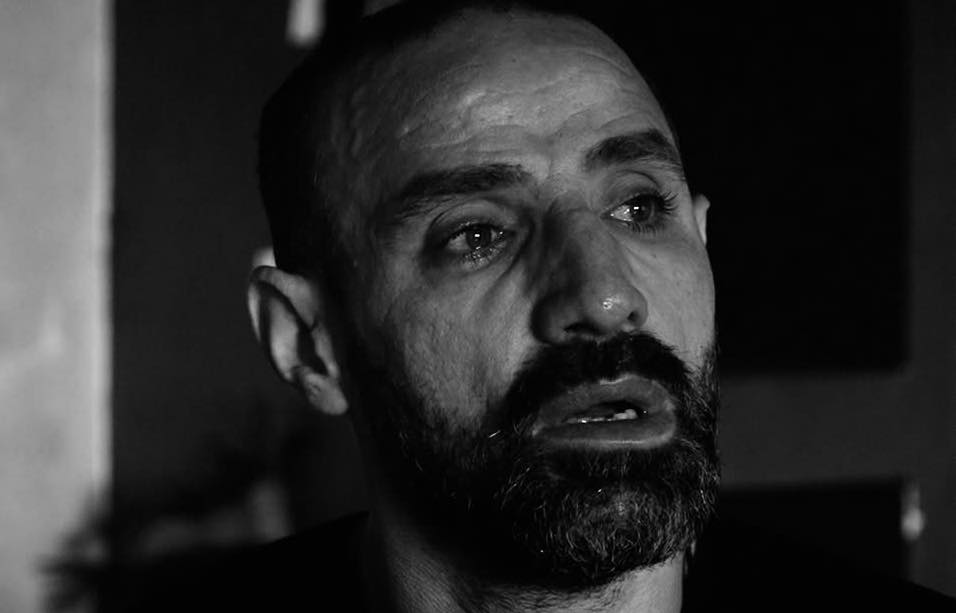
Ammar Jawabra often breaks down, and it is hard to tell whether he is crying from the physical pain of the beatings or from the trauma that still grips him after his release a week ago. In prison, he lost 30 kilograms (66 lbs). He shows photographs taken before his arrest, then lifts his shirt to reveal his ribs, the body of a man marked by hunger and fear.
One night last June, special forces stormed his cell and began beating all the inmates savagely. They crushed their legs and arms between the metal bars, then threw them to the ground and kicked them. They ordered them to lie face down, tied them up, and left them there, half-naked, their bodies covered in bruises. When one of the youngest inmates called for help, a soldier replied, “You can die, do as you please.”
Welcome to hell
In August 2024, less than a year after October 7, B’Tselem, the Israeli human rights organization that has documented the occupation for decades, published a report titled Welcome to Hell, the phrase with which a guard greeted Fouad Hassan, a 45-year-old Palestinian inmate at Megiddo Prison. His story opens B’Tselem’s extensive report.
The report paints a picture of a prison system turned into a mechanism of systematic torture. According to B’Tselem, after October 7, 2023, Israeli prisons were filled to the limit. Thousands of Palestinians from the West Bank, Gaza, and East Jerusalem were arrested, often without formal charges or trial. The number of Palestinian detainees nearly doubled, from just over 5,000 to almost 10,000. Prisons already known for harsh conditions became sites of institutionalized violence, where physical and psychological abuse is now part of daily life.
I think the flotilla participants should be held for a few months in an Israeli prison, so they get used to the smell of the terrorist wing.
These are not isolated incidents, not random excesses, but a deliberate policy endorsed by the current Minister of National Security, Itamar Ben Gvir, the same man who has said, “I think the flotilla participants should be held for a few months in an Israeli prison, so they get used to the smell of the terrorist wing.” The same man who called reduced food rations a “deterrent measure.” The same man who suggested giving Palestinian prisoners “a bullet in the head” instead of food, adding, “We should kill them with a bullet in the head and sentence the terrorists to death.”
A system of domination
According to human rights groups, the Israeli state is openly violating international law, particularly the UN Convention against Torture and the Fourth Geneva Convention, which require the protection of civilians under occupation. Even more serious, according to B’Tselem, is the attitude of the Israeli Supreme Court, which has chosen to look away, allowing the prisons to become lawless zones.
For the organization, this is not a side effect of war but the logical continuation of a system of domination over the Palestinians: arbitrary arrests, inhumane conditions, and collective punishment meant to keep an entire people subdued and terrified.
At present, there are 10,000 Palestinian prisoners in Israeli jails, nearly 4,000 of them held in administrative detention, meaning without charge or trial, based on secret evidence that neither they nor their lawyers are allowed to see. Among them are 400 minors arrested during mass operations in the occupied territories, children systematically tried in military courts.
Entire generations have grown up with prison as a collective experience
Ammar says there is no family in Palestine that has not experienced prison. Looking at the numbers, it is easy to see why. Humanitarian groups estimate that since 1967, more than one million Palestinians, about one-fifth of the total population, have been imprisoned at least once. Entire generations have grown up with prison as a collective experience, a symbol of unending oppression.

Speaking out
In Ramon Prison, Ammar was detained with his 20-year-old nephew. It is his worst memory from the past 30 months. Not what happened to him personally, but the powerlessness of watching someone else suffer. “I was in shock. I didn’t know what to do. I heard my nephew screaming as they broke his bones, and I couldn’t do anything.”
When he returned home last week, Ammar Jawabra was immediately summoned by Israeli intelligence. They advised him not to talk too much about the last two and a half years. Yet Ammar speaks, because, as he says, “if you want to judge democracies, you have to look at what their prisons are like.”
He said this sitting in the room where he keeps his most cherished books, in front of his youngest son, just 10 years old. “How is it possible that governments allied with Israel, organizations like the UN, agencies that defend children’s rights, human rights, international law?,” asks Ammar. “How can societies that call themselves democratic have allowed these abuses to go on against Palestinians for decades?”

