
-OpEd-
BOGOTÁ — “I believe China is the future in so many things,” Jorge Espinosa, managing editor of Colombia’s Caracol Radio, said after visiting the country at the invitation of the Xinhua news agency.
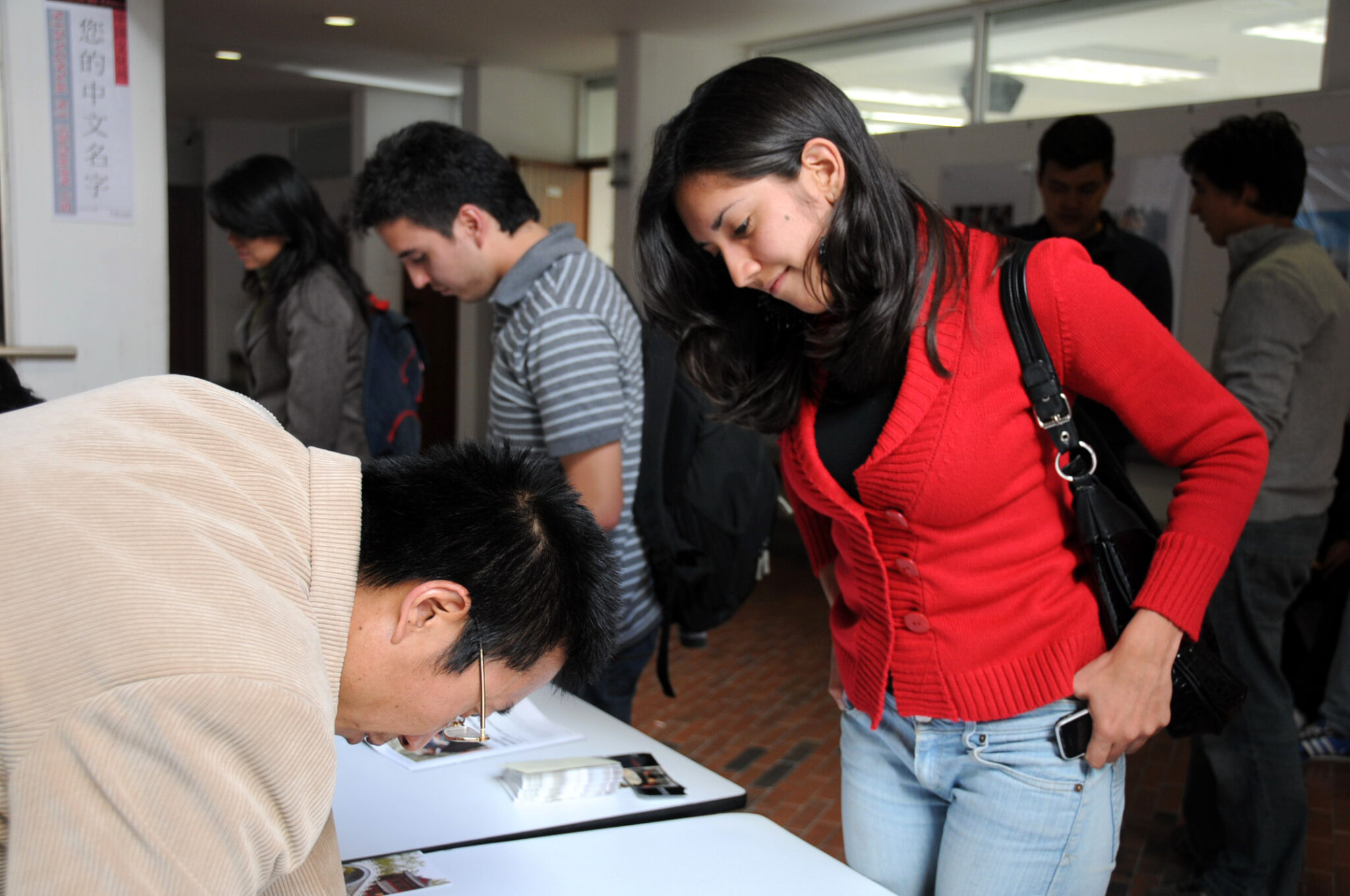
Espinosa’s interest in Eastern societies came from practicing martial arts. He wanted to write his thesis on that subject at Bogotá’s’ Uniandes (the University of the Andes), but thought no one could supervise him. Had he studied later, he might have found someone; since 2007, the private university has a Confucius Institute — a space to “promote the learning of Chinese language and culture” — which also has agreements with other private universities motivated by money, among other incentives.
The Asian superpower’s agreements with Colombian public universities are more recent and fluid, almost symbolic: like a Memorandum of Understanding for the exchange of young scientists (2023) and another on the New Silk Road (2025). Otherwise, our public education sector has shown little interest in China, in collaborative terms.
Espinosa, a salaried employee of a capitalist enterprise, shows enormous curiosity for and has considered opinions on contemporary China. He marvels at its monumental economic miracle, but has also observed on the excesses of the Great Helmsman — the late Mao Zedong, founding father of communist China — particularly the forced collectivization that caused millions of people to starve.
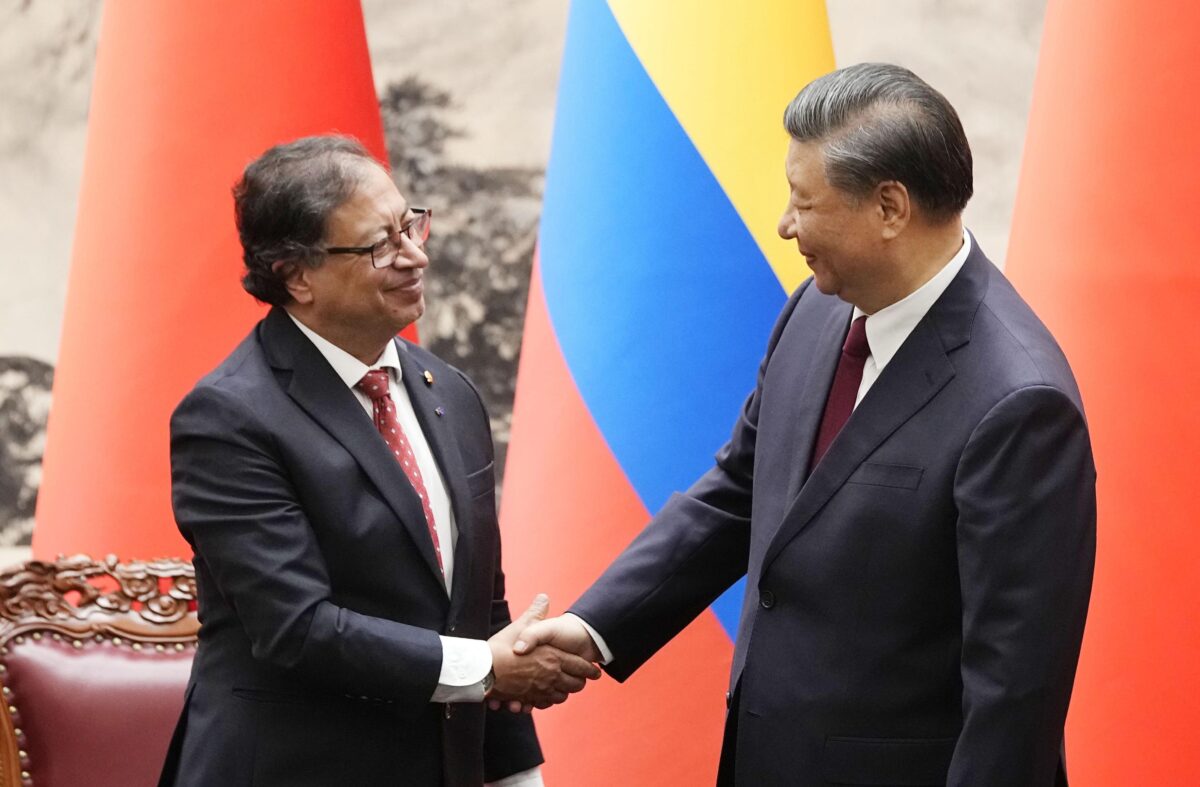
The contrast between this vision of Maoism and Colombian President Gustavo Petro’s wistful words, “You sowed hope in the youth of the world and paved the way for your people to become great,” during his visit to China, could not be more eloquent.
The only redeeming aspect of this misleading and inconclusive message is that it helps remind us that Maoism, with its destructive violence, was ultimately more influential in Colombian public universities and among our former insurgents than in China itself. There, the leap toward modernity happened by abandoning extreme revolutionary practices and reducing Maoism to an inane symbol. Only this way could a world power emerge and overcome its past of misery, backwardness, dogmatism and violence, which Petro seems to miss.
Maoism abroad…
Maoism had enormous influence on the global Left. For example, it fueled France’s May 1968 student protests and the anti-Vietnam War movement. Student protest leaders praised the Cultural Revolution, ignoring the deplorable effects of that fanatical attack on all bourgeois expressions, “especially in art and culture, as well as in technological advancement.”
Since Mao’s death in 1976, China has taken a decisive turn. The “Gang of Four,” a radical faction that sought to isolate and bully the enemies of the party and its late leader, fell. One of the victims of its persecutions was Deng Xiaoping, later a driving force behind the opening that transformed the country into an economic powerhouse. In its dark period, the regime earmarked students at Colombian public universities and even encouraged insurgent groups, but the enormous success of reformist capitalism was entirely passed over in silence.
The legacy of Maoism on university guerrilla leaders of the 1960s and 70s was deplorable, starting with the practice, copied from the Red Guards, of recruiting very young students in high school. The Cuban regime strengthened and refined this policy, which was skillfully combined with free public education to ensure loyalty in the intelligence services. With these two as teachers, the M19 — the Marxist guerrillas that included a youthful Petro among its members — perfectly exemplified the infamous practice of recruiting minors in Colombia.
… and in Colombia
Historian Mauricio Archila, a professor at the National University and researcher at CINEP (a center focused on peacemaking and social rights) notes that “one can see in the leftward inclination of young students the influence of some teacher in their high-school years.”
One can barely ignore the Maoist whiff of our own president.
As Archila wrote in an extensive essay in 2008 (El maoísmo en Colombia: la enfermedad juvenil del marxismo-leninismo), “If the Colombian left were to reproduce the male sexism of our culture, Maoism would perhaps be among the most rigid in this sense… In the old dilemma between reform or revolution… Maoism undoubtedly takes the side of the second pole… it took the defense of dogma to the extreme… It was equally intransigent, bordering on rampant sectarianism… Maoist dogmatism clung to a ‘thought’ and a charismatic figure, to the point of falling into religious veneration… (Something) like an undervaluation of objective conditions, which favors a certain voluntarism… (Like) the 19th century elites, the leftist vanguard felt themselves enlightened leaders of a backward people… a dogmatism that senses it is in possession of the absolute truth.” A deplorable vision indeed.
One can barely ignore the Maoist whiff of our own president, reinforced by his M19 past and irrepressible love of fantasy that are just two of the ingredients of our indigestible national stew. He too, like the infallible helmsman, wants us all to “see the world with Petrist eyes.”
A less lethal but regrettable impact of the politicization of public universities fostered by Maoism was the deterioration of academic standards due to constant closures and the resulting emigration of students and professors. A paradoxical example here: Clara Helena Enciso, the only surviving guerrilla from the (1982 assault on the) Palace of Justice, “entered the National University in 1968 to study economics, but left the following year due to the strikes.”