PARIS — A wart-eating praying mantis, egg whites for burns, a rosemary serum that cures baldness, raw garlic against pimples or even flaxseed gel to get rid of wrinkles…
While false information about health issues has always existed, it has truly exploded since COVID-19. And with the rise of social media, it is gaining more and more visibility. The figures are quite telling. Fake news accounts for up to 51% of posts about vaccines and 60% of content related to pandemics, according to a 2022 WHO study. On YouTube, 20% to 30% of videos on emerging infectious diseases contain similarly inaccurate or misleading information.
For the latest news & views from every corner of the world, Worldcrunch Today is the only truly international newsletter. Sign up here.
But in this jungle of fake news, a growing number of doctors are mobilizing and speaking out to sort out fact from fiction. They do this in an educational manner, adapted to the standards of digital platforms and above all by providing reliable, scientifically proven recommendations.
According to various sources, nearly a hundred professionals are on the front lines of hunting down false information on YouTube, TikTok, Instagram and X by creating content. But the task remains immense. “We are a drop in the ocean of social media,” notes Raphaël Dachicourt, president of the ReAGJIR young general practitioners’ union.
“I’ve seen people stop their treatment”
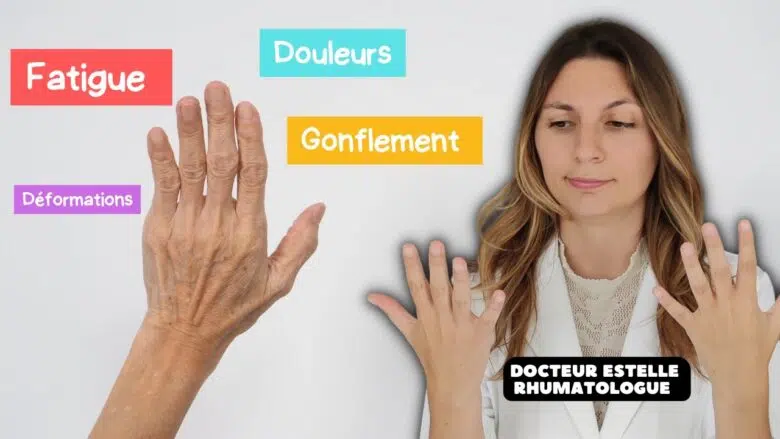
When Estelle Touboul, aka Dr. Estelle, created her account on TikTok, YouTube and Instagram, her primary goal was to share her knowledge. “I love teaching, and social media is a very effective means of communication,” says the 32-year-old rheumatologist, who has around 85,000 followers. But she quickly realized the extent of misinformation and its consequences: “I’ve seen people stop their treatment.”
Many young people’s first instinct is now to look for information on TikTok, Instagram, Facebook or YouTube before making an appointment with a healthcare professional. Some content, such as the one explaining that ingesting turpentine (a highly toxic cleaning product) can purify the body, is extremely dangerous.
This phenomenon also fuels a certain “distrust” of the medical profession: “During consultations, we’ll have to deconstruct this fake news,” Touboul says.
We’re doctors, not full-time influencers.
But how can you effectively address internet users? “Conveying a nuanced, sourced and complex message is more complicated than delivering a simplistic one,” explains Dachicourt, who created the Healthbuster account on TikTok with ReAGJIR. Accompanied by a communications agency, the organization uses deepfake technology: They hijack influencers’ content, impersonating them. “Through the construction of the video, we show how easy it is to sway the message.”
“I’m not going to change the world with my tripod and my phone”
Faced with the influx of misinformation, doctors feel very lonely. Firstly, because it takes time. Dr. Nawale Hadouiri, aka Dr_Nawell2.0, a physician at the Dijon University Hospital, spends about 10 hours a week on her videos — on a personal basis and for free.

“Debunking a minute of medical fake news requires a colossal effort,” Dachicourt says. “You have to analyze the content, research the sources, write the script and shoot the video, then respond to comments… We’re doctors, not full-time influencers.” Doctors also sometimes attract the wrath of certain influencers, through hateful comments or threats.
“Shut up, assassin,” French rapper Booba replied to Dr. Jérôme Barrière in January 2024, after the latter denied a causal link between the COVID-19 vaccine and the onset of Creutzfeldt-Jakob disease on X.
The lack of resources and skills is also being pointed out by doctors. “I’m not going to change the world with my tripod and my phone,” says Hadouiri, who has almost 100,000 followers on Instagram. “It would be good if scholarly societies took over social media and could participate in the creation of medical content.”
There are no sanctions against false informants.
Barrière, an oncologist who is very active on X, has thus chosen to partner with the media Les Electrons Libres and is a member of the scientific council of the French Cancer Society in order to have more influence. “The anti-vaxxers are well organized. Doctors must also join forces to protect themselves and increase their credibility,” Barrière says.

These professionals are calling for help: In an op-ed published in L’Express in January 2024, doctors and medical groups called on the government to act, particularly by enforcing laws and punishing those spreading false information. “We are not really supported by the government or social media,” Hadouiri says. “There are no sanctions against false informants and the videos are not deleted.”
The creation of an ethical charter
However, some positive developments are emerging in this “war against disinformation,” as Health Minister Yannick Neuder called it last January. The National Council of the Order of Physicians (CNOM) was also heard during the commission of inquiry into the psychological effects of TikTok on minors, which is currently underway.
A charter was created in January to provide physicians with an ethical and professional framework for their content creation. Developed with the CNOM, physician content creators and YouTube experts, it establishes 10 principles, such as keeping the account free, informing the medical order of the activity, mentioning partnerships, providing sources and refraining from promoting a product or activity.
“The fact that the medical order is interested in our actions on social media makes us feel a little less alone,” Hadouiri says. Other progress has been made, such as the health minister’s April 18 announcement of the creation of a “national observatory dedicated to disinformation.”
But that’s not enough, Dachicourt says: “Once we have data on fake news via this observatory, what are we going to do with it?”