
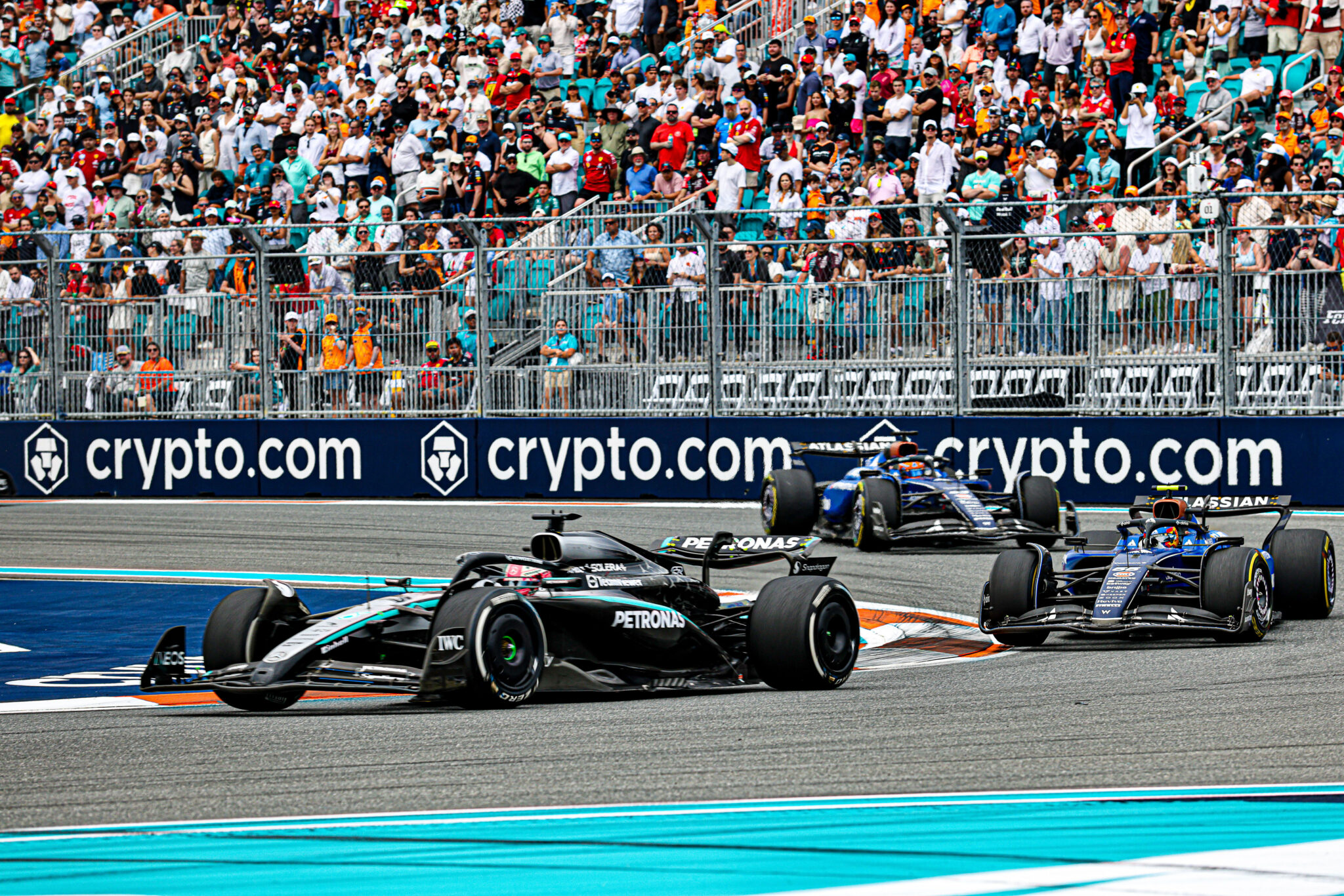
PARIS — From Formula 1 circuits to the podiums, cryptocurrency sponsors are ubiquitous. Their logos cover racing cars, shine in football stadiums alongside Europe’s biggest stars, and even appear on the outfits of some tennis players. They’re impossible to miss. These crypto companies now stand alongside the traditional partners of the sports world and are gaining more and more visibility. “Crypto is the economy of visibility,” acknowledges Sébastien Martin, president of the League for Web3 Security and head of RAID Square, a cybersecurity company.
It’s no coincidence crypto companies are targeting sports to promote themselves. “It’s a major sponsorship sector for these companies. There’s a natural alignment between the audience that watches and the one that invests, typically younger, more male, and wealthier than average,” explains Claire Balva, vice president of the neobank Deblock. This point of view is shared by Olivier Kouvarakis, chief product and marketing officer at Coinhouse: “These fans, often young, digitally oriented, and already familiar with online tools, also tend to be more “crypto-native”, which makes them a natural target for the industry.”
Sports are carefully selected by sponsors, as explained by Rachel Conlan, Global Chief Marketing Officer at Binance: “Formula 1 fans are 75% more likely to invest in cryptocurrencies than other fans. They have a certain technical curiosity, similar to that of crypto users.”
Sports fans who invest in crypto
The same observation is made by the company Bitpanda, which sees sports fans as “a customer base that invests.” The Austrian company launched its sports strategy in early 2024 and aims to connect with the tennis world, targeting the premium clientele of the sport through its partnership with ATP tournaments. Some tactics are proving to be especially successful, such as those of Crypto.com. The platform has been collaborating with Formula 1 since 2021 and signed a contract to remain a partner until 2030.
With a cumulative audience of 1.5 billion viewers worldwide, the sport offers a winning formula for Crypto.com, which surpassed 100 million users in May 2024. “Formula 1 has been a key driver in elevating Crypto.com to the status of the most recognized brand in the world,” says Steven Kalifowitz, the company’s Chief Marketing Officer.

Over $300 million
Across all sports, partnerships between crypto companies and sports organizations are multiplying, with 22 deals already finalized in 2025, compared to 18 during the same period last year, according to the marketing agency SportQuake. Since the beginning of the year, the average value of these new deals has reached approximately $4.3 million, up from $2.6 million in 2024. Total annual deal value hit $305 million last year, compared to $247 million in 2023.
“Companies tend to invest more during bullish crypto markets because they have more cash,” states Claire Balva. In the past year alone, the value of Bitcoin has surged by nearly 50%, now standing at over €90,000 per unit.
We need to reassure sports organizations and educate the French public.
Partnership requests also come directly from sports organizations. “Around ten clubs approach me every year for sponsorships once they realize there’s money to be made,” says Thibaut Boutrou, co-founder of Meria Finance. It’s a win-win exchange, allowing crypto companies to gain “legitimacy and credibility.” “It helps to embed that image in people’s minds, and there’s also a lobbying dimension, with opportunities to invite partners,” the expert adds.
Exclusive experiences are being created, for example through team tokens, “to strengthen community engagement,” adds Olivier Kouvarakis. On Binance, holders of Alpine tokens — priced at €0.61 each — can take part in polls, such as voting on “which team role you’d like to learn more about at BWT Alpine F1,” or even get the chance to meet the drivers.
“Demystifying the sector”
However, it was necessary to regain the trust of sports organizations. In November 2022, the well-known platform FTX declared bankruptcy and became insolvent. Mercedes AMG immediately ended its partnership with the platform, which had been featured on its race cars. Two years ago, the Inter Milan football team also removed its partner Digitalbits from their jerseys. While the first payment installment had been made to the club, the next two never arrived. “We need to reassure sports organizations and educate the French public because crypto still carries a certain stigma,” acknowledges Bitpanda. “We need to demystify the sector,” adds Rachel Conlan.

Some, however, have decided to place full trust in crypto companies, such as the football club Juventus, which opened up 5% of its capital to Tether, a company that issues its own stablecoin, a crypto asset pegged to the value of a fiat currency. Formula 1 team Aston Martin went even further, becoming the first to be fully paid in USDC stablecoins as part of its deal with Coinbase. “We are proud to be at the forefront of this new model of partnership and to keep innovation at the core of our business,” says Jefferson Slack, Aston Martin’s Managing Director of Commercial.
Looking ahead, crypto companies hope to “broaden their message around Web3 and attract the next generation of users,” says Rachel Conlan. As of May 2024, 562 million people globally owned digital currencies. “We’re aiming to reach the customers who will make up the next billion crypto holders,” says Gary Sun, Vice President of Marketing at Coinbase. The question remains: which company will win this fierce battle for visibility and take the title of world’s leading platform — a position currently held by Binance.