-Analysis-
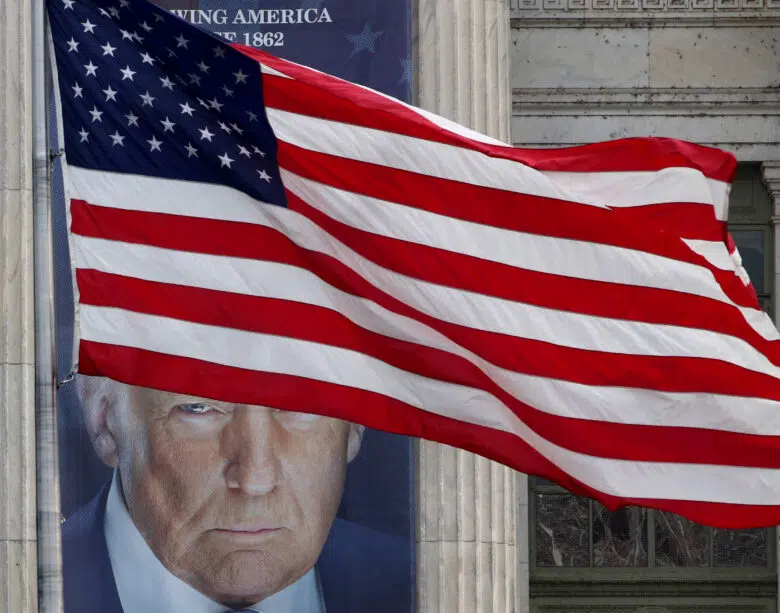
BEIRUT — U.S. President Donald Trump said on Aug. 19 that helping to end the Ukraine-Russia war could help him “get to heaven.” But the paradise he’s hinting at seems more like a postal address in Stockholm. For Trump, the shortest path to political immortality runs through the Nobel Peace Prize.
For the latest news & views from every corner of the world, Worldcrunch Today is the only truly international newsletter. Sign up here.
While an individual cannot nominate himself for a Nobel Prize — in any field — Trump does not shy away from openly declaring his desire to obtain that honor. His desire to “snatch it” is no longer secret either, after the Norwegian business daily Dagens Næringsliv revealed that he raised the subject during a call with the Norwegian finance minister in July.
Trump’s constant repetition that he “deserves a Nobel Peace Prize” even though it will not be awarded to him, shows that the matter occupies his mind and dominates his thinking, according to French journalist Antoine Jacob, who is the author of two books on the prize.
Jacob told Daraj he can only imagine what is going on inside Trump’s head to make him repeat such words: “Perhaps a mix of narcissism and a serious conviction that he has achieved accomplishments that make him deserving of the world’s most famous prize.” What may reinforce that conviction, Jacob said, is that his predecessor Barack Obama received it despite having been in office for only nine months.
Trump’s campaign
Trump does not hesitate to boast of his record full of achievements, arguing that he meets all the requirements after sponsoring the Abraham Accords and his successful mediation that led to peace agreements between Armenia and Azerbaijan, and between Rwanda and the Democratic Republic of Congo. His mediation also contributed to reaching ceasefires between India and Pakistan, and between Thailand and Cambodia. Trump also reminds people of his prevention of an armed conflict between Egypt and Ethiopia, and his efforts to stop the Russia–Ukraine war and the war in Gaza.
Trump’s argument also includes hypothetical scenarios; he claims that the world would not have witnessed Russia’s invasion of Ukraine and the events of Oct. 7 if he had won the 2020 election.
His campaign has not stopped at expressing wishes; it gained momentum with several world leaders nominating him for the prize, including the presidents of Gabon, Mauritania, Senegal and Azerbaijan and the prime ministers of Israel, Pakistan, Cambodia and Armenia. It should be noted that because the nominations for the 2025 cycle closed on Jan. 31, Trump’s nomination is tied to the next cycle.
An “absurd nomination”
On the other side, a number of arguments cast doubt on Trump’s eligibility to receive the Nobel Peace Prize. Jacob notes, for example, an opinion article in Norwegian daily Aftenposten signed by three Norwegian historians specializing in the history of the Nobel Prize. In the article, titled “Peace Prize for Trump? Then the Nobel Committee members must be having a mental breakdown,” the historians write that Netanyahu, who has been “accused of genocide” has “nominated his accomplice” and call the nomination “absurd.”

Jacob agrees with the historians’ arguments that Trump has hurt his chances of obtaining the prize with his decisions to withdraw the U.S. from the World Health Organization, UNESCO and international climate agreements (an issue central to the Nobel Foundation’s concerns), impose sanctions on the International Criminal Court, and threaten to annex Canada, Greenland and the Panama Canal, as well as his use of tariffs as a tool of political pressure. Jacob says that such politics based on hard power do. not resonate positively in Oslo (where the Nobel Peace Center is located).
Others even question the achievements Trump promotes.
Journalists and analysts point to a series of additional “Trumpian” steps and decisions that align with this position: dissolving the U.S. Agency for International Development (USAID), launching a military strike on Iran, pushing NATO members to increase their military spending, and a twisted negotiation style in resolving conflicts, which does not necessarily do justice to the victims.
Others even question the achievements Trump promotes: the ceasefire between Rwanda and Congo remains fragile; and India refuses to acknowledge any U.S. role in halting military operations with Pakistan. So, in parallel with the “achievements,” we find a series of decisions taken by Trump during his two presidential terms that do not align with the spirit of Alfred Nobel’s will, which remains the main reference in determining the identity of the winners.
Pragmatism and outliers
The late Swedish inventor had stipulated that the prize be awarded to the person who, during the previous year, “shall have done the most or the best work for fraternity between nations, for the abolition or reduction of standing armies, or for the holding and promotion of peace congresses.” So why insist on this scenario of Trump obtaining the Nobel Peace Prize despite the reasons mentioned above?
Jacob said that many journalists and experts in international relations refuse to rule out this hypothesis — a sentiment also found in Oslo. Indeed, the jury has proven pragmatic in the past, which may work in Trump’s favor, the French journalist said: “If Trump succeeds in forcing Russia to sign a fair and lasting peace agreement, it will not be impossible for him to be awarded this prize despite his repulsive personality and style. The criterion the jury will rely on is honoring an agreement that ended a fierce war on the European continent, and it is very likely then that Trump will share the prize with others.”
One should also consider the multiple criteria that have been adopted in awarding the prize and the list of figures who have received it since its inception. Indeed, questions have been raised about the eligibility of some names to receive or retain it. Meaning Trump would not be an outlier.
Obama’s 2009 Nobel Prize is considered one of the most controversial.
U.S. Secretary of State Henry Kissinger received the prize in 1973 in recognition of his role in the Paris Agreement to end the Vietnam War, despite being accused of prolonging the war years earlier. In 1994, the trio of Yasser Arafat, Yitzhak Rabin and Shimon Peres received the prize in recognition of their efforts in signing the Oslo Agreement, which raised questions about the need for patience and avoiding haste in awarding the prize before ensuring the peace sought was realized on the ground.
On the other hand, Israeli Prime Minister Menachem Begin obtained the prize for his role in the Camp David Accords, despite invading Lebanon three years later. The same argument applies to Myanmar’s Prime Minister Aung San Suu Kyi for her failure to confront the massacres against the Rohingya minority in her country. The awarding of the prize to Obama in 2009 is also considered one of the most controversial episodes in the prize’s history, for the reasons Jacob mentioned earlier.

Room for maneuver
The French journalist noted that the Nobel Committee has granted itself room to maneuver away from the literal meaning of Nobel’s will. For example, the jury considers the possibility of using the prize’s prestige to support ongoing efforts, which may contribute to their realization in practice; the principle is that risk is better than staying on the sidelines.
The controversy over Trump’s nomination for the Nobel Peace Prize revived broader debate about the mechanism and criteria for awarding the prize: Should it be awarded based on concrete achievements or flawless careers? Is its purpose to recognize accomplishments or to give momentum to ongoing efforts? Is it better to restrict it to organizations rather than individuals? Should the Nobel Foundation have the power to withdraw awards from those who violate its standards? And is it urgent to expand the jury so it is not limited to Norwegians?
Jacob said that restricting the prize to organizations would be a mistake: first, Nobel’s will did not stipulate such a thing, and second, there are individuals who embodied causes more than organizations did, and who fought struggles that deserve attention.
The Nobel Prize has become one of Norway’s most prominent elements of soft power.
As for the authority to withdraw the prize, Jacob said that this proposal is not under consideration, especially with the Nobel Committee insisting and affirming that it is not responsible for the actions of those who were awarded the prize. Jacob also questioned how brandishing the withdrawal of the prize would become a deterrent — unless the concerned person were required to return the financial reward. But the bigger dilemma, in he said, remains in defining the level and criteria of the “fault” that would push toward the decision to withdraw the prize, which is extremely complex.
Regarding opening the jury’s membership to non-Norwegian figures, Jacob said that the committee of five members chosen by blocs represented in the Norwegian parliament are not necessarily specialists in major international issues. Jacob supported the principle of including non-Norwegian elements in the jury on the condition of guaranteeing their independence and competence, as Nobel’s openness would benefit it even if the openness is limited. Yet Jacob said the foundation’s leaders have rejected this idea, especially after they raised complex questions about the criteria to be adopted.
The purpose of raising such questions may be to preempt any possibility of modifying the mechanisms of the foundation and the jury, and the reason lies in the fact that the Nobel Prize has become one of Norway’s most prominent elements of soft power.
In a radio interview, French writer Oscar Lombert quoted a former Nobel Committee president as saying: “The world pays no attention to a change in the Norwegian prime minister, but all eyes are on us on the day the winners are announced and when the prizes are handed out.” And Norway, Lombert is sure, has no intention of giving up this privilege.

