
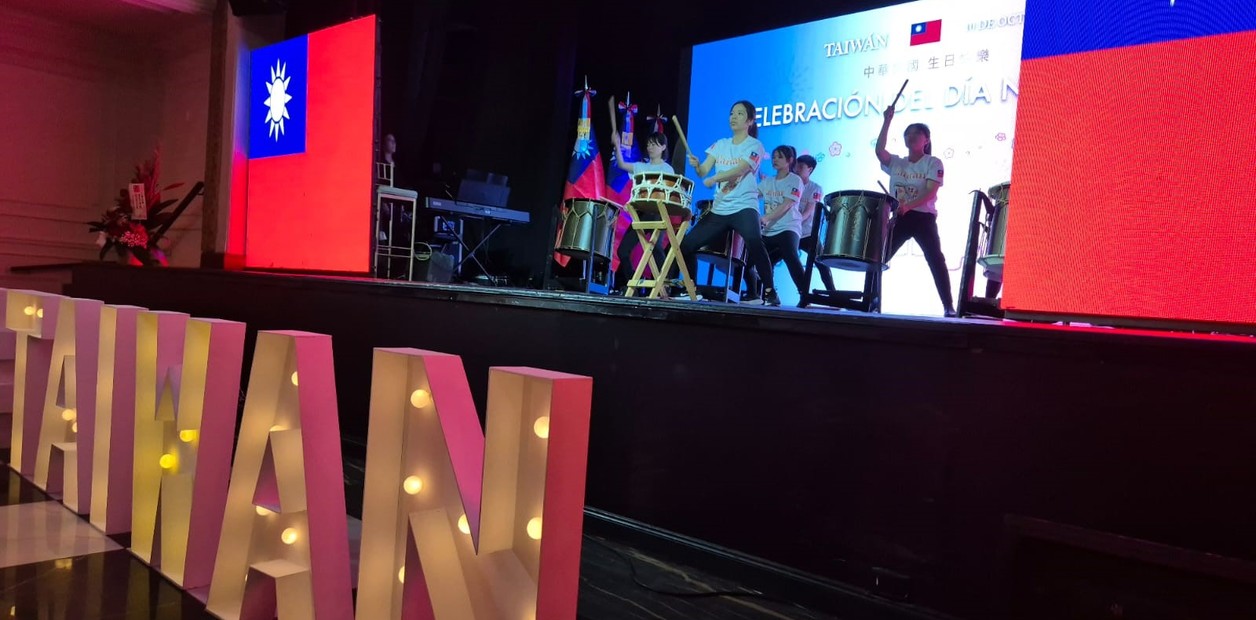
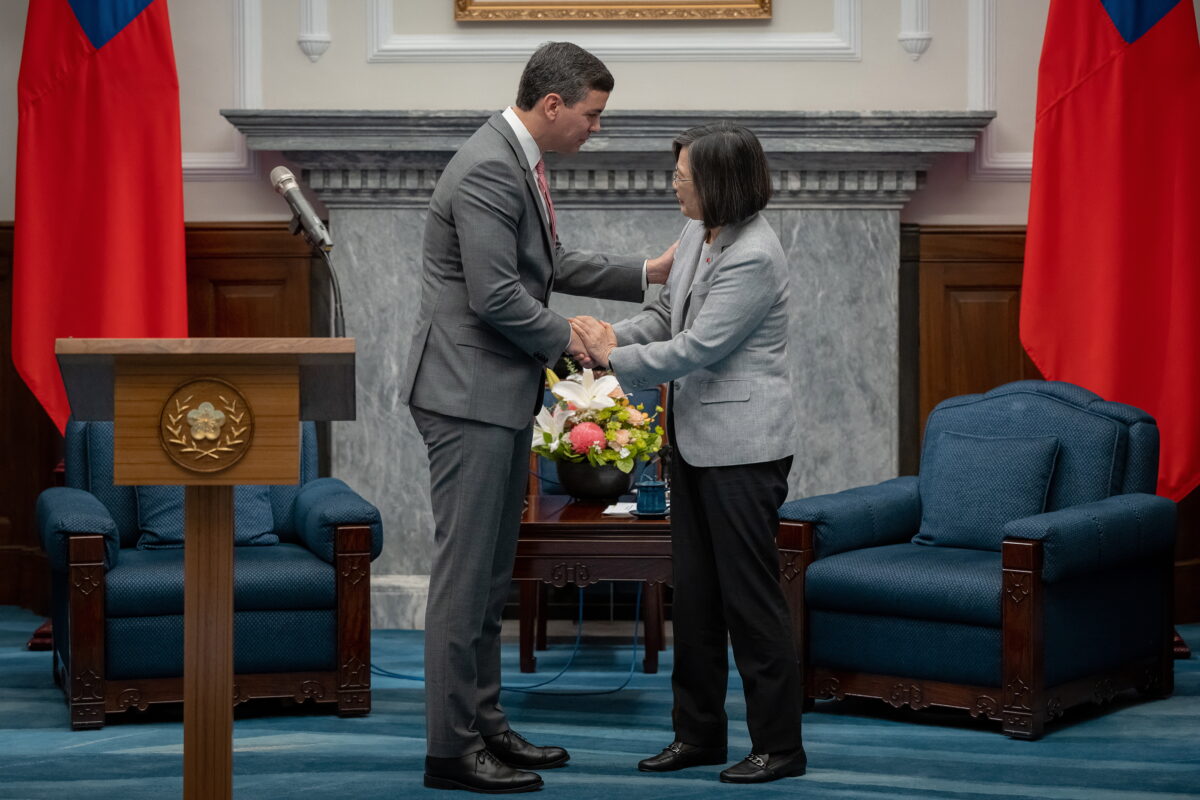
BUENOS AIRES — Taiwan’s presence in Latin America has been constantly strangled, with countries cutting off all diplomatic communication under Beijing’s pressure, either political or economic, to distance themselves from the “rebel island.” However, recent events seem to indicate a change of course: on November 25, a delegation of about 10 Panamanian parliamentarians visited Taipei for the first time since relations broke down in 2017.
It is in the interests of the Chinese authorities to intimidate both directly and indirectly and to prevent the visit from taking place. Supported by Congress, this trip was part of a slow but significant series of actions by individuals to move closer to (or return to) Taipei, and the values that this democracy represents. But it is also an attempt to counterbalance the harmful influence that China has in the region.
For example, the recent meeting of the Inter-Parliamentary Alliance on China (IPAC), held in the European Parliament, had a notably expanded Latin American presence with a delegation of four representatives each, from Paraguay, Bolivia, Colombia, Uruguay, and Panama, all clear in their interest in reopening relations with Taipei through the establishment of an economic office.
Trade matters
By cutting ties, Panama was forced to close all diplomatic channels with Taipei despite the fact that Taiwan has a free trade agreement with Panama and is one of its main trading partners.
In 2024, some $93 million in exports went from the Central American country to the island, surpassed only by the Netherlands ($115.8 million) and the United States ($154.9 million). In comparison, $42.5 million were sold to mainland China. Even so, Panamanian President José Ramón Mulino published a post on X turning his back on the delegation and distancing himself from this initiative.
According to Luis Duke, Panamanian parliamentarian and member of IPAC: “Exploring avenues of economic and trade cooperation with Taiwan —in commercial, academic, or innovation terms — can be positive if done with transparency and respect for our international commitments. The Executive’s statements reflect foreign policy considerations.”
Disappointment with China, its policies, promises, and treaties.
José Ramos Reyes, a Panamanian member of the Central American Parliament, said, Panama had an “excellent relationship” with Taiwan. “With the FTA in place,” he said, “it is only fair to approach and explore the possibility of opening a trade office.”
Opening the door to Taipei’s presence in the Central American country seems to be the main objective of the parliamentarians who support Asian democracy, in order to counter the conditions imposed on them when establishing relations with Beijing, which other countries such as Chile and Argentina do not have to comply with.
Bumpy bandwagon
The actions by Panama and other countries in the region are a response to accumulating disappointment with China, its policies and promises. Since the early 2000s, Beijing has set its sights on some Latin American economies and promised them an alternative path to development, trade and political cooperation. These expectations led several nations to sever diplomatic relations with Taiwan, hoping to “jump on the bandwagon” of what at the time seemed to be an inexhaustible source of resources that imposed fewer conditions than Western lenders.
However, years of broken promises and contracts, the worrying environmental impact of Chinese projects, authoritarian influence, and even negative economic effects have led more and more political and economic leaders in the region to question their relationship with Beijing and even redouble their efforts toward Taipei. In Bolivia, for example, the change of government could open up more space for debate on the potential impact of lithium mining, the presence of Chinese companies in infrastructure, and the lack of transparency in cooperation.
In Paraguay, Beijing continues to exert pressure to end recognition of Taipei, as recently revealed in a documentary by Al Jazeera. In Colombia, the recently announced accession to the Belt and Road Initiative has not yet been presented to Congress for review, something that parliamentarians such as Juan Espinal, also a member of IPAC and the Democratic Center, have openly criticized.
In this context, the coming months, which include several important elections in the region, and key policy decisions in countries such as Colombia, will be crucial in defining Taiwan’s long-term position in Latin America.
Sascha Hannig is a contributor to Análisis Sínico at CADAL (www.cadal.org).