
-Analysis-
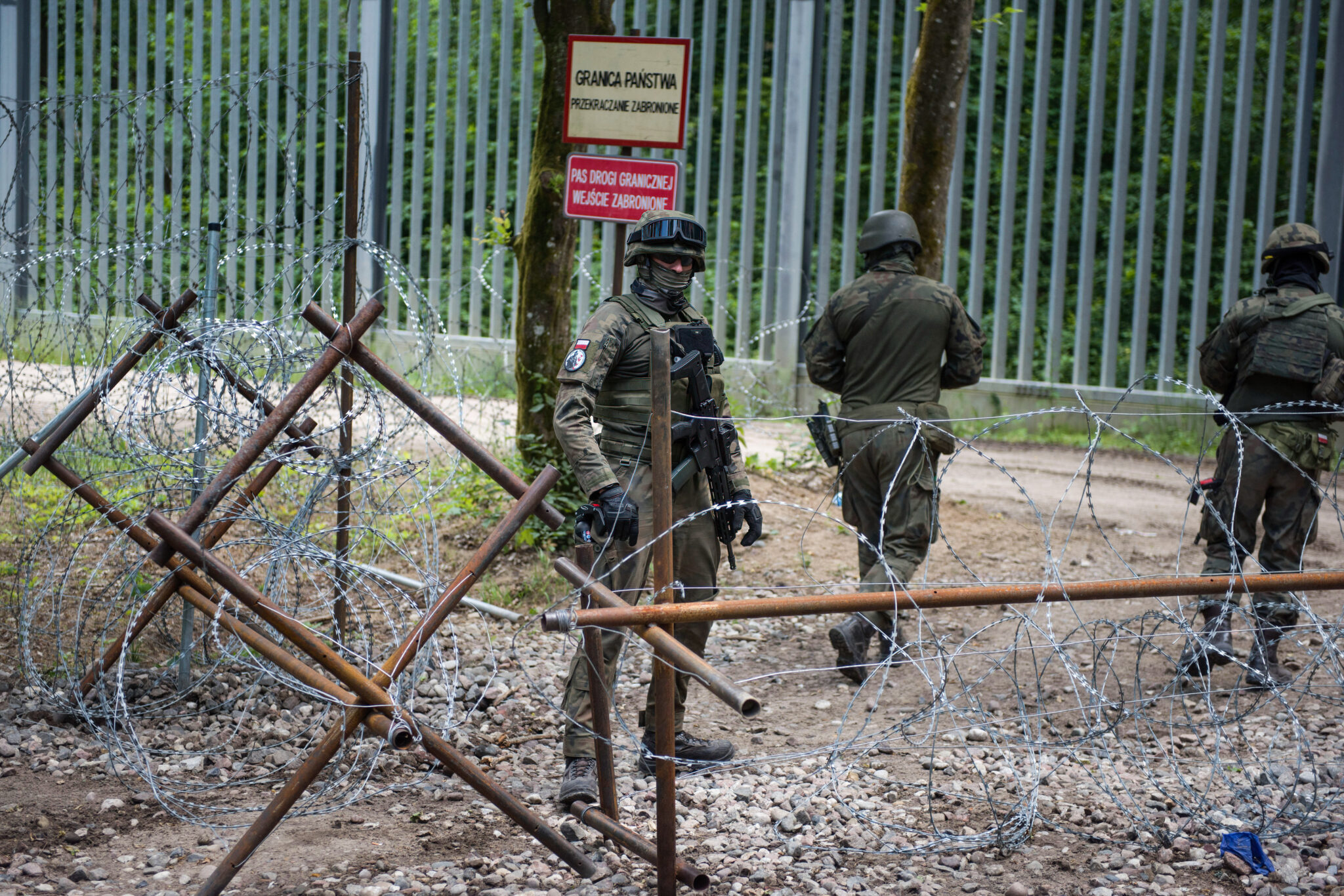
If there was a moment, and a place, when Poland realized that the world as we knew it was about to change, it was August 2021, in the Białowieża Forest, on the border with Belarus.
Suddenly, out of nowhere, thousands of migrants began crossing into the country, pushed by Minsk guards, blocked by Polish forces, and trapped for weeks in the freezing cold of Europe’s last primeval forest. It was then that the authorities in Warsaw spoke for the first time of an escalation in Russia’s hybrid war against Poland.
But the world then still had no idea that just a few months later, Russia would invade Ukraine, and attention was focused above all on the 142 migrants who froze to death — and on Poland’s longstanding mistrust of Russia.
Today we know that this was a crisis engineered and manipulated by Russian President Vladimir Putin’s vassal, Belarusian President Aleksandr Lukashenko, who in the meantime was amassing troops and resources ahead of the “special operation.” And we now know that Warsaw was right to sound the alarm about Russian aggression. “All countries bordering Russia have a more sensitive seismograph. We sense the danger first. If Russia attacks, we are the first in line. That is why we are more vigilant,” as writer Witold Szabłowski explained.
On the geographical frontline
Since February 24, 2022, Poland has become Europe’s outpost against Putin’s aggression. Not only because it shares a 535-kilometer border with Ukraine and over 400 kilometers with Belarus, Moscow’s military ally. Since Russia invaded Ukraine, Warsaw has been living as though it were already at war, even without tanks in the streets. On the frontline, not just geographically but militarily.
The drone incursion in the early hours of Wednesday, Sept. 10, is only the latest — albeit the most serious — attack on Kyiv’s main ally. Every day, the security services say, Poles endure the effects of Russia’s hybrid warfare: cyberattacks, sabotage, rogue drones, and propaganda.
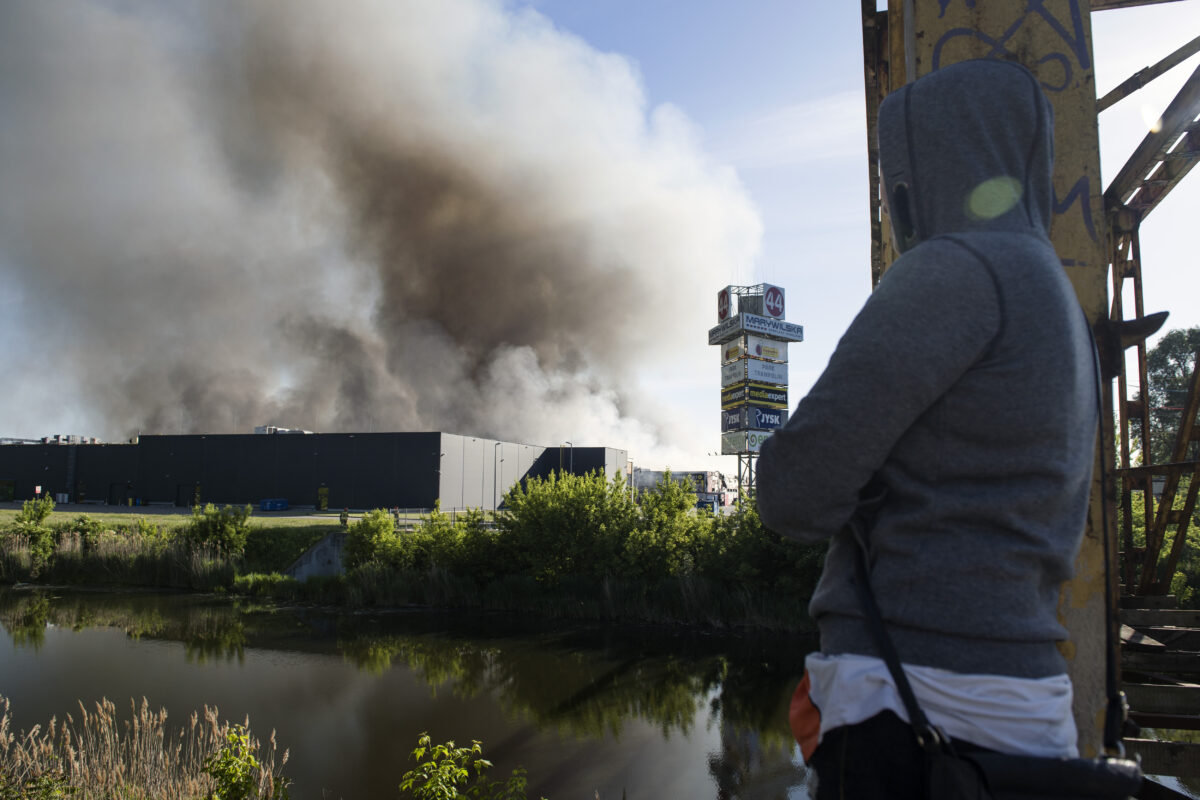
In 2022, immediately after the invasion, the “Cert Polska” National Cybersecurity Agency recorded more than 29,000 serious cyber incidents — a 70% increase compared to the previous year. In 2023, the number rose again, while in 2024 Warsaw reported at least 15 acts of sabotage linked to Russian intelligence: fires at logistics warehouses, disruptions to railway lines leading to Ukraine, and even attacks on energy infrastructure. On March 18, 2024, a fuel depot in Wroclaw went up in flames, and in Warsaw everyone still remembers the fire at the Marywilska 44 shopping center in May 2024: 1,400 shops and an entire megastructure razed to the ground. “A Russian terrorist act,” the investigation concluded.
Benevolent neighbor
And then there are the drones. At the end of August 2025, two Russian UAVs were shot down over Podlaskie, near the border with Belarus. It was not the first time: since February 2022, Warsaw has reported 20 incursions into its airspace. “An act of aggression,” said Donald Tusk, who in September announced the temporary closure of the border with Minsk.
Support for Kyiv and resistance to Russian aggression are written into Poland’s DNA.
Being the West’s first bastion also means giving more than anyone else. Since 2022, Poland has supplied Ukraine with more weapons, relative to its GDP, than any other European country. According to the Kiel Institute for the World Economy, Warsaw has transferred military equipment worth more than 4 billion euros: over 350 tanks, including Leopard 2s, PT-91s, and T-72s; nearly 300 armored vehicles; and more than one hundred artillery pieces. To say nothing of ammunition and missiles.
“An investment in our own security,” repeats Defense Minister Radosław Sikorski, who often sounds weary of reminding people that support for Kyiv and resistance to Russian aggression are now written into Poland’s DNA.
An existential threat
In no European country is distrust of Russia as deeply rooted as in Poland. It is not only a matter of politics but of memory. Poland has always been a land of conquest.
In the 17th century it was ruled by the tsars; in the 18th century it was wiped off the map by partitions, in the 19th century it was suppressed and Russified. Every generation has had its own trauma at the hands of Moscow.
The 20th century confirmed it all: the 1920 war, the Molotov-Ribbentrop Pact, Katyn, the Red Army’s arrival in 1945 — followed by another occupation that lasted until 1989. Even the Smolensk tragedy of 2010 reopened wounds and suspicions.
For Warsaw, Russia is not a counterpart but an existential threat. This is why today it is the most anti-Russian capital in Europe: It backs Kyiv, invests more than 3% of GDP in defense, seals its borders, and builds barriers. Convinced that once Ukraine falls, its turn will come.
Orbán’s shadow
The border is also political, a link with countries that share a Soviet past, such as the Baltics. But it is no longer the united Visegrad bloc: With Viktor Orbán’s Hungary maintaining close ties to Moscow, Warsaw has taken on the role of Ukraine’s advocate in the EU, pushing for enlargement to include Ukraine and Moldova and supporting greater joint defense funding.
Relations with Prague and Bratislava are unstable. The natural axis is with the Baltic states and Germany, despite lingering mistrust. Even with the tensions between Prime Minister Tusk and the new President Nawrocki, the sense of threat holds society together.
Poland aims to invest 4% of its GDP in defense by 2026. It has signed billion-euro contracts with South Korea and the United States for new tanks, howitzers, Patriot systems, and aircraft. A rearmament program that Tusk calls a “guarantee of survival” and that is turning Poland into the European Union’s largest land military power.