–Analysis–
PARIS — Have we truly realized the extent of what Donald Trump is inflicting on the world? He’s not just a more brutal form of Uncle Sam, the world’s longstanding policeman, taking, as he always has, a few liberties with the rules of the international game. No, Trump is actually changing those rules, and replacing them with just one: whatever’s good for Trump is good for the world.
For the latest news & views from every corner of the world, Worldcrunch Today is the only truly international newsletter. Sign up here.
We’ve grown accustomed to the erratic way in which he handles all the big conflicts of the day, Ukraine and the Middle East: one day I’m putting the brakes on arms deliveries to Kyiv, the next I’m getting annoyed with Vladimir Putin and sending them on; I’m bombing Iran but also struggling to devise a plan for the Middle East that isn’t Benjamin Netanyahu’s.
And there are also the less explosive but just as significant decisions: when he threatens to impose 50% tariffs on Brazil, not for commercial reasons, but solely out of ideology. “Tariffs” to denounce the trial of Jaïr Bolsonaro, the ex-president accused of inciting his supporters into an assault on official buildings in Brasilia after refusing his electoral defeat.” Sound familiar? No wonder, Bolsonaro is nicknamed the “tropical Trump.” This Trumpian interference in the political life of Latin America’s largest country is extravagant, and a reminder that this administration, as Vice President J.D. Vance made clear in Munich, has an ideological agenda.
Multi-alignment, ideology, gaffes
In the same style, Donald Trump wants to impose an additional 10% tariff on countries participating in the BRICS, the “club” of emerging countries among which the main power is China. Nevermind that the BRICS do not form a coherent alliance — India and Brazil are imperfect democracies, China is a communist country, and Saudi Arabia, which has just joined, is an authoritarian monarchy; nevermind that countries close to the United States such as India and Saudi Arabia have decided to join, in a world of “multi-alignment,” according to the doctrine devised by New Delhi.
Donald Trump has no time to lose in these fine details, so it will be 10% for all those who flirt with the idea of an alternative world. Once again, ideology.

A third example is this picture of Donald Trump and five African heads of state, which is provoking indignant reactions across that continent: the American president is seated at his desk in the Oval Office, and the African heads of state are standing behind him, like simple collaborators.
A few moments earlier, he had congratulated the President of Liberia on the quality of his English, even though it is the official language of this country founded by former slaves returned from America. He also had congratulated a journalist who had asked the African representatives whether they supported the award of the Nobel Peace Prize to Donald Trump for the agreement agreed upon in his facilitation role between Rwanda and the Democratic Republic of Congo…
Understanding what’s “happening” to us
This is not (just) about awkward exchanges or conventional indignation. It’s about understanding what’s “happening” to us, the rest of the world, that is forced to adjust to this paradigm shift; particularly in Europe, a continent that has owed so much to the United States, primarily its security for decades, and is now mistreated by its protector.
The Europeans have yet to find the narrow path between “resistance” to the White House’s diktats, and compromise to save what can be saved.
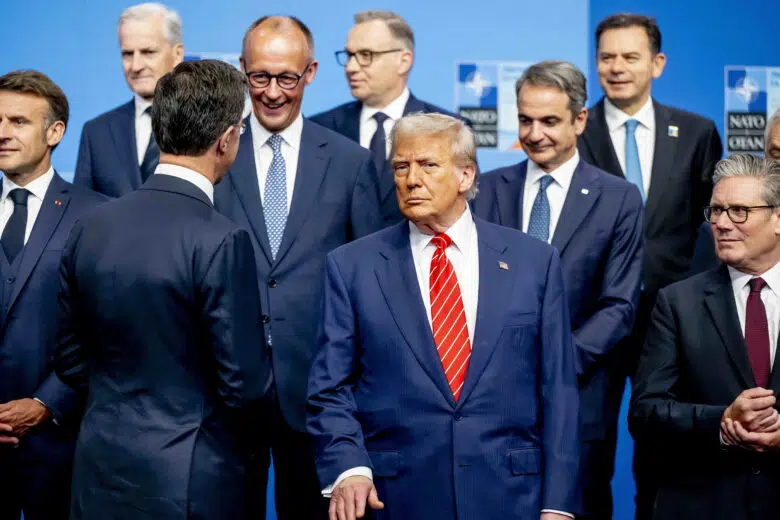
EU countries know this: they don’t have the power to oppose Washington head-on, because most of them don’t want to risk losing American protection as the world becomes dangerous again. But they also know that Trump only understands power relations, and that the display of submission, as shown during the last NATO Summit in The Hague, will only prompt more contempt.
The Europeans have yet to find the narrow path between “resistance” to the White House’s diktats, and compromise to save what can be saved of a foundational alliance. This is the priority if we are to draw the right lessons from these six traumatic months.

