
-Analysis-
BERLIN — I cannot claim to have grasped the full significance of the events of October 7 right away, exactly two years ago. For a brief moment, I thought the Hamas attack on that terrible Saturday morning was simply another appalling chapter in a long series of clashes. After all, since I began covering foreign affairs, I have witnessed five Gaza wars: 2008, 2012, 2014, 2021 and 2022.
But what has unfolded since October 7, 2023, when Hamas terrorists carried out the bloodiest massacre in Israel’s history, can no longer be understood solely within the familiar framework of the Middle East conflict. Nor can this escalation be seen only as part of the century-long struggle between Israelis and Palestinians for national self-determination. What began as another Gaza war has become part of a broader struggle for a new world order.
To make sense of it, one must widen the lens: the Hamas attack set off a sweeping counteroffensive by Israel. The terrorist group was crushed, the Gaza Strip devastated, and the civilian toll has been catastrophic. The balance of power in Lebanon and Syria shifted, and Iran’s regional dominance was pushed back.
In the past two years, the geopolitical map of the Middle East has been dramatically redrawn. Iran has lost its “axis of resistance” of proxy militias and its position as the region’s shadow hegemon stretching from Gaza to Beirut, Damascus, Baghdad, and Sana’a.
Israel, by contrast, has emerged from the darkest moment in its history as the region’s strongest power, ready and capable of fighting on multiple fronts. Whether this new balance of power will bring stability or perpetual unrest with endless military flare-ups is impossible to predict, even now that Donald Trump is using his influence to push for a ceasefire and peace.
Helpless foreign policy
This conflict is about much more than Gaza. It concerns the geopolitics of the region between the Levant and the Gulf, the future of international law, and, not least, the credibility of the Western nations that stand behind Israel.
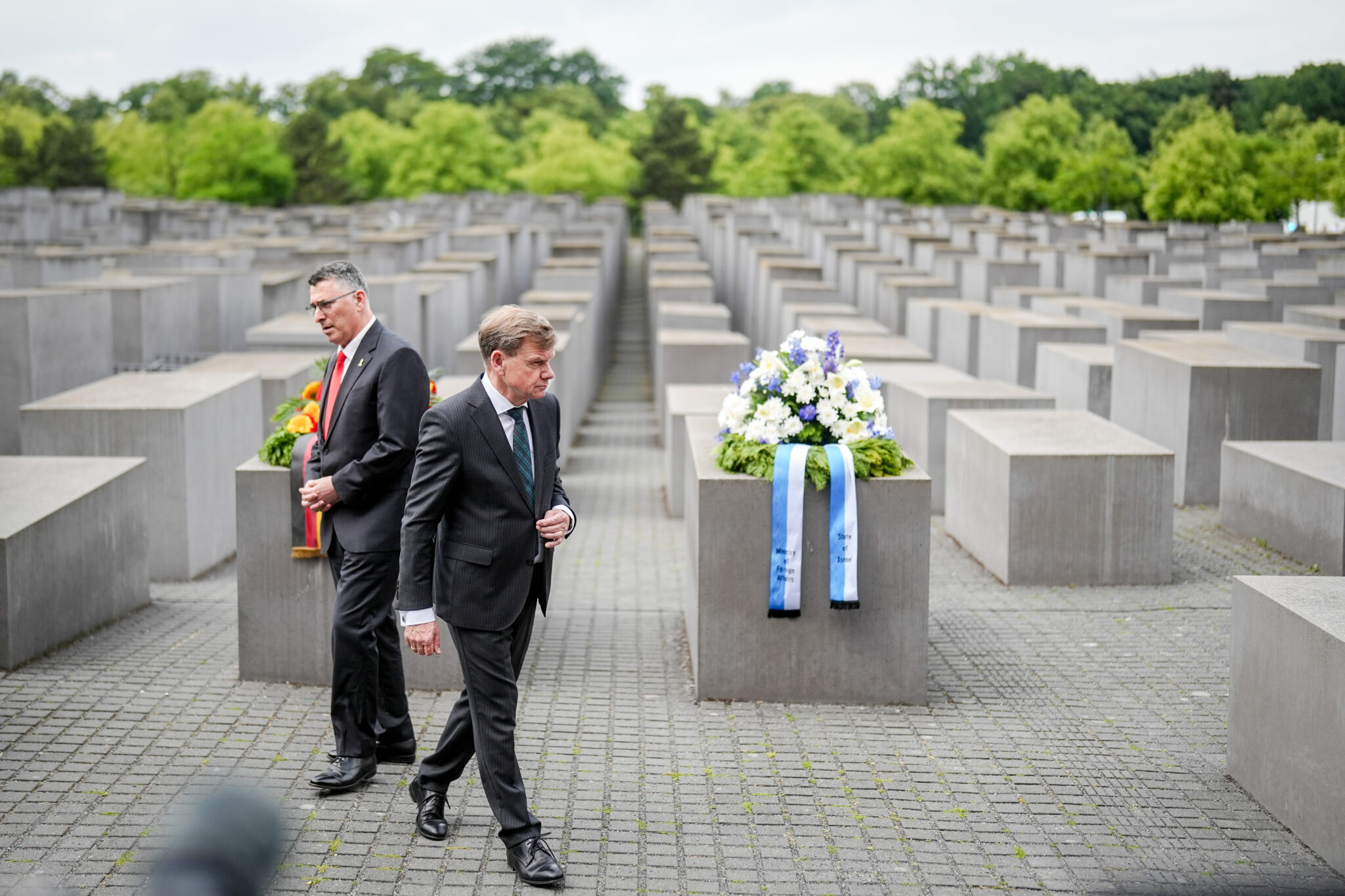
Germany, given its special relationship with Israel, is at the center of this dilemma.
For a long time, German foreign policy appeared paralyzed in the face of the escalation. It clung to one of its core dogmas: that Israel’s security is part of modern Germany’s raison d’état. This principle was not wrong when it was first articulated, but over time it has become outdated, obscuring more than it clarifies.
I would never have imagined that center-right parties would begin the long-overdue course correction.
I would never have imagined that a government led by the center-right CDU/CSU, of all parties, would be the one to begin the long-overdue course correction. For the conservatives, a close relationship with Israel has been central to their identity since the days of Konrad Adenauer and David Ben-Gurion.
A year and a half after the Gaza war began, about a month after taking office, Germany’s two leading foreign policy figures, Chancellor Friedrich Merz and his Foreign Minister Johann Wadephul, began to adjust their rhetoric toward the Israeli government. Previously, they had defended Israel’s conduct of the war as legitimate self-defense under international law, despite tens of thousands of civilian deaths. But when a months-long blockade led to famine, Israel launched yet another offensive, and even close allies like Britain, France, and Canada threatened Netanyahu with consequences, the tone from Berlin changed.
The transformation of Merz
Merz declared that the suffering of Gaza’s civilians caused by Israel’s military operations “can no longer be justified as a fight against terrorism.” Wadephul said that while Germany stood by Israel, it would not allow itself to be drawn into “forced solidarity.” It was an odd phrase, especially coming from him. As an opposition figure, Wadephul had refused to criticize Israeli actions and had harshly attacked the previous government led by Olaf Scholz when it cautiously restricted German arms exports due to Gaza’s humanitarian crisis.
By the summer of 2024, the governing coalition had privately expressed its concern over Israel’s ruthless tactics and demanded written assurances that German-supplied weapons would be used in compliance with international law. Wadephul denounced this in the Bundestag that autumn, declaring, “If there were delivery delays, if there were blockades of export licenses, then this government has violated its commitment to Israel.”
Mixing solidarity with coercion in this way was a peculiar rhetorical twist.
He had once exerted moral pressure himself, but now, as Foreign Minister, he spoke of being “forced” into solidarity. Mixing solidarity with coercion in this way was a peculiar rhetorical twist. Wasn’t the German government itself responsible for shaping a Middle East policy in line with its own interests?
The Chancellor’s position was also unsteady. From initial caution over Gaza, he swung toward an exaggerated identification with Israel, describing it as doing the “dirty work for all of us” in Iran. Publicly saying another state was doing Germany’s “dirty work” amounted to strategic self-abandonment. The wavering by the Chancellor and Foreign Minister illustrated the peculiar lack of freedom in Germany’s debate about Israel, which constantly veers from one extreme to another. The Chancellor clearly viewed Israel’s actions in Gaza and Iran differently, but these assessments were never aligned.
Reactions from within
By this point, Germany had largely isolated itself on the international stage. Even Donald Trump began lamenting the suffering of Palestinians in Gaza by early summer 2025, likely under pressure from Gulf trade partners during his first overseas trip, but still. Notably, he avoided visiting Israel on that same trip. The very man Netanyahu once hailed as Israel’s best friend was now pressing hard for a ceasefire and peace talks.
Germany’s new government began publicly questioning Israel’s conduct in Gaza, albeit late in the game. The suspension of arms deliveries to Israel (specifically weapons that could be used in Gaza) came at a high political cost for Merz. Within his party, reactions were lukewarm. His parliamentary leader, Jens Spahn, could only bring himself to call the decision “justifiable.”
The CSU grumbled at every opportunity. The Jüdische Allgemeine proclaimed that “reason of state is dead.” Critics branded Merz a “turncoat” who had “buried” Germany’s pledge to guarantee Israel’s security. August 8, 2025, the day he announced the embargo, was described as a day of national disgrace.
Such exaggerations revealed the flaw in the concept of “raison d’état.” Angela Merkel had introduced the term to express Germany’s solidarity with Israel. Raison d’état is an old concept that usually refers to the core principles guiding state action. In German foreign policy, this includes Western integration, reconciliation with the East, and European unity. Defining the security of a foreign state outside NATO as part of Germany’s raison d’état was historically unprecedented. Merkel also declared Israel’s security “non-negotiable,” a rather odd phrasing. The intent was to remove Germany’s commitment to Israel from any pragmatic calculation of interests. The term conveyed unconditionality.
The end of unconditionality
Yet never was there more talk of raison d’état than at a time when the question of how to strengthen Israel’s security had become more complicated and divisive than ever. Germany continued to justify Israel’s war in Gaza as self-defense, even after it became clear that this brutal campaign would likely leave Israel less secure and more isolated, dragging its supporters down with it. By late 2024, Israeli experts agreed that Hamas had been militarily defeated following the deaths of Ismail Haniyeh and Yahya Sinwar.
They were aiding a partner that was weaponizing hunger
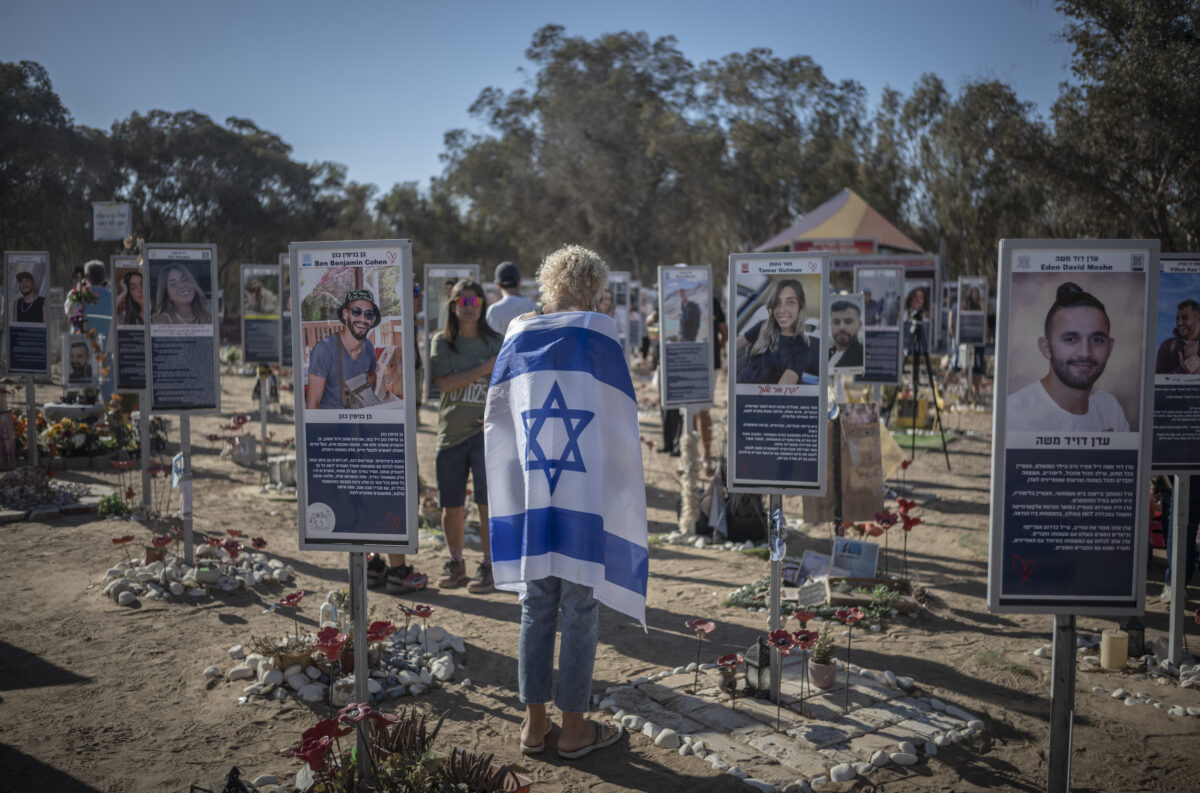
The moral nadir came in the spring of 2024, when German aircraft, alongside others, dropped humanitarian aid over Gaza because Israel’s blockade was causing famine. The moral paradox of Western support for Israel could not have been starker. They were aiding a partner that was weaponizing hunger, and when the blockade was bypassed by air, even that aid killed people: at least five Palestinians died when parachutes failed to open. Feeling powerless, Germany resumed the airlift in the summer of 2025, again in response to a famine caused by the Israeli blockade.
After all the election-year posturing over the previous coalition’s decision to limit arms exports, Chancellor Merz soon found himself confronting the full complexity of the new Middle East. It carries symbolic weight that a center-right Chancellor should be the one to redefine Germany’s diplomatic approach toward Israel. The conservatives’ identity has long been tied to being “pro-Israeli,” so any shift in tone resonates deeply both at home and in Israel.
Israel’s democracy is at risk
What is needed now is both more empathy and more distance, however contradictory that may sound. Germany must understand Israel’s harsh response to existential threats from Hamas and Iran and its many proxy militias. Former Foreign Minister Annalena Baerbock’s claim that the strike on Hezbollah “in no way” served Israel’s security was absurd.
At the same time, Germany must keep its distance and apply pressure where Israel continues to occupy and disenfranchise Palestinians, up to and including sanctions coordinated with other Western partners.
German policy toward Israel must reckon with this dual reality: alienation in Middle Eastern politics on one hand, and overlapping interests in broader geopolitics on the other. Israel’s weakening of Iran also enhances our own security. Yet its treatment of the Palestinians invites future catastrophe and undermines all of Israel’s allies. The notion of raison d’état can no longer obscure these contradictions.
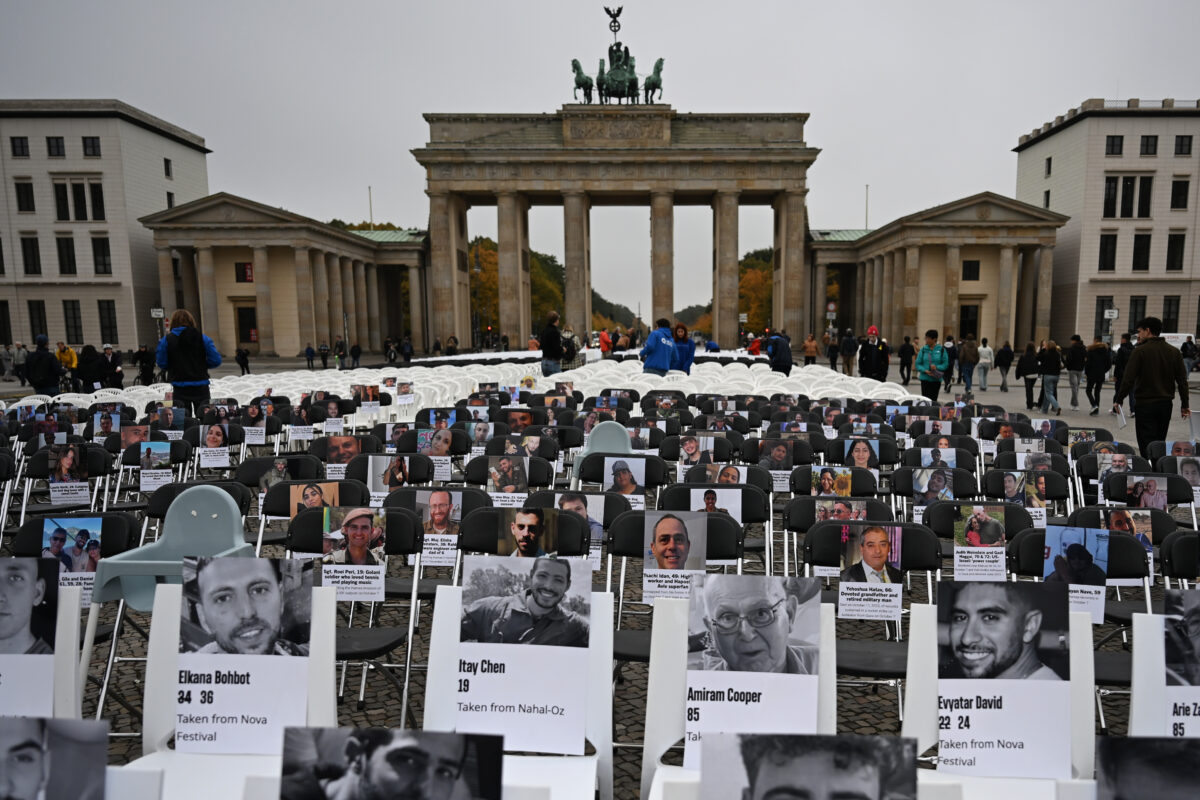
This is not about turning away from Israel. But the era of hollow declarations of solidarity with “the only democracy in the Middle East” is over. Israel’s democracy is in jeopardy, and the threat comes from its own democratically elected government — as in many other countries today. A bolder foreign policy is therefore both necessary and possible.
The shift in tone introduced by Merz and Wadephul shows the way forward. The new government must now find a path that combines solidarity with honesty. It once attacked its predecessors for doing the same. Now it must prove it can do better. In the words of poet Ingeborg Bachmann, it must have the courage to face its friend.